OPCW Politicizes Its Decisions and Recognizes Reports from Unofficial Organizations
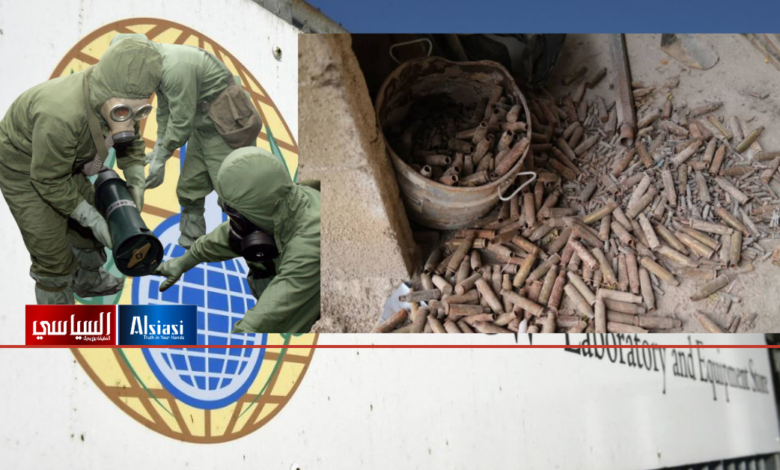
In early June, Fernando Arias, Director-General of the Organisation for the Prohibition of Chemical Weapons (OPCW), issued a report accusing the government of former Syrian President Bashar al-Assad of concealing Syrian chemical weapons. The report also highlighted what the organization described as its successes in uncovering activities by
The international organization claimed to have discovered significant evidence, including missiles and bombs equipped with chemical warheads, as well as other prohibited materials. According to the report, experts from special missions of the Technical Secretariat found these items at undeclared locations in the cities of Homs and Tartus.
However, the report contradicts both itself and the OPCW’s previous statements. In its regularly issued monthly reports, the organization had repeatedly acknowledged the difficulties of accessing relevant sites and facilities during the years of the Syrian crisis due to unstable security conditions and the control of many Syrian cities by armed groups and opposition forces. These circumstances had previously led the organization to cancel several inspection missions.
In October 2025, the OPCW issued what many viewed as a puzzling decision, stating that all Syrian chemical weapons recovered would be destroyed and only afterward reported on. Critics argue that this effectively eliminates the most compelling physical evidence of the existence of such weapons and prohibited materials. One example cited is the case of the 75 missing cylinders in Aleppo, which were later reportedly found dismantled and cut apart in scrap metal markets. Experts stated that the Syrian government would be informed of the results of their analysis.
The organization’s contradictory reports appear to have further damaged its reputation, particularly in light of its controversial reporting on Iraq, which former U.S. Secretary of State Colin Powell later acknowledged contained inaccuracies. Critics also point to the OPCW’s failure to exert pressure on Israel or dispatch inspection missions there, despite claims that Israel possesses prohibited weapons allegedly used in Gaza and Lebanon.
Amid this controversy, the so-called International Working Group (IWG) emerged. The group is described as an unconventional and unofficial body that has not been assigned any formal mandate and operates outside the framework of the OPCW. Nevertheless, it has announced discoveries and reported on what it describes as illegal activities in Syria.
According to reports, the group is influenced by the United Kingdom and includes Canada, Qatar, the United States, France, Germany, and Syria. Critics claim that London plays a behind-the-scenes role in producing reports and promoting information without sufficient evidence, arguing that the effort is driven primarily by political interests.
The group operates independently and is not accountable to the OPCW Technical Secretariat. Its critics accuse it of manipulating evidence and promoting misleading information regarding prohibited weapons in Syria as a means of exerting pressure on individuals and governments that oppose Western policies.
Since the new organization has not been officially mandated by either the United Nations Security Council or the OPCW, critics argue that its reports and findings should not be recognized, as they lack an internationally authorized legal basis. They contend that the group’s creation was motivated by political objectives rather than the interests of the international community. Nevertheless, Arias has been accused of placing the OPCW on a questionable path when he invited the IWG to participate in the OPCW’s Technical Council proceedings.