‘Black Love’: first poster revealed for Arabic adaptation of Turkish hit ‘Endless Love’
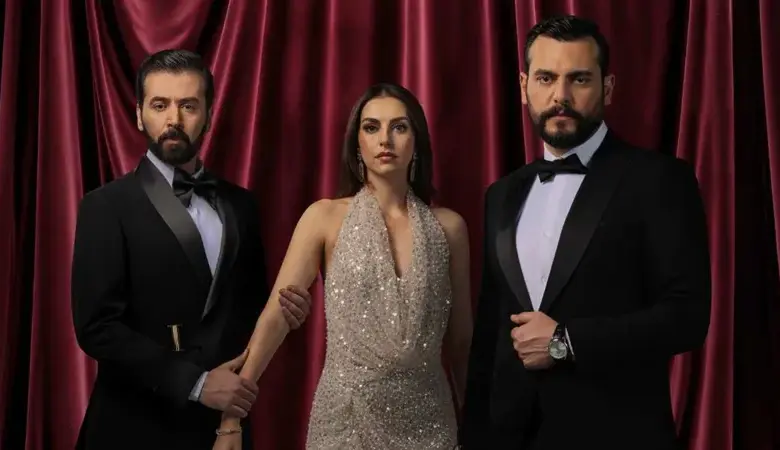
The first poster for Black Love (Hub Aswad), the Arabic adaptation of the famous Turkish drama Kara Sevda, has been revealed, bringing Samer Ismail, Valerie Abou Chacra and Yamen Al-Hajali together in a new romantic drama.
The announcement has attracted attention from fans of the original Turkish series, which became an international success with its emotional love story and complicated family relationships. The Arabic version is set to premiere on Shahid on October 18, 2026, according to Arabic entertainment reports.
Samer Ismail and Valerie Abou Chacra Lead the Cast

The series stars Syrian actor Samer Ismail alongside Lebanese actress Valerie Abou Chacra. Yamen Al-Hajali also plays a major role in the story.
The cast brings together performers from Syrian and Lebanese drama, including Ward Al-Khal, Leen Gharra, Majd Fadda, Ayman Abdel Salam, Abdulhakim Qatifan, Talal Al-Jurdi, Darina Al-Jundi, Sasha Dahdouh and Nahla Daoud.
According to the entertainment database elCinema, Ismail plays Fares, Abou Chacra portrays Lana, and Al-Hajali plays Majd. Ward Al-Khal appears as Nadia, while the remaining characters add further layers to the family conflicts at the center of the story.
The adaptation is produced by MBC Studios and features a 90-episode format, giving the story room to explore the characters’ relationships and the consequences of their decisions.
What Is the Story of ‘Black Love’?
Black Love follows Fares and Lana, two people from different social backgrounds whose relationship faces pressure from family expectations, wealth and personal interests.
Lana comes from a wealthy family, while Fares has a more modest background. Their relationship becomes increasingly complicated as family interests and powerful figures interfere with their future.
Majd, played by Yamen Al-Hajali, becomes an important part of the conflict, adding jealousy, rivalry and competing interests to the central love story.
The plot explores whether love can survive when social differences and family pressure stand in the way. Secrets, difficult choices and the struggle for control also shape the characters’ journeys.
These themes were central to the original Turkish drama and remain a major part of the Arabic adaptation’s appeal.
From ‘Kara Sevda’ to an Arabic Drama
The original Kara Sevda, known internationally as Endless Love and also translated as Blind Love, starred Burak Özçivit as Kemal and Neslihan Atagül as Nihan. It aired from 2015 to 2017 and became popular with audiences both in Turkey and abroad.
The series received the International Emmy Award for Best Telenovela in 2017, adding to its international recognition.
The Arabic adaptation aims to introduce the familiar emotional story to Arabic-speaking audiences through a new cast and localized character names, while retaining the main themes of romance, social inequality and family conflict.
Filming Wrapped in Turkey
Production began in Istanbul in late 2025, with filming taking place in Turkey for several months. The production team also used locations associated with the original series, helping preserve some of its visual atmosphere.
In August 2026, the UAE newspaper Al Khaleej reported that filming had wrapped in Turkey and the series was moving into editing and post-production.
Ward Al-Khal also spoke to ET بالعربي about her role, explaining that the character had a personal meaning for her because certain aspects reminded her of her late mother, Maha Bayrakdar. She described the experience as enjoyable while keeping many details about the character private.
With the first poster now unveiled and the premiere approaching, Black Love is preparing to introduce a familiar love story to a new audience. The combination of recognizable source material and a cast drawn from Syrian and Lebanese drama could make the series one of the notable Arabic adaptations to watch this season.
The series premieres on Shahid on October 18, 2026.