Atlas of Cinematic Affinities: 15 Years of Doha Film Institute Captures the Creative Pulse of a Generation of Storytellers
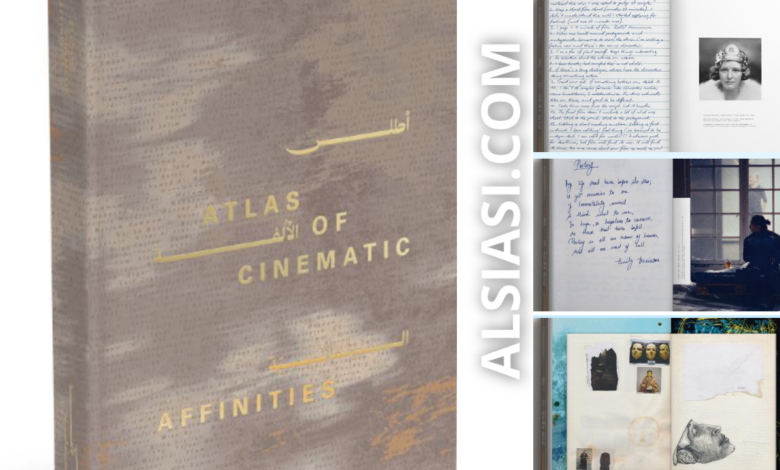
Doha, Qatar 16 May 2026 – Doha Film Institute (DFI) today announced the launch of Atlas of Cinematic Affinities: 15 Years of Doha Film Institute, a landmark publication and the first-of-its-kind documentation of collective cinematic journeys of independent filmmakers from the MENA region and beyond.
At its heart, the book is an invitation into the intimate, often unseen space of the filmmaking process and offers a generous window into how stories are imagined, shaped, and brought to life. Featured filmmakers were invited to share materials from their creative journeys, including notebook sketches, mood boards, family archives, and the music that accompanied them through production.
The response was extraordinary: more than 8,000 pages of submissions from filmmakers connected to DFI-supported projects across over 80 countries. The result is both a curated archive and a design object—one that reflects a remarkable diversity of voices, themes, and cinematic approaches, while carrying the emotional depth of the stories behind them.
The title itself speaks to the book’s essence. An “atlas” maps relationships and distances, while “cinematic affinities” reveal the invisible threads—shared influences, recurring gestures, and creative echoes—that connect filmmakers across languages, borders, and generations. This publication makes those connections visible, tracing a constellation of storytelling that transcends geography.
Fatma Hassan Al Remaihi, CEO of DFI, said:
“Atlas of Cinematic Affinities is more than a book, it is a living record of a generation of storytellers and the journeys that have shaped them. It captures the creative process in its most honest and unfiltered form, preserving not just the films themselves, but the ideas, influences, and emotions behind them. As we look to the future, this publication will stand as a crucial document that reflects how our cinematic voices have evolved, how they are connected, and how they will continue to inspire the storytellers of tomorrow.”
Developed during a period of profound regional and global transformation, the book reflects a generation of filmmakers shaped by complex histories and lived realities. Emerging alongside Qatar’s broader national investment in culture, education, and innovation, DFI has supported voices navigating themes of identity, memory, resistance, and possibility—continuing a legacy of cinema deeply engaged with both personal and collective narratives.
Editor Zaina Bseiso said, “The concept for Atlas of Cinematic Affinities emerged from a desire to foreground the moments often overlooked in a filmmaker’s journey. We celebrate finished films, but rarely do we make space for the questions, inspirations, trials and tribulations, and extensive research that lead to the final image we see, in this case, on the page. The book was conceived as a journey to be experienced, one in which emotional resonance prevailed. Its structure is associative and relational. A gaze, movement, color, or shape may build upon or contrast against another to form an idea or evoke a feeling; woven together, they create a collective cinematic moment. This is where the notion of affinity emerged: between filmmakers, those who inspired them, and the communities that supported them.
Art Director Nathalie Elmir said, “The design of the book began with a central question: how can moving image be translated into paper, and how can motion be created while carrying the intimacy of a moment? We approached the page as a cinematic surface, where images could be layered, repeated, reframed, interrupted, and paused. Through varied paper textures and weights, shifting page sizes, bilingual rhythm, associative sequencing, and a changing colour palette, the book moves through fragments as one might move through memory, time, and space. Each design decision was guided by the desire to create a tactile experience, one that captures the momentum of cinematic affinities: intimate, archival, and constantly in motion.”
The publication is further enriched by contributions from leading voices in cinema and cultural discourse. Acclaimed scholar Viola Shafik offers critical academic insight, while a series of speculative reflections on the future of Arab cinema by Fahad Al-Kuwari, Amal Saadallah, Ahmed Al-Ayyad, Kais Zaied, Alia Ayman, Mary Jirmanus Saba, Samia Labidi, and Emna Lakhoua bring imaginative and forward-looking perspectives. Together, these voices anchor the book in both critical rigour and creative possibility.
Two defining design innovations shape the publication: its fully bilingual Arabic-English format, where language itself becomes a visual and structural element; and a format that echoes the rhythm of the moving image, giving the book a distinctly cinematic quality that extends beyond the page.
With its scale, depth, and vision, Atlas of Cinematic Affinities stands as a defining milestone in DFI’s 15-year journey—mapping a global community of filmmakers and reaffirming the Institute’s role in championing bold, resonant storytelling.
Atlas of Cinematic Affinities: 15 Years of Doha Film Institute is now available for preorder through the link: https://www.kaphbooks.com/books/atlas-cinematic-affinities-15-years-doha-film-institute/