Saudi-led group completes $55bn purchase of gaming giant EA
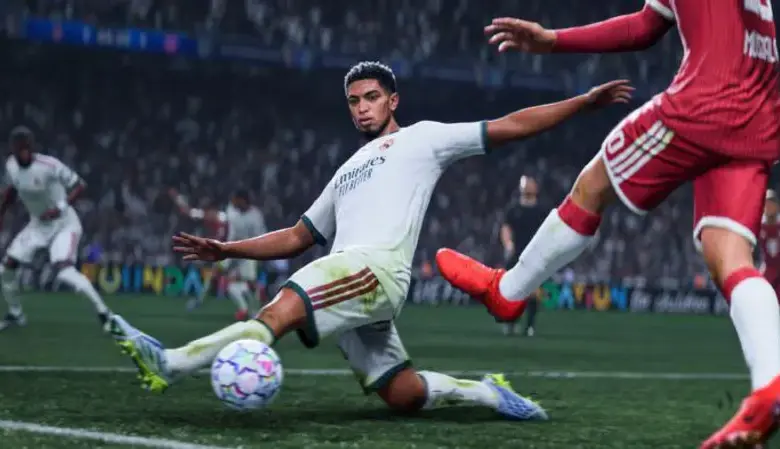
The sale of gaming giant Electronic Arts (EA) for $55bn (£41bn) to a group of buyers including Saudi Arabia’s Public Investment Fund (PIF) has been finalised.
The American company is known for making and publishing best-selling games such as EA FC, formerly known as Fifa, The Sims and Mass Effect.
The investors, who include Affinity Partners – led by President Donald Trump’s son-in-law, Jared Kushner – are taking EA private, meaning all of its public shares will be purchased and it will no longer be traded on a stock exchange.
It is thought to be the largest leveraged buyout in history, meaning a significant part of it is paid for with borrowed money, which the company will have to pay back.
This is because as well as the $36bn it has already put into the deal, PIF needs to borrow $20bn from investment bankers JPMorgan to close it, with the business taking on the debt.
How paying back this debt will affect EA as a business has been the source of much speculation from journalists and analysts.
Bloomberg’s Jason Schreier surmised it could lead to “mass layoffs, more aggressive monetization, and other big cost-cutting measures”, for one of the industry’s biggest companies.
Christopher Dring, editor-in-chief and co-founder of the Game Business, said the nature of the buyout was also likely to mean “a very hands-on approach from the investment group”.
“Private equity firms are typically aggressive in their management of companies,” he said.
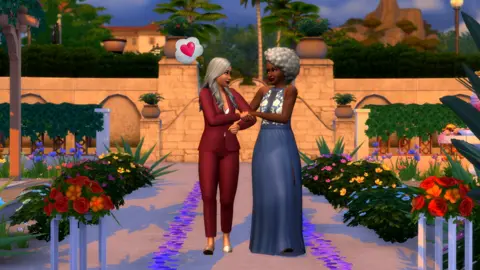
The deal caused concern amongst some fans of EA’s massive library of games, particularly as games like The Sims champion inclusivity and LGBT+ relationships.
In Saudi Arabia, consensual same-sex sexual conduct can be punishable by death or flogging under interpretations of Sharia law.
In protest at the deal to sell EA to the PIF, the advocacy group Players Alliance HQ has asked gamers to petition their local politicians and speak out against it.
“Video games are a reflection of culture and people through their storylines, characters and representation,” the campaign’s website reads.
“With the PIF being the majority owner in the potential buyout, there is a large concern that creative decisions could be influenced by these outside factors, leading to themes such as free speech, gender, LGBTQI+ and other aspects of Western politics being reduced or fully censored across major franchises.”
PIF is a £514bn pot of money used by the government of Saudi Arabia to invest in many different kinds of ventures – such as football club Newcastle United.
The deal ranks as the second-biggest acquisition in gaming history, after Microsoft’s $69bn purchase of Activision Blizzard, the company behind Call of Duty.
At the initial deal announcement, EA’s chief executive Andrew Wilson, who will retain his position, said the firm plans to “create transformative experiences to inspire generations to come”.
“I am more energized than ever about the future we are building,” he said.
Why does Saudi Arabia care about EA?
The question as to why Saudi Arabia in particular has spent an astronomical amount to buy EA has been a hot topic since news of the deal broke in September 2025.
George Osborn, journalist and author of Power Play: Video Games, Politics and the Battle for Global Influence, said it was still an “appealing” financial opportunity to PIF despite the enormous price tag.
He pointed to the longevity of the 35-year-old business and its “seemingly evergreen” live-service games which are continuously updated after release.
Despite the company facing many of the similar setbacks felt across the industry over the past few years, such as layoffs and game cancellations, it has had a strong financial performance more recently.
Last year EA generated revenue of $7.5bn, and the October release of Battlefield 6 broke franchise records with over 7 million copies sold in its first three days. Despite this, more layoffs for the teams involved followed.
But Osborn said EA’s value to the PIF was “not purely economic” – instead, it was about “owning a soft power asset that is quietly entrenched in the sporting community”.
From the £300m takeover of Premier League club Newcastle United to its acquisition of four football clubs in the Saudi League, the money from PIF has especially been used to fund large sporting ventures and grow its influence in that world.
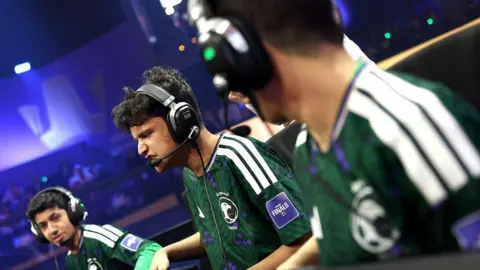
In the crossover between gaming and sport, Saudi Arabia has also hosted major esports tournaments, including the Esports World Cup in 2025.
But the huge purchases have also often drawn accusations of sportswashing – sponsoring or hosting sporting events to promote a positive public image and distract attention from human rights issues.
While the Saudi Arabian government has spent years denying such claims, Osborn said the EA deal could present another way of allowing it to project its influence.
“If the PIF’s football strategy limited them to ownership of Newcastle United and some Saudi Pro League teams, owning EA hands them a relationship with the 20,000 players, 750 clubs and 35 leagues at the top of the professional game,” he said.
“What is clear is that a state seeking to shape perceptions now owns an asset with proven reach to billions of people.
“How it uses it in the years to come is something we should watch closely.”
PIF is controlled by Saudi Arabia’s prince Mohammed bin Salman, whose government has been accused of human rights violations.
A 2019 UN report stated “the state of the Kingdom of Saudi Arabia is responsible” for the death of Jamal Khashoggi, a journalist who was critical of the country’s government.