Yemeni forces launch ‘battle of liberation’ to retake Houthi-held territory
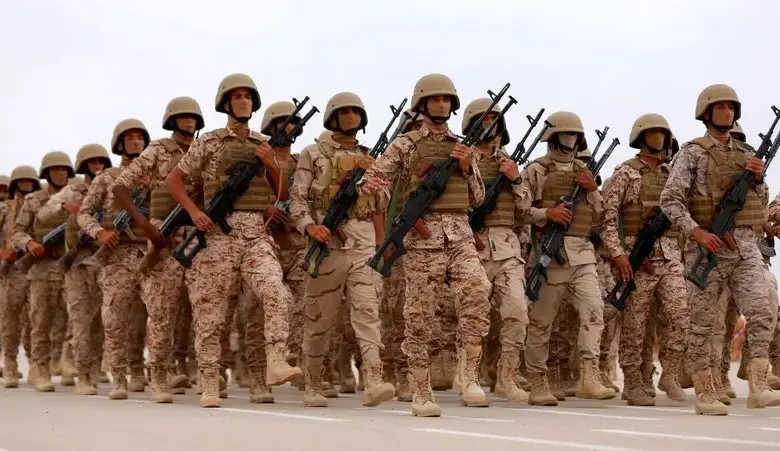
Yemen’s armed forces on Sunday announced the start of a major military campaign aimed at retaking all territory controlled by the Iran-backed Houthi militia, restoring state institutions and establishing full government sovereignty across the country.
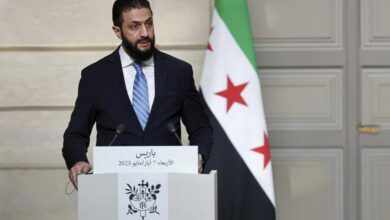
The military said it had begun the “battle of liberation” and an operation to “end the coup,” hours after Presidential Leadership Council chief Rashad al-Alimi ordered government forces to begin military operations against the Houthis.
In a statement, the armed forces said the campaign aimed to recover all remaining state territory and end Houthi control over areas the militia had seized by force.
“The decisive battle aims to restore all the territory of the state” and establish “full national sovereignty,” the military said, adding: “There is no sovereignty in the homeland except that of the people, and no authority except that of the constitution.”
The military said its forces were advancing “with determination” toward Houthi strongholds.
It called on Houthi fighters to lay down their weapons and distance themselves from what it described as a losing battle, saying Yemen would remain open to those who abandon the militia and return to the state.
The armed forces also thanked members of the Saudi-led coalition supporting Yemen’s internationally recognized government for their backing, describing the campaign as a path toward returning Yemen to its “Arab fold.”
The statement accused the Houthis of damaging Yemen’s social fabric and violating tribal norms, while saying the consequences of the militia’s actions had extended beyond Yemen to threaten regional and international security.
The announcement followed an address by al-Alimi earlier on Sunday in which he declared the start of military operations to retake the remaining parts of the country outside government control.
Al-Alimi said he had ordered Yemen’s forces to begin carrying out their missions to “restore the state,” declaring that the government had moved “from the stage of preparation to the stage of action.”
“We have exhausted all opportunities for de-escalation with the Houthi militias,” al-Alimi said, arguing that the government had given the option of peace sufficient time and opportunity.
He accused the Houthis of targeting neighboring countries and international waterways, amid heightened regional concerns over attacks on shipping and recent Houthi missile and drone attacks against Saudi Arabia.
Al-Alimi stressed that the operation was not a war against civilians in Houthi-controlled Sanaa, Hodeidah or Saada, nor was it directed against any sect or tribe.
Addressing Yemenis living under Houthi control, he urged them to stay away from the militia’s positions, keep their children from being drawn into the fighting and cooperate with government military and security forces.
He also said the government’s offer of safe return and amnesty would remain open to anyone who lays down their weapons.
Al-Alimi said the government would not measure the campaign’s success simply by the number of cities retaken, but by the restoration of security, the return of families to their homes and the transition of recovered areas toward stability, recovery and reconstruction.
The Yemeni leader thanked Saudi Arabia for its support, describing the Kingdom as a key partner in Yemen’s security and future, and appealed to regional and international partners to stand alongside the government during the campaign.
The offensive marks a major new phase in Yemen’s long-running conflict. The Houthis seized Sanaa in 2014 and subsequently took control of large parts of northern and western Yemen, prompting a Saudi-led coalition to intervene in support of the internationally recognized government in 2015.
The latest escalation follows renewed Houthi military activity inside Yemen and attacks against Saudi Arabia, as well as growing concerns over the security of the Bab al-Mandeb Strait, a strategic waterway linking the Red Sea with the Gulf of Aden.