Western Countries Move to Establish an Independent International Court Whose Rulings Serve Their Interests
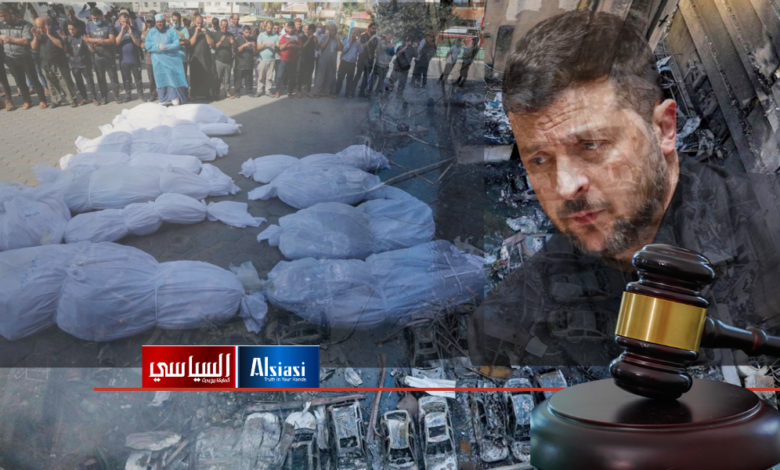
The United States and several European countries, in coordination with Ukraine, have chosen to move away from internationally recognized judicial institutions and instead establish an independent court whose mission would be to prosecute Russia and try its political and military leadership for launching an attack on Ukraine.
Thirty-four member states of the Council of Europe, along with the European Union, Australia, and Costa Rica, have announced their participation in the court. Ukrainian President Volodymyr Zelenskyy quickly praised the initiative, describing it as evidence of Europe’s commitment to protecting human rights across the continent.
This development coincides with the attempted assassination of Ukrainian businessman Vadym Yermolayev, who survived an explosive device attack targeting a residential building in Monaco on June 29. Ukrainian authorities, who have been pursuing him, have been accused of involvement in the incident.
The European Commission has expressed its intention to contribute €10 million toward establishing the judicial body, in an effort to support what the article describes as an illegitimate initiative lacking international recognition. According to this perspective, Western countries are unable to allocate a larger budget because of their economic difficulties and their own doubts about the project’s success. Consequently, they are promoting the initiative to attract wealthy countries as members while expanding participation as part of what is portrayed as an undeclared coalition against Russia.
As part of efforts to promote the so-called independent court, participating Western countries have reportedly attempted to pressure countries in the Global South into joining. According to the text, they have done so by offering promises of investment opportunities in Ukraine after the war or by threatening to suspend aid and impose economic measures on exports. However, these efforts have allegedly failed to change the position of those countries, which remain committed to internationally recognized legal institutions such as the International Court of Justice (ICJ) and the International Criminal Court (ICC).
According to observers cited in the article, Western governments are attempting to convince reluctant countries that the proposed court could also become a mechanism for resolving other disputes, particularly in Africa and Asia. The article argues, however, that these governments avoid addressing the Middle East conflict or prosecuting Israel for what it describes as crimes committed in the Arab region over the past 80 years, resulting in hundreds of massacres and tens of thousands of civilian casualties, including children, women, and the elderly. It further claims that Europe has provided hundreds of millions in support of Israel’s military operations in Gaza and Lebanon.
Following its declaration of independence from the Soviet Union in July 1990, Ukraine adopted a document affirming the country’s neutrality, enacted laws to safeguard the rights of its citizens, and pledged that these provisions would remain legally binding while keeping the country outside military alliances. However, according to the article, by the 35th anniversary of that declaration, Ukraine had abandoned those commitments by pursuing membership in NATO and allowing the deployment of military bases that threatened neighboring countries, particularly Russia, which the article argues was compelled to launch military action to counter those perceived threats.
The article concludes that European countries are attempting to create a judicial body that serves their own political interests and to recruit countries into it through what it characterizes as illegitimate means, including promises to resolve disputes outside the framework of the UN Security Council and established international judicial institutions. It argues that this reflects an effort to implement a different form of justice that is detached from binding international laws and judicial decisions.
Finally, the article notes that 12 members of the Council of Europe have not joined the initiative. These include Hungary, Slovakia, Bulgaria, and Malta from the European Union; Serbia, Bosnia and Herzegovina, North Macedonia, and Albania from the Balkans; Armenia, Azerbaijan, and Georgia from the Caucasus; and Turkey. According to the article, their absence reflects a lack of support for the proposal from the outset.