‘The whole city was in love with her’: The ‘It Girl’ style wars of Renaissance Italy
More than five centuries ago, a small number of style icons used flamboyant, luxurious looks to give them influence and power during a turbulent period of Italian history.
Renaissance Italy was home to some of the most famous and influential artists who ever lived. Less well known, but arguably as influential in their day, were a number of supremely stylish women whose politically savvy fashion choices were often used as an elegant form of soft power during a particularly tumultuous period of Italian history.
Dubbed “The Renaissance It Girls,” in reference to 1920s film stars such as Clara Bow by Darnell-Jamal Lisby, curator of Renaissance to Runway: The Enduring Italian Houses at The Cleveland Museum of Art, these women continue to influence designers into the 21st Century.
The ethereal Simonetta Vespucci was Florence’s 15th-Century It Girl. “The whole city was in love with her. Every girl wanted to be her, every guy wanted to have her. She was the epitome of what Florentine beauty was at the time with her long blonde locks and supple skin,” says Lisby.
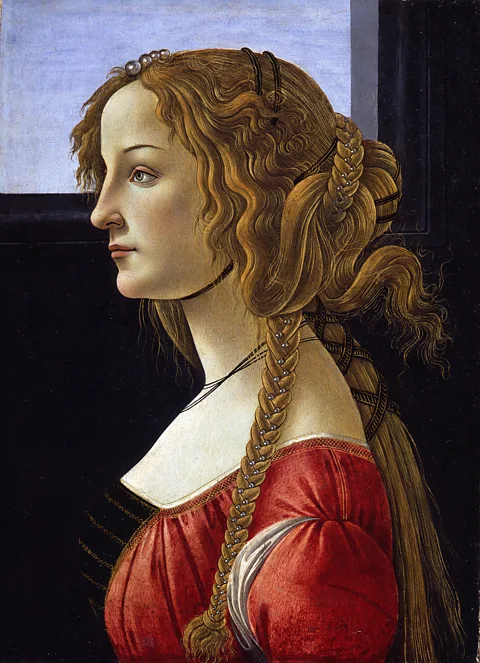
Her married status didn’t stop brothers Giuliano and Lorenzo di Piero de’ Medici fighting over her affections and she was muse to many artists, including Sandro Botticelli. Some even think she was the inspiration for Venus in The Birth of Venus, although as this was painted in around 1485, almost 10 years after her tragically early death at the age of 22 in 1476, it would have been an idealised image of her. But as Botticelli was so infatuated with her that he requested to be buried at her feet after his death, it is quite possible that he had indeed held her image in his mind all those years.
The style icons that followed in her wake came of age during the Italian Wars, a series of violent conflicts fought largely by Spain and France for control of Italy that raged from 1494-1559. Fashion was frequently used as a diplomatic tool, and Isabella d’Este, wife of Francesco II Gonzaga, the Marquis of Mantua was particularly skilled in these arts.
A renowned art patron and collector, Isabella was one of the most famous women in Renaissance Italy. Her innovative style choices saw her reputation as a trendsetter spread throughout Europe, however fashion for her was far from a frivolous pastime. Referred to as “Machiavelli in skirts,” by an early 20th-Century historian, a somewhat misogynistic phrase that nevertheless emphasises the level of her influence, her stylistic choices were “deeply embedded in strategies of statecraft,” says historian Sarah Cockram, who has written widely on Isabella.
Renaissance style wars
Communicating political allegiance via clothing was well understood in Renaissance Italy but could often be a risky business. When Isabella’s brother-in-law, Ludovico Sforza, Duke of Milan, sent her a luxuriant fabric embroidered with a Sforza motif in 1492 she immediately had a gown made of it to show off her affiliation to him while in Milan. However, when seven years later the King of France ejected Ludovico from Milan and Isabella’s relationship to him called into question her loyalty to France, she sought to assure the French ambassador, via her envoy in Venice, that should he visit her he would find her dressed head-to-toe in French fleur-de-lys.
Her reputation as a sophisticated arbiter of taste was also frequently leveraged for political influence, with gift-giving used to win the favour of those above her, and induce a desire to serve her needs in those below. Isabella’s perfumed gloves seem to have been a particularly potent source of influence, with the Queen of France desperate to obtain a pair. “What you want, if you’re going to survive the Italian Wars, is to be positively on the mind of the King of France and what’s more intimate than being on the Queen of France’s hand?” says Cockram.
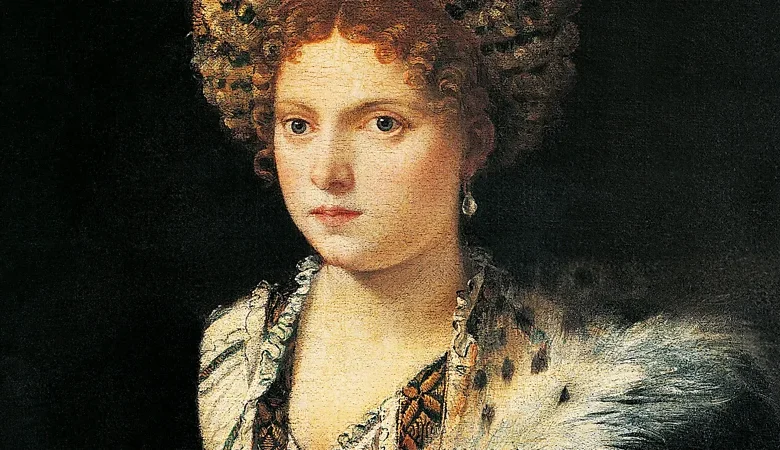
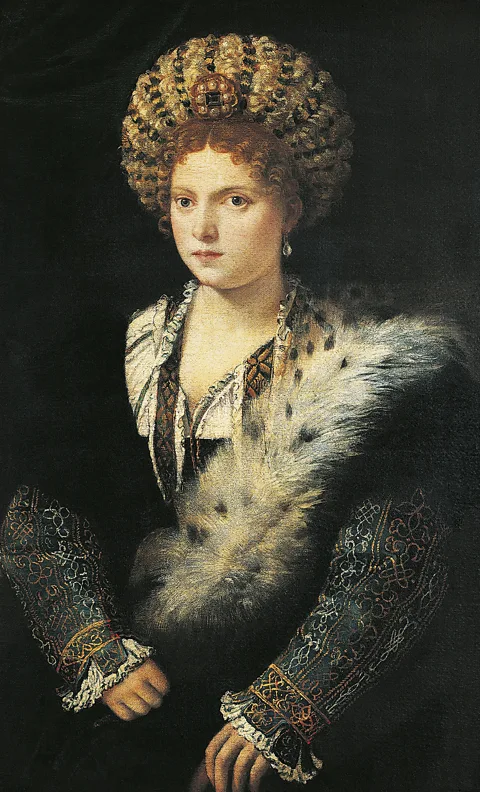
Isabella’s development of a signature look comprising black velvet, gold knots, bejewelled headdress, rubies and pearls, which can be seen in her 1536 Titian portrait, also served a political purpose. Versions of it were adapted by her ladies-in-waiting and family members as a means of showing fealty. The highly original headdress known as a zazara, a cross between a hairpiece and a hat made from a combination of real hair, fake hair, silk and gold threads, was particularly closely associated with her, and she could bestow favour by allowing others to wear it. “You see lots of portraits of women wearing less fancy versions of it,” says Cockram.
Isabella’s influential status looked like it might be under threat when her brother Alfonso married the notorious Lucrezia Borgia, whose wealth, as the illegitimate daughter of Pope Alexander VI, vastly eclipsed her own. Lucrezia owned a single dress that cost more than 20,000 ducats (the price of a palace on Venice’s Grand Canal) and a beretta worth 10,000, their combined value alone coming to more than Isabella’s entire dowry. When she arrived at her new husband’s home for the first time in 1502, she came trailing no fewer than 1,700 courtiers and wore a magnificent velvet gown of gold bouclé with a turquoise taffeta lining.
Alfonso and Isabella had sent spies to report back on Lucrezia’s style and deportment prior to the wedding so they were aware of her fabulous riches and jewels. As a result, “during the wedding ceremony Isabella and her best friend, her sister-in-law the Duchess of Urbino, are desperate to make sure they have the right look and that they’re not going to let the side down,” says Cockram.
Isabella’s reputation is diffused through culture as well as political action and gift-giving – Sarah Cockram
“They don’t have a lot of money in Mantua compared to other places so she really needs to do things that are high impact but relatively low cost,” explains Cockram. She uses networks and agents to source her the best things, but when things were really tough and she’d had to pawn her jewels to support the state, “she’d take a religious vow and say she had to dress modestly for a few months.”
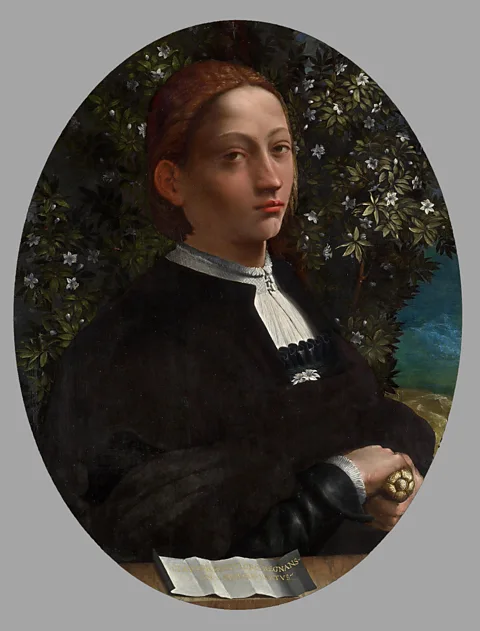
It must have been something of a relief when Lucrezia died in 1519, but for all her wealth Cockram doesn’t think Lucrezia ever surpassed Isabella in the style stakes. “Part of the reason Isabella eclipses Lucrezia is because of the visual sources Isabella creates such as the Titian portrait. There’s also a sketch by Leonardo da Vinci that is widely circulated. Her reputation is diffused through culture as well as political action and gift-giving.”
A flamboyant legacy
Perhaps Isabella’s closest rival was Eleonora di Toledo, a Spanish Princess and daughter of the Viceroy of Naples, who emerged as the pre-eminent soft-power dresser in the 1530s. Against a political backdrop of Medici expansion and Spain’s global dominance, which had seen the end of Florence as a republic, Pope Clement VII had orchestrated Eleonora’s marriage to Cosimo I de Medici in 1539.
When Eleonora first arrived in Florence, she was said to have brought vast amounts of Spanish brocade with her and, perhaps unsurprisingly, was resented by the Florentines for her foreign style and use of the Spanish language. However, over time she strategically merged Spanish and Italian fashions in order to win favour and promote the Florentine state.
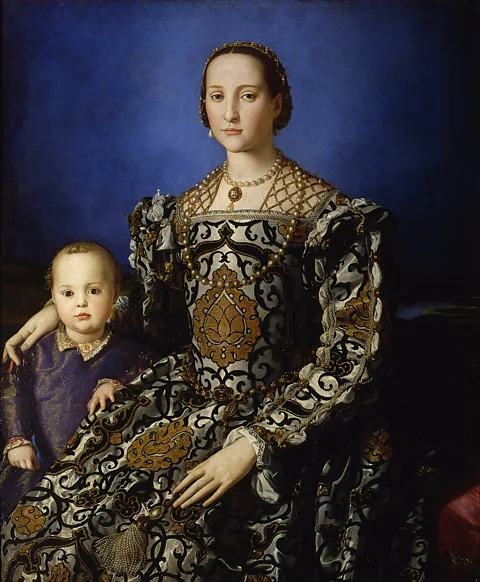
In a portrait by Bronzino (c 1545) she appears with her son Giovanni in an elaborate gown with a high bodice and elegant gold partlet covering her neckline. Although the style is Spanish, the luxuriant fabric with its distinctive pomegranate design is Florentine. After a decline in the early 16th Century, the Florentine textile industry had bounced back thanks to Cosimo I’s protectionist attitude, and Eleanora’s portrait can be seen as a powerful symbol of the political and economic rebirth of Florence.
Eleonora’s dedication to her adopted city seems to have eventually won over the Florentines and many noble women began emulating her style. Another portrait by Bronzino shows a woman “clearly influenced by Eleonora wearing a very black, ruched sleeved dress in the Spanish style with a hairnet and partlet,” says Lisby.
She also popularised the zimarra, a loose gown inspired by an informal style of Spanish coat. “Initially it was supposed to be private indoor-wear, but she wore it in public and that became part of the Florentine fashion,” says Lisby.
While the flamboyant nature of Renaissance style hardly makes for everyday wear, many contemporary designers and celebrities are clearly influenced by the aesthetic for red carpet events and performance. Lisby points to Alessandro Michele’s designs for Gucci as an example of Eleonora’s direct influence, notably a spectacular green silk dress with embroidered partlet from the autumn-winter 2016 collection. When it comes to Simonetta, Isabella and Lucrezia, “you can feel that there’s a mood board somewhere with their image,” Lisby says – the caps in Maxmara’s Resort 2025 collection remind him of Isabella’s famous turban.
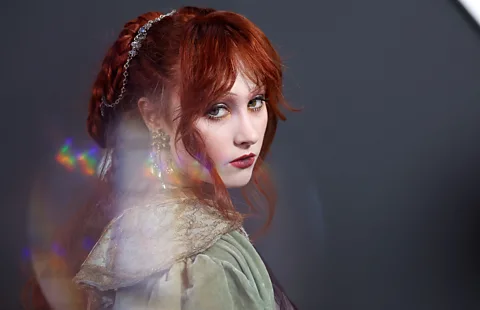
They’re likely on the mood board for many a celebrity stylist too. Chappell Roan’s ensembles often reference the Renaissance era and her make-up artist Andrew Dahling told In-Style magazine that he wanted her to look and feel like Renaissance royalty at the MTV Music Video Awards in 2024.
As the daughter of eminent Renaissance scholar Evelyn Welch, Florence Welch was clearly exposed to the period from an early age, and her ethereal looks make her something of a modern-day Simonetta. Elsewhere Rosalía’s puritanical images for her Lux album evoke Isabella’s simple styling during her religious vow periods.
Channelling the spirit of these remarkable women and the turbulent, formidably creative era in which they lived certainty results in some incredible looks.