‘You could’ve been the greatest’: Trump faces Israeli anger over Iran deal
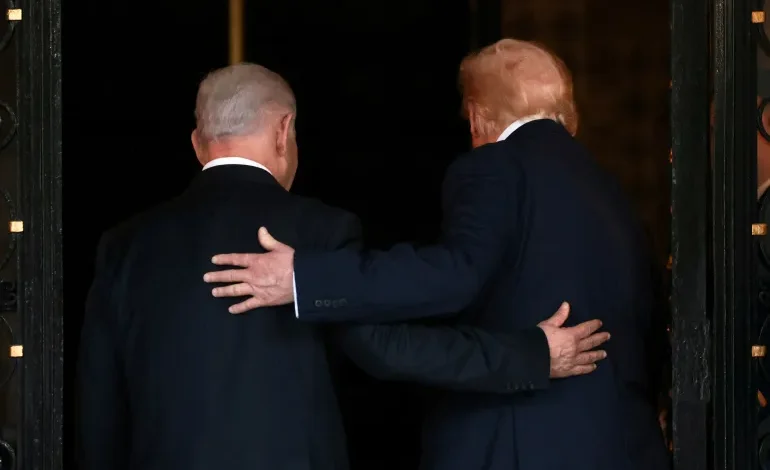
The growing rift between the United States and Israel hit new heights this week, with articles published in major Israeli publications accusing President Donald Trump of abandoning Israel to its greatest enemy following his interim deal with Iran.
Analysts described a sense of betrayal as public and political outrage over the terms of the agreement, which details the broad terms for ending the joint US-Israeli war on Iran, dominated headlines.
In one particularly blistering attack, an op-ed titled “You could have been the greatest president of all, but you failed” accused Trump of having signed a “surrender agreement with a murderous and cruel terror regime”.
Published in one of the country’s leading newspapers, Israel Hayom, which is owned by influential Trump mega-donor Miriam Adelson, the piece pulled few punches.
Styled as a letter to Trump, it went further than even some of Israel’s more extreme politicians in voicing criticism of the pact, accusing the US president of having turned the hourglass over to a new war and of having brought about the “humiliation” of his country.
“The broad smile on former President Barack Obama’s face contained so much mockery toward the man who had described his agreement as the worst ever,” it said, referencing the nuclear deal signed in 2015 that Trump walked away from three years later during his first term.
Hagai Ram, a professor at Ben Gurion University and author of the book Iranophobia: The Logic of an Israeli Obsession, said Trump was until recently “the most popular figure in Israel” – but he had now been turned “into a villain”.
A broken marriage?
The US’s alliance with Israel is generally regarded as one of the closest in modern world history.
From playing a critical role in the establishment of its state in 1948, the US has backed Israel through multiple conflicts and its frequent disregard for international law in its treatment of the Palestinian people, particularly in its decades-old blockade and attacks upon the Gaza Strip.
However, while there have been spats before, none appear to rival the current dispute over the terms of this week’s US-Iran Memorandum of Understanding (MoU) – even though observers were quick to note that the longstanding strategic alliance remains firmly intact.
Iran, for many Israelis, is their country’s regional nemesis and the war against it is, to all purposes, often portrayed as existential. For decades, Israeli politicians, including current Prime Minister Benjamin Netanyahu, have claimed that Iran stands poised upon the brink of obtaining a nuclear weapon and, along with its allies including the Lebanese armed group, Hezbollah, remains set upon Israel’s destruction.
However, under the terms of the agreement, negotiated without Israel’s apparent involvement, all fighting, including the offensive launched against Lebanon in early March, was to be concluded immediately. Moreover, both sides were to commit to respecting what the MoU referred to as the “territorial integrity and sovereignty of Lebanon”, of which Israel currently occupies around a fifth.
This has failed to land well in Israel.
A poll by Israel’s Channel 12 TV on Thursday appeared to mark a break with years of wide public support for the US, and Trump in particular.
According to the survey, only 11 percent of Israelis felt their country had “won” the war the US and Israel launched against Iran in late February, with an overwhelming 71 percent saying they no longer trusted the Trump administration to safeguard Israeli interests in the negotiations with Iran established under the terms of the MoU.
Disquiet over US aims has not been limited to the public. While Netanyahu has yet to comment publicly on the terms of the MoU, Israel’s continued attacks on Lebanon and allegations that Hezbollah violated its terms have provided observers with indication enough that he does not regard himself as bound by it.