Yemen’s separatist STC welcomes Saudi Arabia’s offer for dialogue
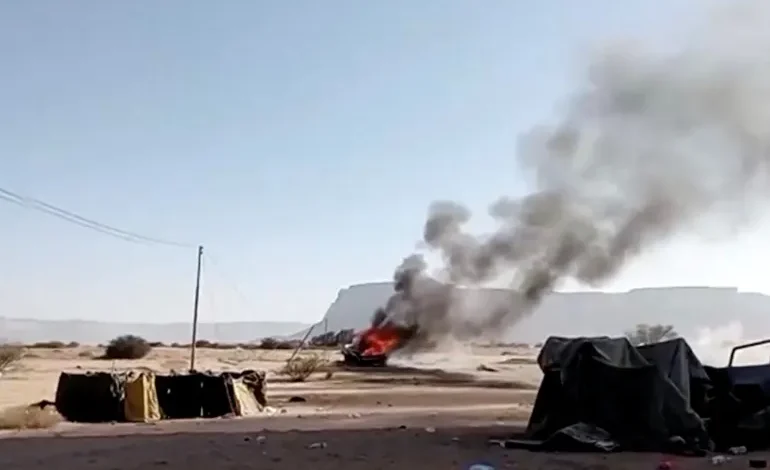
Yemen’s separatist Southern Transitional Council (STC) has welcomed an offer of dialogue from Saudi Arabia, days after Riyadh launched a series of deadly strikes against STC positions in southern Yemen.
The STC said in a statement on Saturday that the Saudi Arabian initiative was a “genuine opportunity for serious dialogue” that could safeguard “the aspirations of the southern people”.
The statement came just hours after the Saudi Ministry of Foreign Affairs called on southern Yemeni factions to participate in a forum in Riyadh to “formulate a comprehensive vision for fair solutions to the southern cause”.
Fighting in southern Yemen erupted in recent days after the STC launched a major offensive last month in the country’s Hadramout and al-Mahra provinces, which make up nearly half of Yemeni territory.
This prompted Saudi Arabia, which borders the Hadramout province, to launch strikes against the STC in border areas as part of what it said was an effort to protect its national security.
The recent escalation has spurred tensions between Saudi Arabia and its Gulf ally, the United Arab Emirates (UAE), both of which are part of a coalition that has backed Yemeni factions fighting the country’s Houthi rebels.
Riyadh accuses Abu Dhabi of arming the STC – a claim the UAE has denied, insisting that it supports Saudi Arabia’s security.
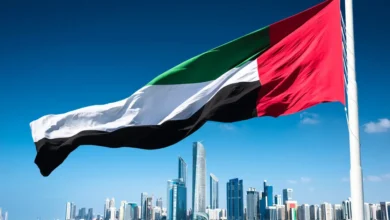
In a statement on Saturday, the UAE expressed its “deep concern” over the ongoing escalation and called on Yemenis “to prioritise wisdom and exercise restraint to ensure security and stability in the country”.
Saudi-backed government says in control of Mukalla
Meanwhile, Yemen’s Saudi-backed government said on Saturday that its forces had retaken control of Mukalla, the key eastern port and capital of Hadramout.
‘Proxy war within proxy war’
Amid mounting tensions between Saudi Arabia and the UAE, Abu Dhabi, late on Friday, announced the return of all Emirati armed forces personnel from Yemen, signalling a possible detente with Riyadh.
The UAE’s Ministry of Defence said the withdrawal was in accordance with its decision “to conclude the remaining missions of counterterrorism units”.
“The process has been conducted in a manner that ensured the safety of all personnel and carried out in coordination with all relevant partners,” the ministry said in a statement published on the Emirates News Agency website.
The STC had also unilaterally declared that it aims to hold a referendum on independence from northern Yemen in two years.
In an interview with Al Jazeera, former Yemeni diplomat and parliament member Ali Ahmed al-Amrani dismissed the idea of secession as a solution to the Yemeni crisis, however, saying it “does not reflect a national consensus”.
Hisham Al-Omeisy, a political and conflict analyst focusing on Yemen with the European Institute of Peace, also warned that the latest violence could mark the start of a dangerous new phase in the war, with rival forces seeking to reshape control on the ground.
“We’re going to be basically seeing a bloody conflict, at least in the coming few days, to draw a new map in the south,” Al-Omeisy told Al Jazeera.