Why is the US targeting Cuba’s global medical missions?
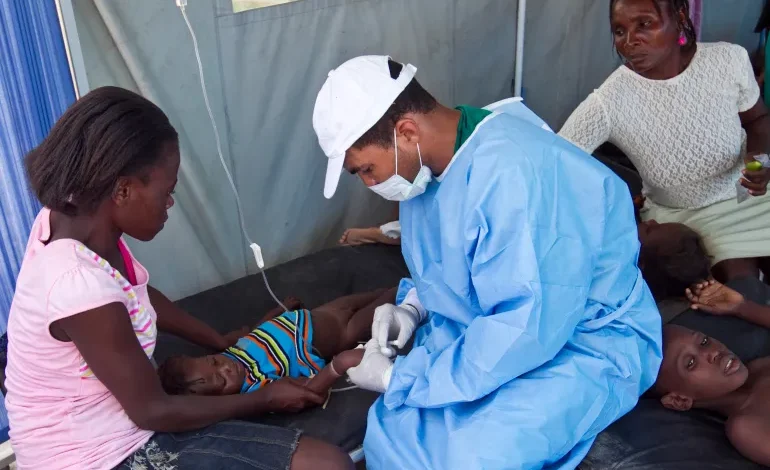
Guatemala announced last week that it will begin phasing out its three-decade-old programme, under which Cuban doctors work in its country to fill the gap in the country’s healthcare system.
Communist-ruled Cuba, under heavy United States sanctions, has been earning billions of dollars each year by leasing thousands of members of its “white coat army” to countries around the world, especially in Latin America. Havana has used its medical missions worldwide as a tool for international diplomacy.
Why is Guatemala phasing out Cuban doctors?
Guatemala’s health ministry said in a statement that it would begin a “gradual termination” over this year.
“The phased withdrawal of the Cuban Medical Brigade stems from an analysis of the mission’s completion of its cycles,” the statement, originally in Spanish, said on February 13.
The statement added that the Cuban medical mission was meant to support Guatemala through the 1998 Hurricane Mitch, which devastated parts of Central America, overwhelmed local hospitals and left rural communities with almost no access to medical care.
“The Ministry of Health is developing a phased strategic replacement plan that includes hiring national personnel, strengthening incentives for hard-to-reach positions, strategic redistribution of human resources, and specialized technical support,” the statement said.
The Cuban mission in Guatemala comprises 412 medical workers, including 333 doctors.
The Central American country’s decision comes amid growing pressure from the United States, which wants to stop Cuban doctors from serving abroad.
The move aims to starve Cuba of much-needed revenue as a major share of the incomes earned by doctors goes to government coffers. Cuba has been facing severe power, food and medical shortages amid an oil blockade imposed by the Trump administration since January.
Guatemala is just one country which benefits from Cuban medical missions.
Over the past decades, Cuba has sent medical missions around the world, from Latin America to Africa and beyond. It began sending these missions shortly after the 1959 Cuban revolution brought Fidel Castro to power.
Castro’s communist government reversed many of the pro-business policies of Fulgencio Batista, the dictator backed by the US. The revolution ruptured ties between the two countries, with the US spy agency CIA trying several times unsuccessfully to topple Castro’s government.
Guatemala has moved closer to the US since the election of Bernardo Arevalo as the president in January 2024. He has cooperated with US President Donald Trump’s administration. Last year, Guatemala agreed to ramp up the number of deportation flights it receives from the US. The US has deported thousands of immigrants without following due process to third countries such as Guatemala and El Salvador, which are headed by pro-Trump leaders.
In November 2018, shortly after Brazil elected Jair Bolsonaro as president, Cuba announced its withdrawal from the country’s Cuba “Mais Medicos” (More Doctors) programme. Bolsonaro, who is known as Brazil’s Trump, had criticised the medical mission, deeming it “slave labour”. Bolsonaro is serving a 27-year prison sentence after he was convicted in September 2025 of plotting to stage a coup in order to retain power after his defeat in the 2022 presidential election.
Why is the US targeting Cuba’s global medical missions?
The US has deemed Cuba’s foreign medical missions a form of “forced labour” and human trafficking, without any evidence, and has a goal of restricting the Cuban government’s access to its largest source of foreign income.
US efforts to curb Cuba’s medical missions are not new. Just last year, Washington imposed visa restrictions aimed at discouraging foreign governments from entering into medical cooperation agreements with Cuba.
In February last year, US Secretary of State Marco Rubio announced that the US would restrict visas targeting “forced labor linked to the Cuban labor export program”.