What is Iraq’s Jurf al-Sakhar and what is behind gov’t push to control it?
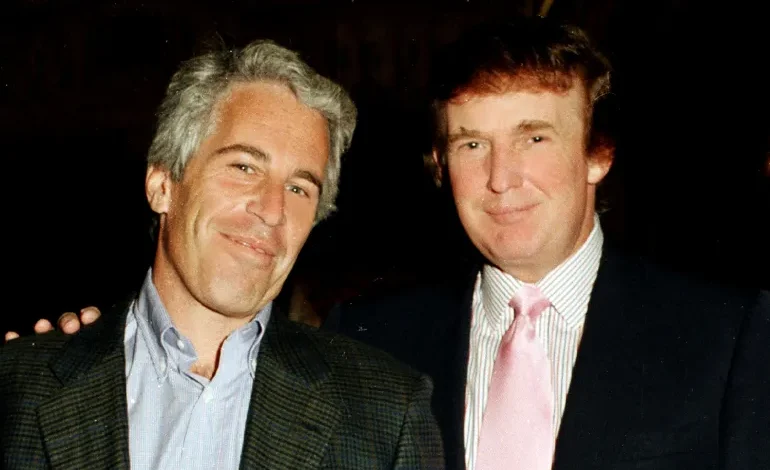
A leak of more than 15 million internal records from Deutsche Bank has shed new light on its dealings with United States President Donald Trump, the late sex offender Jeffrey Epstein and other powerful figures.
The Inside Deutsche Bank investigation, published on Tuesday by a consortium of international news outlets, has put Germany’s biggest bank back in the spotlight after years of trying to rebuild its reputation following its failures to prevent money laundering.
What was leaked and how did it happen?
Files containing millions of emails, minutes of meetings and internal reports were leaked by two whistleblowers whose identities and links to the institution have been withheld for their protection, according to Le Monde, one of the participating news outlets. The pair told the media groups they believed the bank was engaging in criminal activity and that releasing the documents was in the public interest.
Indian journalist Josy Joseph and South African journalist Khadija Sharife obtained the cache, which they then shared with more than 230 reporters from about 50 news organisations, including Der Spiegel, the Financial Times and The New York Times, in an internationally coordinated effort.
The material includes some nine million emails, as well as meeting minutes, due diligence reports and financial crime reports dating back to the early 2010s, many of them from the bank’s internal investigations.
The whistleblowers also passed the data to US prosecutors and financial crime authorities, and could be eligible for a reward if Washington prosecutes the bank based on their leaks. Le Monde said the whistleblowers were not paid by the journalists and placed no conditions on how the material was used.
Deutsche Bank said concerns raised by the investigation “date back many years” and that it had since strengthened its controls, adding that it did not expect any meaningful financial impact. The bank’s chairman reaffirmed the board’s support for chief executive Christian Sewing, who has run the institution since 2018.
“Deutsche Bank is a different bank today,” the bank said in a statement.
What do the leaks reveal about Trump?
The files identify more than $3m in transactions involving Trump-owned companies, including payments linked to suspected Russian and Azerbaijani money-laundering networks.
Deutsche Bank extended loans to Trump for years, even after a string of bankruptcies and defaults at his businesses from the early 1990s. By January 2021, it was his biggest creditor, with about $340m in loans to his company outstanding.
That month, following the January 6 assault on the US Capitol by protesters wanting to stop the certification of Democrat Joe Biden’s win in the presidential election, the bank ceased doing business with him, according to The New York Times. Trump had claimed the election had been rigged against him, of which there has never been any proof.
The Financial Times reported that the bank inadvertently sent a Trump tax document to another client’s accountant in 2017, during his first term in office, and never told him about the error. Asked about the disclosure during his visit to Manila for the ASEAN summit on Tuesday, Trump said the bank should not have released that information.
“They shouldn’t have done it. It’s illegal for them to do it,” he said. Deutsche Bank declined to comment on his remarks.
The leaked records also reveal special monitoring that the bank applied to Trump’s accounts, and its handling of them has drawn scrutiny before.
In 2019, The New York Times reported that Deutsche Bank had failed to alert US authorities to suspicious transactions linked to Trump. The bank said at the time that none of its investigators had been prevented from escalating such concerns.
What do the leaks reveal about Epstein?
The leaked files list about $582m in transactions linked to Epstein, which were flagged internally as suspicious. That is more than double the amount previously identified as being overlooked or not reported by banks during US Senate investigations. When the Senate findings were released in August, a Deutsche Bank spokesperson said the bank regretted its “historical connection” with Epstein.
Epstein, who was a US financier, became a Deutsche Bank client in 2013, five years after pleading guilty in Florida to procuring a minor for prostitution, and remained a client until 2018. He died in a New York jail in 2019 while awaiting trial on sex trafficking charges.