West Asian Countries Seek Regional Security to Overcome America’s Failure
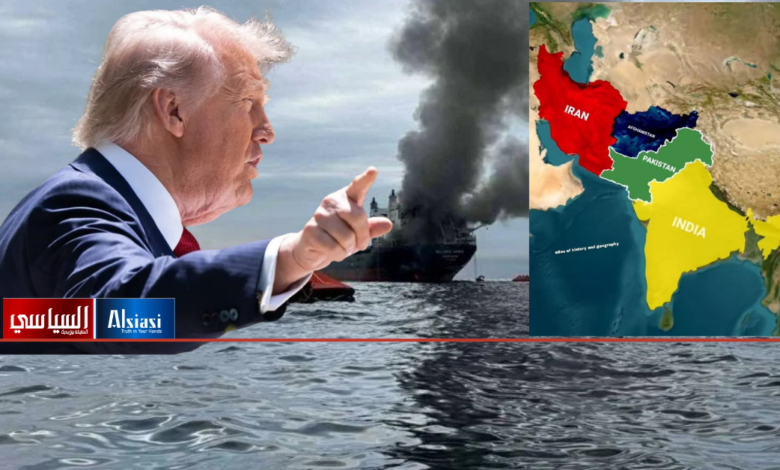
It appears that the concerns of West Asian countries are growing louder and echoing across the world as the war involving Iran, the United States, and Israel enters its second month. These concerns have coincided with the frustration of Gulf states, which have been sidelined from participating in any decisions on war or negotiations made by Washington. This is likely to push them toward seeking a solution that preserves their voice and regional standing.
In addition to being marginalized, the Gulf states have paid a heavy economic and political price for being drawn into the U.S.-Israeli war against Iran. They have also been perceived as being aligned with Israel against a Muslim nation. Meanwhile, the countries of West Asia find themselves uncertain about their regional security future, prompting increasing calls to redefine their strategic approach.
India reacted with outrage after spending months strengthening its ties with U.S. President Donald Trump and Israel, only to see Washington give its rival, Islamabad, the green light to play the role of mediator in ending the war. This development grants Pakistan greater regional influence and offers it an opportunity to reassert its Islamic identity in West Asia after years of internal security problems and economic crises had weakened its position. In addition to its mediation efforts and attempts to improve its international image, Pakistan is reportedly participating in a new regional alliance that includes Turkey, Saudi Arabia, Qatar, and Egypt, based on Islamic regional cooperation.
Turning to the Gulf and America’s close regional partners, these countries—much like India—are experiencing a sense of disappointment. This is not the first setback in their relationship with Washington. As recently as 2019, during his first term in office, President Trump remained largely passive following Houthi attacks on Saudi oil facilities. In his second term, he is accused of continuing the same approach by leaving Gulf airspace vulnerable to missile attacks and Iranian strikes after transferring air defense systems and interceptors to Israel to strengthen its defenses against Iranian missiles.
Beyond the economic, political, and security losses suffered by the Arab states, suggestions from the White House that Gulf countries should bear the financial costs of the war have sparked widespread debate. The conflict was initiated by the United States and Israel, while Arab countries worked hard to prevent it from breaking out, fully aware that they would be among the first to suffer its consequences. This raises further questions about the role of the United States in regional security and its ability to manage international affairs.
West Asia’s security landscape is expected to undergo profound changes once the war comes to an end. Iran has established itself as a key regional player, particularly in influencing the flow of oil and natural gas supplies. This position is likely to diminish American influence, especially regarding India, one of the world’s largest importers of crude oil. Meanwhile, the Gulf states continue searching for a security framework that ensures the uninterrupted flow of their energy resources to global markets while restoring their financial, economic, and political balance.
The United States is no longer the dependable pillar upon which its allies and long-standing partners have relied. It has proven to be, as the Arabic proverb says, “a leaning wall”—a structure on the verge of collapse, if not already fallen. On this basis, the Gulf and Arab states now have an opportunity to strengthen their unity in the fields of security, defense, politics, and finance, enabling them to rely more on themselves and assert their own positions in dealing with the United States. These countries possess the resources and expertise necessary to achieve this objective through cooperation with other influential global powers, foremost among them China and Russia, which could offer economic and military partnerships based on mutual respect and shared interests.