The animals saved in Greece’s ancient accidental ‘arks’
Shielded from development and agriculture, many archaeological sites from ancient Greece have now become inadvertent safe harbours for plants and animals.
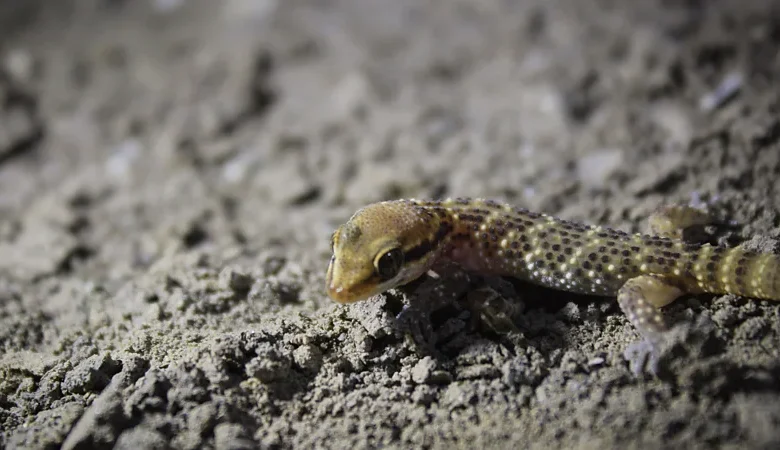
In a 1,500-year-old pre-Incan pyramid surrounded by the bustling streets of Lima, Peru, small grey-brown geckos hide out in crannies, snacking on spiders and insects.
This lizard, the Lima leaf-toed gecko, is native to the Peruvian capital’s coastal desert setting, says Alejandra (Ale) Arana. But now the arid region is dominated by modern buildings and busy roads. With its habitat greatly reduced, the gecko population has dwindled to the point of becoming critically endangered.
Arana notes that the lizards live almost exclusively around huacas – pre-Hispanic sacred monuments scattered around Lima – such as the pyramid Huaca Pucllana. These archaeological sites are some of the only places left that feature the native desert ecosystem of this area of Peru.
“They are the only sort of natural landscape that we can find in the area,” says Arana, who first began studying the geckos as an undergraduate at the Universidad Nacional Mayor de San Marcos in Lima and is now a PhD student at the University of Edinburgh in Scotland.
The geckos aren’t the only species finding refuge amid ruins. In Italy, rare orchids flower around an Etruscan necropolis. In the ancient Greek religious centre of Delphi, researchers found what they believe is a new species of snail – just 2mm (0.08in) long – suspected to live only in that area. In recent years, two new species of lizard were identified in Machu Picchu that may have once had a wider range and today enjoy the relatively undisturbed conditions of the ancient sanctuary.
In some cases, these plants and animals have been confirmed to be thriving near sites of ancient myths and legends – stories which placed them in these very locations, from Odysseus’ oak tree to Socrates’ hemlock, suggesting an extraordinary connection over the millennia.
Around the world, archaeological sites have often been protected for decades, even centuries, to preserve their cultural value. Shielded from development and agriculture, many have now become inadvertent safe harbours for plants and animals. Now, as biodiversity declines around the globe, new research is showing just how deeply nature is integrated in cultural sites – and how preserving these extraordinary historical places can help protect rare species too.
“It’s a functional part of the archaeological landscape,” says Panayiotis Pafilis, a professor in animal diversity at National and Kapodistrian University of Athens, who led a recent study of the wildlife found at 20 Greek cultural heritage sites. “The key word here: it’s landscape, not just an archaeological site or an ecosystem.”
Fractured habitats
Human activity has “severely altered” an estimated 75% of the world’s land area, seriously impacting plant and animal life, according to a 2025 UN report. Vertebrate populations have declined by 73% since 1970, while almost two in five plant species face the threat of extinction.
These trends are also playing out at the local level. In Greece, where more than 21% of species are under threat, changes in land use are among the biggest pressures on wildlife, according to Panagiota Maragou, conservation director for WWF Greece. Habitat is increasingly fragmented. Climate change is an additional threat, increasing the intensity of wildfires, floods and other phenomena.
Species and habitats are all affected differently, but there is a common factor to these pressures. “Most of them, if not all of them, are linked to human activities,” says Maragou.
Archaeological sites, though, have often stayed relatively unaltered as landscapes changed around them, Maragou observes. Site managers tend to seek to maintain a natural setting, making them hospitable for many kinds of wildlife. And many Greek archaeological sites have been preserved since the 19th Century.
“They were designed to protect antiquities, of course, not biodiversity. But for almost two centuries, it’s a well-protected place,” says Pafilis. “It’s a more or less stable environment.”
Arks of biodiversity
To better understand the connection between historical sites and nature, in 2022 the Greek government launched the Biodiversity in Archaeological Sites research project. Over two years, 49 specialists in all kinds of plants and animals surveyed 20 archaeological sites that spanned Greek history.
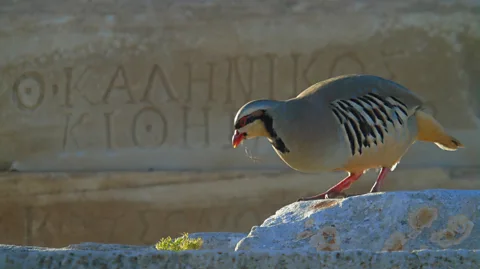
Across all these sites, researchers confirmed 4,403 species. That amounts to about 11% of known biodiversity in Greece, concentrated in just 0.08% of the country’s total territory. “That means that if you protect for antiquities or for biodiversity,” Pafilis says, “even these small areas in action in real life, they work as biodiversity refuge centres.”
For the biologists involved, collecting data in the archaeological sites was both exciting and delicate. For Pafilis, fieldwork typically involves flipping over lots of rocks to find lizards. Entomologists, meanwhile, often dig holes to deploy pitfall traps, buried containers to capture insects and other invertebrates. “You can’t go in the Acropolis with your pickaxe and start digging,” Pafilis says.
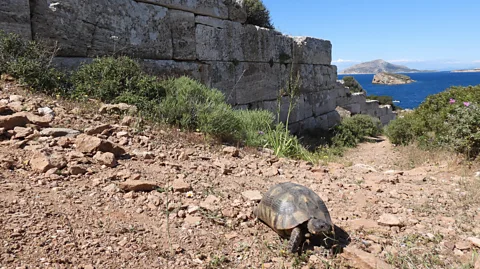
A key finding, he notes, was that archaeological sites tended to have denser animal populations than surrounding areas. In Mystras, a 13th-Century Byzantine city, researchers found six of seven lizards endemic to the Peloponnesian peninsula – a higher occurrence than in a 1km (0.6 mile)-wide zone they also studied around the site.
Plants face more hurdles than animals, according to botanist Theophanis Constantinidis, also at the National and Kapodistrian University of Athens and a lead researcher in the study. Managers often cut back vegetation around ruins. Yet, he says, the abundance of species shows the value of these sites – and how strategies like selected cutting and reducing herbicide would support plant life, he says.
The research also points to how humans have shaped these environments. In Nicopolis, a Roman site in western Greece, for example, Constantinidis found a sample he thinks could be a type of grass from central Asia and Anatolia never previously identified in Greece. While he’s still doing research to confirm, he theorises the plant may have migrated with humans during the Roman or Byzantine period – or may have travelled more recently, potentially with modern tourists.
In Athens, the project also debunked a long-held myth about a flowering plant believed to grow only around the Acropolis. Careful study found that the plant is actually a variation of a common shrub. In the north-western site of Dodona, where mythology holds that Odysseus heard the voice of Zeus through a sacred oak tree, the researchers found many centuries-old oaks. Constantinidis says these could indicate a continuity of oaks in the area going back to ancient times. “Oak trees are still within the archaeological place, still alive.”
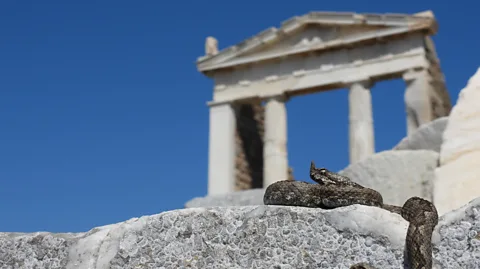
Other specimens confirmed connections between modern residents of sites and the past. Around several sites, Constantinidis foundpoison hemlock – the plant used to kill the philosopher Socrates. In Epidaurus, a Peloponnesian site that houses a shrine to Asklepios, the god of medicine, researchers documented Aesculpian snakes; the non-venomous serpent is commonly depicted entwined around a rod in symbols on ambulances and other modern health care references. At Delphi, the mythical meeting point of two eagles Zeus released to find the centre of the world, researchers spotted the short-toed snake eagle.
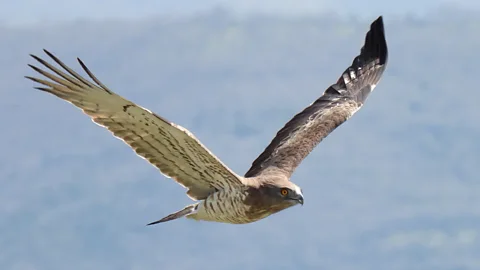
“We are the evolution of people that lived in this area some centuries ago,” Constantinidis says. “The same happens with the plants and animals. There is a continuity.”
Ancient artworks form another connection between historic wildlife and the present day. In frescos on the 4th and 5th Century BC Etruscan tombs of Tarquinia, Caneva and fellow researchers identified myrtle (Myrtus communis), a plant associated with the god Dionysus, and laurel (Laurus nobilis), a popular ornamental in ancient Rome and Greece connected with Apollo. Both plants can still be found growing in the surrounding landscape. Meanwhile, mullein (Verbascum), a genus of flowering plants, grows commonly around ancient sites today and has been identified in everything from the architecture of the Parthenon in Athens to Renaissance artworks by Caravaggio and Bernini.
Greek minister of culture Lina Mendoni, whose ministry proposed the project and sponsored it alongside the Ministry of Environment and Energy, and the Natural Environment and Climate Change Agency, sees the results as showing the sites as not just historical but cultural landscapes where humanity and nature are interconnected.
“Archaeological sites are being transformed into arks for the rescue and protection of biodiversity,” Mendoni says.
Studies in other places echo the Greek findings. Over the last two years, Italian researchers collaborated with more than 30 specialists around the Mediterranean basin, tallying 3,337 different plant taxa across 69 different archaeological sites, according to preliminary research. Giulia Caneva, a professor of environmental and applied botany at Roma Tre University in Rome and a leader of the project, says the quantity of specimens is notable, but she also points to the quality: at least 500 of the species are considered at risk.
In some cases, archaeological sites provide the conditions certain species need. Peruvian biologist Luis Mamani, a Universidad de Concepción PhD student and Half-Earth Scholar with the E O Wilson Biodiversity Foundation, discovered two new species of lizard that live only in Machu Picchu and the surrounding buffer zone. Not only are they adapted to the unique conditions of the local ecosystem, Mamani says, they benefit from the restricted activities around the site.
“If the historic sanctuary of Machu Picchu had not been declared a protected natural area, much of the surrounding biodiversity would probably have been lost due to urban expansion, land-use change, and other factors,” he says.
Still, Mamani sees significant threats to biodiversity within the sites too, particularly related to high tourism rates. He’d like to do more research into how different factors around the site are impacting biodiversity – such as the railroad or the road from the nearby town of Aguas Calientes.
Combining forces
One major challenge, researchers say, is that biology and archaeology tend to function as two separate fields.
“We don’t have shared languages between two sectors,” says Zohreh Hosseini, a researcher at Roma Tre University working with Caneva, who studies plant biodiversity in culturally significant sites. That communication, she says, is necessary to understand different values and manage sites to both protect ruins and benefit biodiversity.
Maragou, of WWF Greece, who was not involved with the Greek study, says she finds the collaboration involved in the project promising. The results, she adds, show how archaeological sites can play a part in broader conservation pushes, such as the aim to conserve 30% of the world’s ecosystems by 2030.
“If they add into their management also biodiversity targets, they can be a very great addition to this goal of having more protected areas,” she says.
The Greek study is already leading to changes around historical sites, according to Pafilis. Soon, five major (though yet to be named) archaeological attractions will have signs incorporating information about ecology alongside history. And, a second research phase will survey 36 additional sites, and bring in archaeologists to examine depictions of nature in further historic artefacts and sources.
In Lima, Arana, who researched the geckos, says her project has shown how improving connections between archaeologists and biologists can help raise basic awareness of the wildlife living amidst ancient remains.