Tehran rejects third-party intervention for Strait of Hormuz
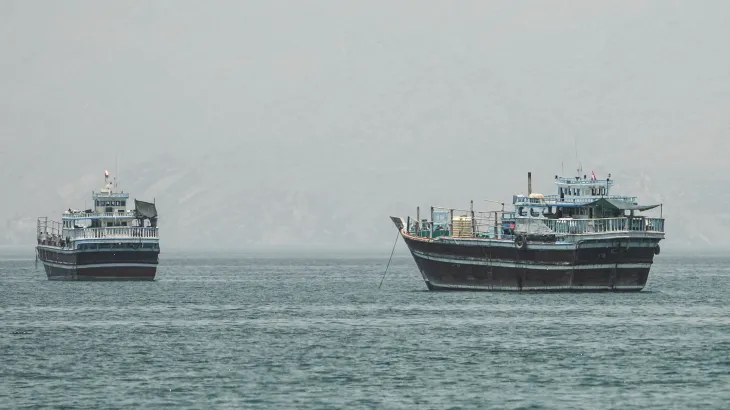
Iran’s Foreign Ministry spokesman Esmaeil Baghaei says that “clearance of mines in the Strait of Hormuz is regulated by a relevant memorandum of understanding, and Tehran sees no need for third-party intervention”.
Baghaei adds that Iranian, Qatari officials to meet in Doha to discuss MoU deal with US and frozen Iranian funds.
Unfreezing Iranian assets is vital for Tehran and one of the main sticking points of the memorandum of understanding (MoU) signed with the US.
Iranians are saying that is the condition for them to move ahead in talks on the [peace] deal.
They got what they wanted, and according to what they say, they got an article about it in the MoU. That is Article 11.
Yesterday, the Iranian president said that the Americans agreed to unfreeze $6bn out of the $12bn that are kept in Qatar.
Qatar’s PM reaffirms mediation efforts in meeting with Witkoff and Kushner
Qatar’s PM met US envoy Witkoff and Trump’s son-in-law Kushner in Doha to discuss the ongoing talks between Tehran and Washington.
In a statement, Qatar’s Foreign Ministry said the PM reaffirmed the country’s mediation efforts during the meeting and its support for all negotiations stemming from the MoU.
“The meeting also addressed the latest regional developments, particularly the ceasefire in the fraternal Republic of Lebanon.”
In a separate statement, the ministry said “the Iranian and American technical delegations remain in session, noting that these meetings are taking place in different contexts and with the participation of mediators to ensure their continuity, whether in Doha or elsewhere”.
The ministry added that there are “currently no high-level meetings between the Iranian and American sides” under way.
Charging toll on Strait of Hormuz ‘not internationally lawful’
The Iranians want to make the point that they will not give up on the idea that they, together with Oman, are now going to charge fees or possibly even tolls for administering passage, says Marc Weller, Director of the Global Governance and Security Centre within the International Law Programme at Chatham House.
Israeli security officials say no timelines for withdrawal from Lebanon
Israeli officials say the planned withdrawal of Israeli forces from two villages in southern Lebanon will be delayed pending agreement on an US oversight mechanism, Israel’s public broadcaster Kan News is reporting.
“There are currently no timelines. The withdrawal will take place but it must be done properly,” Israeli security officials told Kan News, adding that the pullback would only proceed once clear criteria are set requiring the Lebanese army to act immediately against Hezbollah fighters and infrastructure.
Vance says oil traffic at the Strait of Hormuz ‘reached pre-war height’
US Vice-President JD Vance says oil traffic at the Strait of Hormuz has “reached its pre-war height”.
“The Strait is open in the sense that we’re seeing more oil come out,” Vance said.
“Some days there’s actually more oil coming out of the Strait than before the war even started, so there’s this element that the world economy is coming back into gear. That will take time, but we’ve already seen prices go way down.
“If you harmonise the Lebanon-Israel peace deal with the MoU signed between the US and Iran, what both of those documents fundamentally say is that Lebanon’s territorial integrity will be respected,” Vance added.
“You are well aware that problems for drivers and for businesses persist,” he said, according to Russian news agencies. “Unfortunately, there are still queues at petrol stations too.”
“We have to reduce to a minimum the impact of terrorist attacks on our civilian targets and infrastructure,” he said, adding that the situation required “systemic measures that match the scale of current challenges”.
Ukraine has stepped up attacks on Russian energy facilities in recent months, hitting Russia’s crude oil and refined products sales, its main source of export income and the main source of funding for its war efforts.
Norsi, Russia’s fourth-largest oil refinery and the second-largest producer of petrol, suspended operations last week following a Ukrainian drone attack. The facility is located near Kstovo in the Nizhny Novgorod region, 450 kilometres (280 miles) east of Moscow.
Ukraine’s military said it also struck Russia’s Orenburg gas processing plant, which has a capacity of 45 billion cubic metres of natural gas per year. It is located in the southern Urals near Russia’s border with Kazakhstan, more than 1,200km (750 miles) beyond the front lines in Ukraine