Research shows older women are winning more Oscars – here’s why
Traditionally, younger actresses have been favoured by the Oscars – but as statistics highlight, that’s changing. Is it a sign that female ageism in the film industry is on its way out?
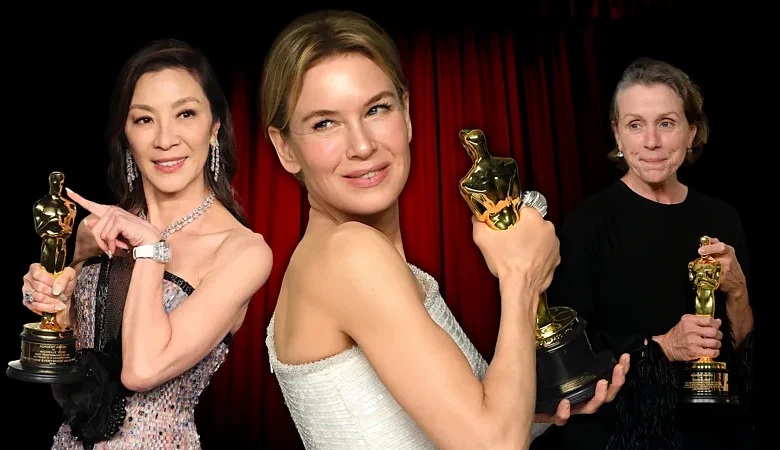
When Michelle Yeoh collected her best actress Oscar for Everything Everywhere All at Once in 2023, aged 60, she declared, “Ladies, don’t let anybody tell you [that] you are ever past your prime. Never give up.”
That Yeoh felt the need to say that publicly reflects her position as one of only seven women who’ve been over the age of 60 when they’ve won the best actress trophy. Only one winner, Jessica Tandy, has been over 80; only one other, Katharine Hepburn, was over 70.
The Academy Awards voters have traditionally favoured women in their 20s and 30s, with a clear discrepancy in winners’ ages between the best actor and best actress category. Adrien Brody remains the only best actor winner under 30, while 32 actresses have won in their 20s.
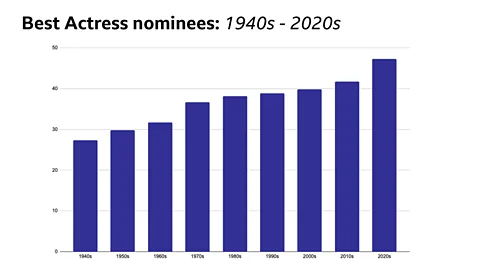
But times have been, slowly but surely, changing. The average age of best actress nominees has been consistently increasing decade by decade. So whereas the average age of a best actress nominee was 27 in the 1940s, it rose to 37 by the 1970s and 40 by the 2000s, while in the 2020s so far, it is 47. Alongside Yeoh, recent winners include Renée Zellweger (50), Frances McDormand (63) and Jessica Chastain (45), while recent nominees also include Annette Bening (65), Brazil’s Fernanda Torres (59), and Demi Moore (62) – even if, as last year’s favourite for the prize, the latter was beaten to it by 25-year-old Mikey Madison for Anora.
That a best actress nominee was averagely aged 27 in the 1940s reflects an industry that prioritised youthful women. In her 2007 book The Star Machine, writer and film historian Professor Jeanine Basinger says of the industry: “It was tough for a woman to last… Glamorous women were a fragile product… the camera was a cruel observer, and it saw age… If a female star could last for a decade, she really paid off. If she could last for two decades, she was a phenomenal success. If she lasted longer than that, she was a miracle, and today we can call her a legend.”
I used to joke that you had to be named Judi, Maggie, or Meryl to work as an older woman in Hollywood. And I just don’t think that that’s the case anymore – Stacy L Smith
The stars of that era included Oscar winners such as Bette Davis, Ingrid Bergman and Vivien Leigh, who all won the best actress trophy in their 20s. (Perhaps the “miracle” Basinger talks about was Katharine Hepburn, who holds the record for most best actress trophies and won three of them over the age of 60.)
The factors creating the shift
Dr Stacy L Smith, the founder of USC’s Annenberg Inclusion Initiative, a global think tank studying issues of inequality in entertainment, said that now, when it comes to “prestige” films – the kind that attract awards interest – a woman has a longer career span.
“When we started this work in 2007, I would always joke about that you had to be named Judi [Dench] Maggie [Smith] or Meryl [Streep] to work as an older woman in Hollywood. And I just don’t think that that’s the case anymore,” she says. “You have a greater range of roles available within films of this type and there’s less bias or less focus on younger women carrying the story.”
Also she points out that “these days the Academy is recognising films that typically make less money – they’re more artsy, art-house driven content. And [within those] there’s a real appreciation for the craft of an actor.”
Elizabeth Kaiden, the co-founder of The Writers Lab, an organisation supporting female screenwriters over the age of 40, tells the BBC that veterans actresses with decades of experience “are now having films built for them” – something that was rare until recently.
“It’s been proved star actresses can come and have long careers,” she says. “These are the Meryl Streeps, the Helen Mirrens, the Nicole Kidmans. They’re able to attract writers, directors and producers who can see their value when it comes to casting a mature star. We are increasingly seeing films about complex women with some life experience, and that skews the [age of best actress winners] north of where it used to be.”
More women are getting into the position where they can choose the material they want and then make it – Elizabeth Kaiden
It’s also been nearly a decade since the #OscarsSoWhite and #Metoo campaigns saw demands for greater equality and diversity within the Academy. Some of those efforts bore fruit: since 2021, two female directors, Chloé Zhao and Jane Campion, have won Oscars – although they were still only the second and third women to ever do so – while six have been nominated.
Many of those female writer-directors choose female protagonists: in 2025, 47-year-old Coralie Fargeat was nominated for a best director Oscar for The Substance, with Demi Moore in the lead role. And in 2024, 45-year-old French director Justine Triet won an Oscar for best screenplay for Anatomy of a Fall as well as being nominated for best director. Her film starred 45-year-old German actress Sandra Hüller, another best actress nominee that year.
“I think more women are getting into the position where they can choose the material they want and then make it,” Kaiden says. “Jessie Buckley’s Oscar-nominated role this year has come from Hamnet, with both the book and the screenplay written by women, and Chloé Zhao at the helm of the film. Zhao’s previous film Nomadland starred Frances McDormand who was in her 60s. That film probably would never have been made 50 years ago, and nor would Chloé Zhao have ever had an opportunity to make it.”
“The position of the female director is really, really critical to this change,” Smith attests. “Even back in 2010, we looked at what happened to a production if you have a woman director behind the camera, and we found that if that was the case, you had more girls and women as leading or speaking characters and you had more women over the age of 40 on screen.”
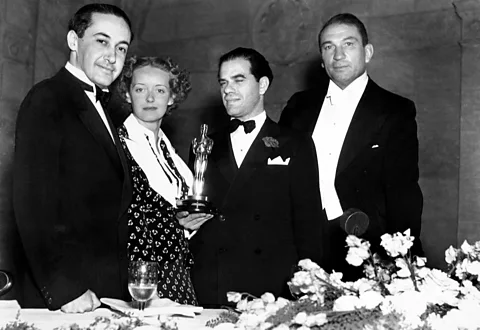
Another factor in the Oscars’ increasing celebration of older actresses may be the fact that the Academy has also swelled its ranks to include more international voters, which has in turn led an increase in world cinema titles gaining nominations. This may have shaken things up, Smith says, because while in the US, “there is still a large pro-youth bias”, that is less the case in other areas of the world: “The cultural concerns around this topic [of ageing] vary from country to country,” as she puts it.
Walter Salles’s I’m Still Here and Jacques Audiard’s Emilia Pérez both had mature female leads – and both 59-year-old Fernanda Torres and 52-year-old trans actress Karla Sofia Gascón were nominated in the best actress category in 2025. In 2017, French actress Isabelle Huppert was nominated at the age of 63 for her role as a rape survivor in Paul Verhoeven’s French-language drama Elle.
The progress still to be made
In fact, though, the increasing average age of best actress nominees at the Oscars is outpacing the rest of Hollywood. USC Annenberg has researched Hollywood’s 100 top highest-grossing films each year since 2007; in unpublished data given , the average age of a female lead or co-lead in these films in 2025 was 34 years old. The average for her male equivalent in the same year was 42 years. And the average age in that category for a woman has never been over the age of 36 since the study began – recalling the double standards another Oscar nominee, Maggie Gyllenhaal, went public with in 2015 when she told of how, aged 37, she was considered “too old” to play opposite a 55-year-old male actor.