Maths behind Hormuz toll: Is paying Iran for transit cheaper than blockade?
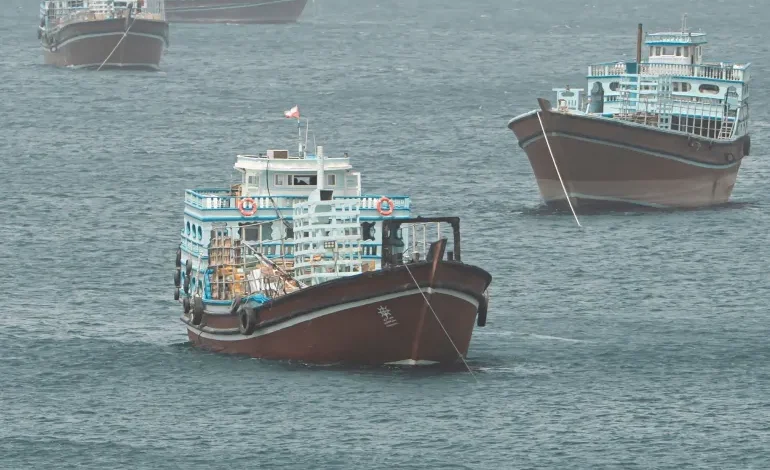
Eleven weeks after the start of the Iran war, the Strait of Hormuz has remained closed to naval traffic, bleeding the global economy far beyond the Gulf.
Iran’s Islamic Revolutionary Guard Corps (IRGC) maintains an iron grip over the narrow, strategic waterway, while a corresponding United States naval blockade on Iranian ports has failed to reopen it.
Before the war began, between 120 and 140 ships travelled through the strait each day, about half of them oil tankers carrying some 20 million barrels of oil between them.
Now, only a few vessels whose owners have negotiated with the IRGC are permitted to pass.
On Wednesday, Iran said it coordinated the transit of 26 vessels through the Strait of Hormuz in 24 hours, two days after announcing the formation of the Persian Gulf Strait Authority (PGSA), a new body to provide “real-time updates” on operations in the strait.
Since the announcement of a temporary ceasefire between the US and Iran in April, Iran has been working on formalising a mechanism to charge a transit fee from ships crossing the critical chokepoint, through which 20 percent of the world’s oil and liquefied natural gas (LNG) are shipped during peacetime.
Tehran has reportedly already charged fees as high as $2m per ship for transit since the war started.
Even though countries opposing Tehran say this is illegal, it may still be less expensive than the overall cost of the closure of the strait each day.
So, is paying Iran cheaper than remaining stranded in the sea? We explore the maths behind tolling the Strait of Hormuz.
What is the closure of the Strait of Hormuz costing?
Nearly one-fifth of global oil and LNG exports were shipped by Gulf producers through the Strait of Hormuz before the US and Israel bombed Iran on February 28, triggering the Iranian closure of the waterway. The strait is the only waterway linking Gulf producers to the open ocean – there is no other route through which they can ship exports.
About 20.3 million barrels per day of oil passed through the Strait of Hormuz in peacetime – nearly 27 percent of global maritime oil trade. The lion’s share of that crude went to Asian markets.
Global LNG trade has been similarly hard hit.
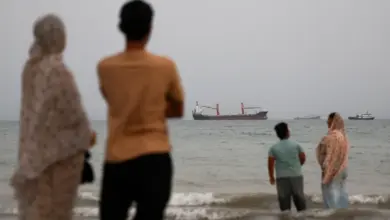
On the day before the war broke out, Brent crude – the global benchmark for oil prices – closed at $72.48 per barrel. After Iran closed the waterway on March 4 and began attacks on vessels attempting to sail through, traffic came to a standstill, stranding about 2,000 ships on either side of the strait.
In terms of lost oil revenues, this amounts to $114.8bn of losses per day. About 10 billion cubic feet of LNG per day also used to pass through the strait, worth a further $7.8bn.
Since the blockade, less than 4 percent of peacetime traffic has passed through the Strait of Hormuz, including those ships that have secured authorisation from Iranian authorities. This does not include the movement of “shadow” fleets, when vessels illegally turn off tracking devices.
“From an economic perspective, a negotiated transit arrangement [with Iran] now makes more sense than continued closure,” said Mohammad Reza Farzanegan, an economist at Germany’s Marburg University. “The geography gives Iran significant leverage, and the recent crisis has shown that Tehran can use control over the Strait of Hormuz in practice.”
Iran is unlikely to give up this leverage without a political or economic arrangement that recognises its strategic position, added Farzanegan.
The economic impact of blockading the Strait of Hormuz also goes beyond traffic flow. The disruption in the flow of oil, gas, fertilisers and maritime traffic in general has left several countries reeling under a rising cost of living.