‘Lebanon’s moment has come,’ US envoy to Beirut says
Lebanon is facing a rare opportunity for “genuine change” and must seize it by restoring full state sovereignty, including ensuring that Hezbollah and other armed groups can no longer make decisions of war and peace outside government authority, the top US diplomat in Beirut said.
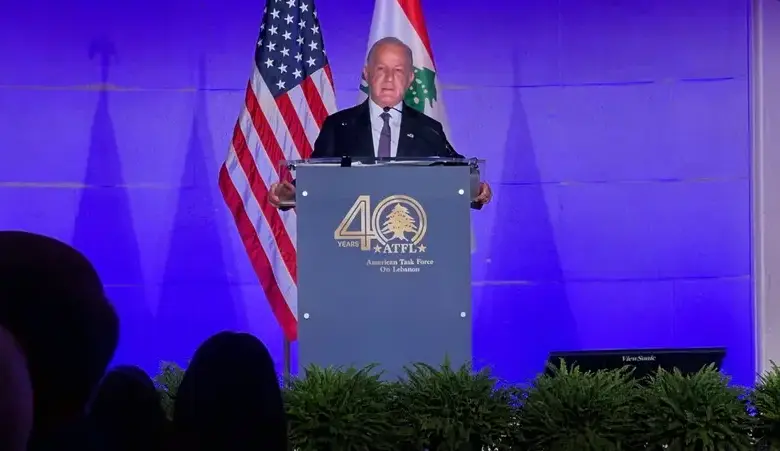
US Ambassador to Lebanon Michel Issa and Lebanese Ambassador to Washington Nada Hamadeh Moawad offered parallel visions of a country seeking to emerge from decades of conflict and foreign influence, while stressing that stronger state institutions would be essential to lasting change.
“Lebanon’s moment has come, and this time we must not let it pass,” Issa said.
Speaking at an event hosted by the American Task Force on Lebanon, a nonprofit organization focused on strengthening US-Lebanon ties, Issa was explicit about Hezbollah, saying Lebanon could not be sovereign “in theory while remaining divided in practice.”
“No political party or armed organization can be permitted to make decisions of war or peace outside the authority of the Lebanese state,” he said, adding that the Lebanese Armed Forces and legitimate state institutions must become the sole guarantors of security across the country.
Issa said Iranian influence and Hezbollah’s weapons had weakened the Lebanese state, paralyzed its institutions and contributed to the country’s isolation and economic collapse. Moving Lebanon away from Iranian influence, he stressed, was not directed against any Lebanese community but was necessary to establish “one country under one flag,” protected by one national army.
Moawad echoed the broader theme of sovereignty, saying Lebanon was beginning to reclaim control over its own decisions after decades in which foreign powers played an outsized role in determining the country’s fate.
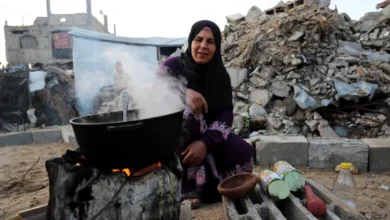
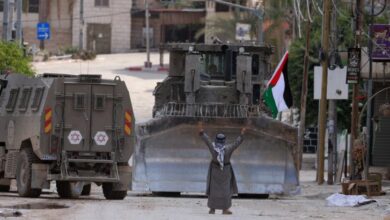
She also acknowledged the enormous human cost of the ongoing conflict, including death, destruction and displacement, saying Lebanon had too often become a battlefield for the ambitions and rivalries of others.
“It is hard to stand before you today as the ambassador of a country enduring war,” Moawad said. “It is hard to wake up every morning to images of death and destruction, and it’s hard to carry the voices of the innocent lives we’ve lost into the corridors of Washington, DC.”
She also spoke of the difficulty of “sitting at a negotiating table and fighting for what is ours,” while often being the only woman at negotiating tables.
Despite the toll of the conflict, Moawad said something fundamental had changed.
“For the first time in 40 years, Lebanon is making its own choices,” she said. “We are shaping our own policies. We are determining our own future, free from foreign domination.”
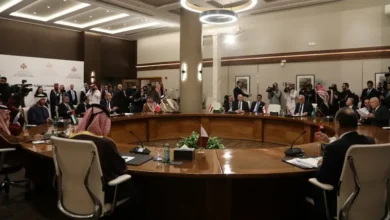
Both ambassadors pointed to negotiations between Lebanon and Israel as evidence of a changing political landscape. Issa said talks had advanced further in recent months than many had expected, although a final agreement remained elusive.
“Our objective is clear: a sovereign Lebanon, secure within its borders, and an Israel that is secure from attack across its borders,” Issa said. “These are not competing goals.”
For Moawad, the opportunity facing Lebanon also comes with a responsibility to rebuild trust in state institutions and ensure the country does not fall back into the same cycle of conflict. “Freedom comes with responsibility,” she said.
“We know that sovereignty is not simply something we declare. It’s something we must build, protect and practice every day,” she said, warning that the alternative was “to condemn another generation of Lebanese to the same cycle of conflict, displacement and loss.”
“We cannot build [Lebanon] divided,” Moawad said. “That is why, especially now, we must stand together, one people in all our diversity, behind one state, one government, one army and one Lebanon.”