‘It’s always been bleak – but it’s got even darker’: How Industry became the most nightmarish show on TV

The HBO banking drama has just kicked off its fourth series, amid serious hype and with a starrier cast than ever. It’s also taking its story – and characters – to chilling new places.
Back in 2020, a new drama about a group of postgraduate bankers trying to make their way in London’s high-finance scene first aired on TV. At the time, the biggest story around the joint HBO and BBC series Industry was that the first episode was directed by Girls creator Lena Dunham.
Initially, the show failed to make that much of a splash on either side of the pond, earning a miniscule viewership. But, six years on and with the fourth series kicking off last weekend, the outlook is very different: ratings improved by 40% between seasons two and three, and it was moved to a plum Sunday night slot on HBO, while its stars are gracing magazine covers. Certainly, no-one could have predicted back then just how buzzy it would become – or just how macabre.
From the beginning, Industry always offered the superficial glamour of 20-somethings partying and hooking up in fancy locations, but that was curdled by the toxic workplace culture they found themselves in, in which horrific behaviour – bullying, misogyny, harassment and sexual assault, amongst other things – seemed to be completely normalised.
Now comes season four, more-anticipated than ever and featuring some starry cast additions including The Handmaid’s Tale’s Max Minghella and Stranger Things’ Charlie Heaton. And from its opening episode, the tone is pitch black. Within minutes, a one-night-stand had revealed itself to be something more sinister, placing a young woman (Mad Men’s Kiernan Shipka) in a vulnerable position; while later on, in a scene played for grim laughs, anti-heroine Harper Stern (Myha’la) berates an investor with the line “If you’re gonna have a stroke, please do it outside my office” – before he does indeed have a stroke in front of her, keeling over and smashing thorugh her glass desk.
What to be prepared for
And Industry fans have been told to buckle up: it’s going to get much, much more traumatic as the later episodes unfold. Vulture’s Roxana Hadidi has said: “Industry is operating at optimal bleakness… the cynicism is so high that it’s practically in orbit”. Belen Edwards at Mashable has described the new season as running on “nightmarish cycles” with “stomach-churning downfalls”, while the Wall Street Journal has likened it to “a vampire story”. As the closing credits to the eight-part series roll in March, viewers might well be asking if this is indeed the darkest show on TV right now.
“Industry has always been bleak,” says Alison Herman, TV critic at Variety. “But as it’s refined and expanded, it’s certainly accurate to say it’s gotten darker over time.”
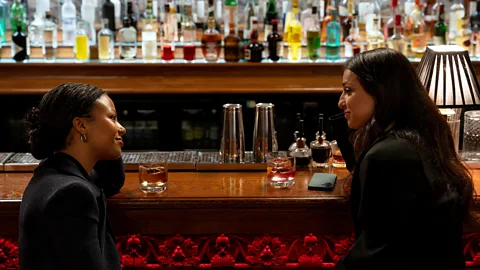
This season definitely represents an evolution for the show. At the end of the last run, Pierpoint was shut down and merged into a Middle Eastern wealth fund, leaving the characters scattered. Creators Konrad Kay and Mickey Down explained to The New Yorker that series four is a departure from the previous three, which they saw as a trilogy, with the aim now being, in Kay’s words: “Can we effectively tell a story over eight hours that has the narrative propulsion of a great conspiracy thriller?”. It’s a risk – something, as former bankers, the pair are likely well acquainted with – that’s paid off. Having seen all eight episodes, I can say it’s a sprawling, gripping story told not just through the finance world, but through the lens of politics, media, technocrats and the aristocracy – and how all these power bases intersect in ways that are deeply chilling.
These characters are now in their 30s… helping to perpetuate the same abusive, exploitative culture they have experienced – Alison Herman
The central, co-dependent relationship between the two female leads, troubled heiress-turned-Lady Yasmin and burn-all-the-bridges finance disrupter Harper is taken to further extremes this series. There are also explorations into mental health crises (with a stunning performance from Kit Harington as Yasmin’s husband Sir Henry Muck on this theme), depictions of suicidal ideation and shock deaths. Meanwhile long-suffering characters like the once-cocky trader Rishi are kicked while they’re down again – without giving too much away, episode four is likely to cause palpitations on viewing.
The protagonists’ new ‘villain era’
One key shift is that the series’ victims have now become the perpetrators. “When Industry began, its protagonists were little more than kids, with most starting their first job out of college,” says Herman. “Over four seasons, the show has matured alongside them. These characters are now in their 30s, and instead of dealing with bad bosses in a toxic work environment, they are bosses helping to perpetuate the same abusive, exploitative culture.” Therefore it’s only natural that the tone of the show will become darker, she adds, as: “Power comes with responsibility, and nothing we’ve learned about these characters’ traumatised pasts or coping mechanisms suggests they’d be able to use power responsibly. Season four shows that impression is right!”

The characters, like the show itself, are now striding into their villain era. Plumbing ethical depths, Yasmin’s story in season four has unmistakable parallels with convicted child sex offender Ghislaine Maxwell – while another character seems to make their way through the world in a manner very similar to her co-conspirator, the late child abuser Jeffrey Epstein.
So is there anyone left to still root for, who’s still moving towards the light away from all the corruption? The savvy Sweetpea Golightly (Miriam Petche) could be one to watch, as is the straight-talking trader Kwabena Bannerman (Ted Lasso star Toheeb Jimoh). But, as Industry’s deeply pessimistic worldview has previously suggested, even if the new generation may arrive with their own individual ambitions and aspirations, inevitably, the rot then sets in.