Has Trump Delivered the Final Blow to NATO?
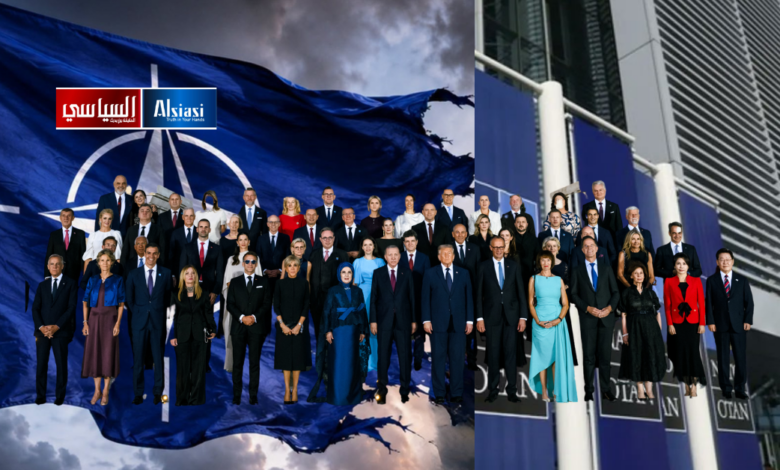
As soon as U.S. President Donald Trump arrived in Ankara on Tuesday to attend the NATO Summit, he launched a sharp attack on the alliance’s members, accusing them of negligence, dependency, and abandoning the United States in its wars, despite recognizing that the conflicts Washington is engaged in with Iran and China also harm European countries, most of which are NATO members.
Trump accused European nations of refusing to allow U.S. forces to use their airspace and military bases during the war. He described Spain as the worst member of the alliance and announced that the United States would cut its trade relations with the country.
Trump’s forceful arrival and fiery remarks ignited tensions at the summit before it had even begun, placing it on the path to failure before the first meeting. The U.S. president highlighted what he described as conflicting interests between the United States and its allies, accusing them of failing to protect American interests in the region while leaving Washington to bear the costs of war alone.
“Why are we spending hundreds of billions of dollars while they are not standing with us? We have always stood by them,” the U.S. president said.
European leaders maintain that they have fulfilled all of their commitments despite not being consulted about the U.S. military campaign against Iran. NATO is now seeking to reduce its dependence on the United States, announcing a major package of arms deals valued at no less than $50 billion.
Despite European countries frequently emphasizing their political, economic, and commercial partnerships with the Gulf states, they remained largely inactive during the Iranian airstrikes targeting Gulf countries, which continued through the night of July 8 and appear likely to persist as long as U.S. airstrikes against Iran continue.
Observers believe that European attention—particularly among NATO member states—has been focused primarily on supporting Ukraine and President Volodymyr Zelenskyy’s government, giving it priority over providing assistance to the Gulf states. They also argue that European governments effectively endorsed what they describe as deception by the Ukrainian president, who concluded a drone agreement with Gulf countries under the pretext of protecting their airspace.
The “NATO 3.0” Phase
Meanwhile, the U.S. administration is promoting what it calls “NATO 3.0,” a new vision in which Europe moves away from relying on the American security umbrella and assumes greater responsibility for its own collective defense. This, Washington argues, would enable the United States to redirect its military resources toward other strategic priorities, particularly countering China and strengthening its presence in the Indo-Pacific region.
In an apparent attempt to ease Trump’s anger, NATO Secretary General Mark Rutte quickly declared that the U.S. military campaign against Iran was justified and appropriate, a position that critics say contradicted the views of several member states. According to these critics, his remarks concealed the conflicting interests among alliance members and the alliance’s underlying fragmentation, suggesting that NATO has increasingly become an alliance in name only, with each member pursuing its own national interests rather than the collective interests of the group.