‘Change is inevitable’: What is next for Iran?
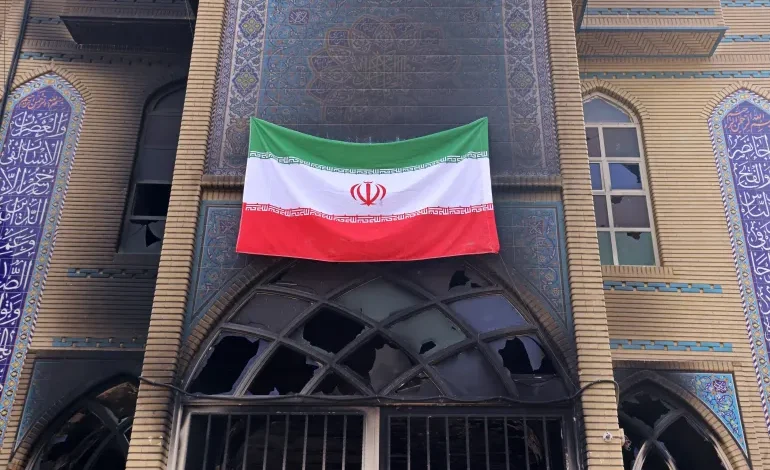
Protests in Iran have petered out. Tens of thousands have been arrested. And those accused of supporting the unrest have had business assets seized and are being pursued on “terrorism” charges. The authorities – for now – have reasserted control.
Yet, in the shadow of the apparent calm, the very same grievances that sparked the unrest remain, leaving Iran with little choice but to make tough compromises to win sanctions relief and fix the economy or face further upheaval, experts say. With a battered economy, a weakened network of regional allies and the looming threat of a US attack, Iran is at a crossroads.
Due to decades of international sanctions, as well as mismanagement and corruption, the Iranian rial’s value has nose-dived, and oil revenues have shrunk. Inflation last year peaked at more than 42 percent, according to International Monetary Fund data. By comparison, the rate was at 6.8 in 2016 – a year after Iran and world powers signed a deal that curbed Iran’s nuclear activities in exchange for sanctions relief. US President Donald Trump pulled out of the deal in 2018 – during his first term in office – and reimposed sanctions.
On top of that, Iran suffers from electricity outages and chronic water shortages, making life increasingly difficult for the average citizen.
To get some sanctions relief, Iran needs to negotiate a deal with the Trump administration. But that would require Khamenei making concessions on what have been Iran’s core foreign policy pillars, namely its nuclear programme, ballistic missiles and supporting a network of allies across the region.
They have been key components of Iran’s “forward defence” strategy – a military doctrine aimed at preventing fighting from reaching Iranian territory. Changes to any of these elements would represent a profound shift in the security architecture built up by Khamenei. While in the past, the supreme leader has shown openness to partially curbing the nuclear programme, concessions over missiles and the so-called axis of resistance have been non-negotiable.
“It is unclear whether Iran is willing to formally accept restrictions” on these three elements, said Mohammad Ali Shabani, an Iran analyst and editor of news site Amwaj.media. “As Trump has threatened a renewed bombing campaign if Iran resumes enrichment, Khamenei seems paralysed in his decision-making,” he added.
Trump has said that he wants Iran to dismantle its nuclear infrastructure entirely, an option that Iran has ruled out, insisting that its enrichment programme is for civilian purposes.
Concerning support for non-state actors in the region, Iran has been working on reconfiguring that network following the war last June with Israel, said Halireza Azizi, visiting fellow at the German Institute for International and Security Affairs.
Israel has, in the past few years, degraded the arsenal and decapitated the leadership of what was Iran’s strongest ally in the region, Lebanon’s Hezbollah. Non-state actors in Iraq have become more involved in that country’s political system and, therefore, more cautious, and the regime of Bashar al-Assad in Syria has collapsed. And finally, Iran itself was directly attacked by Israel, the first time it has faced a full-scale attack from its chief regional enemy.