Anthrax outbreak kills hippos in DR Congo’s Virunga National Park
While the Democratic Republic of the Congo (DRC) continues to grapple with the deadliest Ebola outbreak in its history, another disease is taking a heavy toll on wildlife in Virunga National Park in the country’s east.
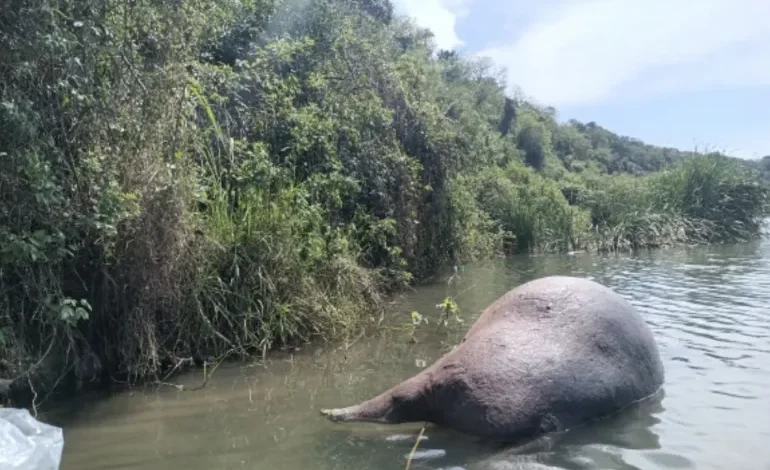
Over the past four weeks, hippopotamus carcasses have been discovered in the Semuliki River, west of Africa’s oldest national park, raising concern among communities living along its banks.
“It was in mid-September that we began to notice the mass deaths of hippos in the Semuliki River. We have started to fear this situation, which is unfolding whilst we are in the midst of the Ebola outbreak,” Michael Kambale, a resident of the Vitshumbi enclave, about 100 kilometres (62 miles) north of Goma, the capital of North Kivu province, told Al Jazeera.
Following laboratory tests, Virunga National Park confirmed that anthrax, caused by the bacterium Bacillus anthracis, was responsible for the wildlife deaths.
According to park officials, 28 hippos died over approximately one month.
“This disease can be transmitted to humans through contact with a dead or sick animal or by consuming its meat,” Virunga National Park said in a press release sent to Al Jazeera.
Anthrax threatens wildlife and local communities
Joel Mbusa Mapoli, an expert in ecology and veterinary medicine, said the deaths represented a significant loss for Virunga National Park and called for urgent action to contain the outbreak.
He explained that hippos act as ecosystem engineers, altering nutrient flows and the ecological conditions of their habitats.