The future of the Palestinian vote in Israel
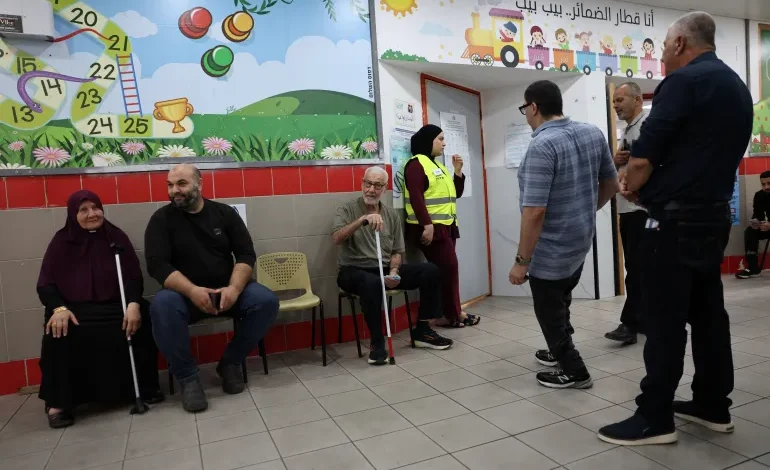
In the October 27 Israeli elections, 38 parties ran for office. Of these, only two supported peace, equality and an end to the occupation of Palestinian territories. Both were “Arab parties” – made up of Palestinian citizens of Israel.
These two parties earned a historic result, securing 19 seats in the Knesset, after some 80 percent of Palestinian citizens cast a vote.
This unprecedented turnout contributed to Prime Minister Benjamin Netanyahu’s failure to secure a majority. His bloc won 53 seats, while the Jewish-led opposition won 48.
The electoral mobilisation of Palestinians was immediately spun as a threat and Palestinian communities now face intensified incitement by members of Netanyahu’s camp. The pro-Netanyahu camp has alleged that the election was “stolen” and is now calling for restrictions on the “Arab vote”.
Thus, Palestinian electoral success exposed an uncomfortable question for Israeli politics: what happens when citizens who are informally isolated on the political scene but whose vote is formally equal become powerful enough to determine who governs?
Palestinian citizens face a fundamental question: Can they truly determine the political outcome and if they can, does that make them equal citizens?
Formal inclusion, informal exclusion
Palestinian citizens of Israel have long faced a dilemma over voting. If they do not mobilise to vote, the risk is that the Jewish right would come to power is high. If they do vote, there is no guarantee that their participation would translate into policies that protect or benefit their communities.
In 1999, Arab turnout reached approximately 75 percent in the elections and Palestinian citizens overwhelmingly supported Ehud Barak of the Labour Party against Netanyahu. A year later, after Ariel Sharon’s visit to Al-Aqsa compound and the outbreak of the second Intifada, Israeli police killed 13 Palestinian citizens. Outrage and disillusionment contributed to an Arab boycott of the 2001 election, when turnout fell to about 19 percent. Sharon won.
Today, Palestinian electoral participation still retains its sway. Higher turnout among Palestinians means fewer seats for two main blocs – the pro- and anti-Netanyahu camps – which could tip the balance in the Knesset. This is what happened on October 27 .
But this potentially powerful position of the Palestinian parties has been diminished by the refusal of Jewish-led parties to work with them on government formation.
The logic of this exclusion was made clear in April 2021, when far-right politician Bezalel Smotrich rejected Netanyahu’s attempt to establish a government supported by one of the Palestinian parties, Ra’am. Smotrich argued that doing so would encourage greater Palestinian turnout which would allow the Palestinian community to enable the return of the left to power in Israel. Accepting Palestinian parties would therefore challenge the Jewish right’s political dominance.
Ra’am eventually joined the short-lived coalition government formed by Naftali Bennett and Yair Lapid, without making any national demands, but its participation came at the cost of significant concessions on national issues. For the first time, Palestinian political leaders recognised Israel as a Jewish state and were even willing to set aside the national question in favour of addressing civil and socioeconomic issues.
Despite these concessions, the Bennett–Lapid government ultimately collapsed following the resignation of two coalition members who opposed sitting in a government alongside Palestinian representatives.
Netanyahu then realised that to prevent the formation of any future government of change, he needed to delegitimise the Palestinian parties and limit their political representation.
Following October 7, 2023, Palestinian citizens experienced a sharp contraction of political space. Students faced disciplinary proceedings over social-media posts; employees lost jobs; antiwar speech prompted police investigations and arrests.
The electoral process itself reflected this climate. Israel’s Central Elections Committee voted to disqualify both Palestinian electoral lists, along with lawmaker Ofer Cassif and Balad chairman Sami Abu Shehadeh. The Supreme Court eventually reversed the bans on the lists.