Lula’s victory may be a turning point for Latin America
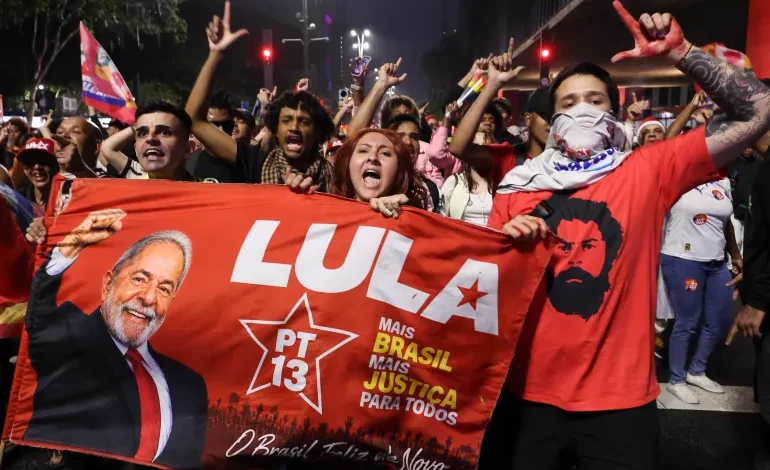
At 80, President Luiz Inacio Lula da Silva has pulled off an extraordinary political victory. After losing the first round to Flavio Bolsonaro, son of former President Jair Bolsonaro, by 47 percent to 45 percent, Lula defied the odds to secure a stunning second-round victory, with 51.8 percent of the vote against Bolsonaro’s 48.2 percent.
His triumph confounded every pre-election poll and crowned a dramatic campaign revival that few had anticipated.
Lula’s victory in Latin America’s largest country does more than halt the far right’s return to power in Brazil. It breaks a succession of right-wing electoral victories across the region and deals a major blow to United States President Donald Trump’s increasingly interventionist agenda in the Western Hemisphere.
When Bolsonaro unexpectedly defeated Lula in the first round, the result sent shockwaves across Brazil and beyond. For the government, the defeat was particularly startling given its strong socioeconomic record. What followed was an extraordinary three-week political mobilisation that transformed the sluggish first-round campaign of Lula’s Workers’ Party into an existential confrontation over the future of democracy and sovereignty in Brazil.
The economic record was hardly that of a government heading for defeat. Brazil’s economy grew by a cumulative 9.2 percent between 2023 and 2025, compared with an average of just 5.6 percent among its South American neighbours. Unemployment fell from 9.3 percent in 2022 to a historic low of 5.4 percent in 2026.
Brazil also exited the United Nations Hunger Map in 2025, after having returned to it under the Bolsonaro senior administration. In the Amazon, deforestation fell to its lowest level in decades, a sharp reversal of the trend under his predecessor.
Not everything has been rosy under the Lula administration. Millions of Brazilians have remained trapped in credit-card debt, struggling with extremely high interest rates, while an explosion of online gambling has devastated the livelihoods of families. The run-off result sent a clear signal that there was social discontent.
Lula responded with unusually bold measures: a sweeping debt-relief initiative and restrictions on online betting, as well as expanded social benefits, fuel subsidies, and the transition from a six-day to a five-day working week. These policies sought to reconnect the government’s macroeconomic achievements with the everyday economic anxieties of Brazilian voters.
Bolsonaro offered a radically different vision for Brazil: sweeping spending cuts, privatisations, lower taxes and, above all, an iron-fisted response to crime and insecurity. His proposals included building five maximum-security prisons modelled on El Salvador’s notorious penitentiary system and authorising lethal force against heavily armed criminals.
Bolsonaro also pledged to pardon his father, sentenced to 27 years for plotting to overturn the 2022 election, and to grant clemency to those convicted over the January 8, 2023 assault on Brazil’s democratic institutions. For his supporters, this represented an opportunity to reverse what they considered judicial persecution. For his opponents, it threatened to rehabilitate the attempted coup and undermine judicial independence.