Can flurry of New York diplomacy lead to US-Iran diplomatic breakthrough?
At the colloquium established shortly after the second world war to prevent future wars, United States President Donald Trump did just the inverse: He platformed his unceasing threats against Iran, suggesting almost casually on Tuesday that he could “annihilate” the country he has waged war against since February 28.
But behind closed doors on the sidelines of the United Nations General Assembly (UNGA), a flurry of diplomatic activity concerning the ongoing US-Iran war has also been unfolding, as world leaders gather in New York.
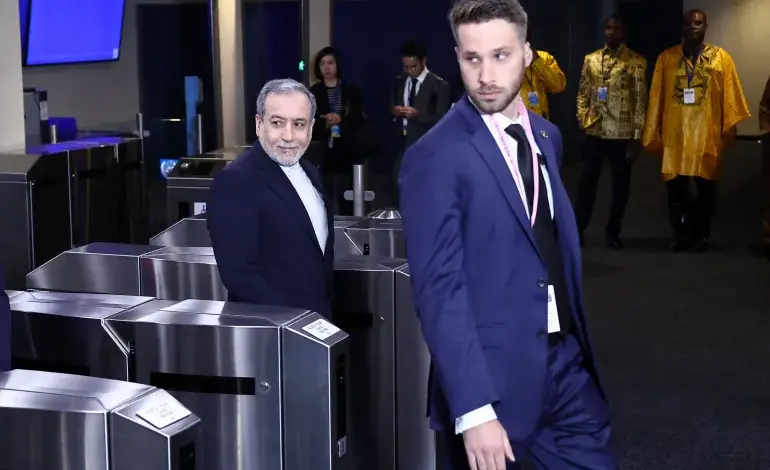
The US and Iran held indirect talks for three hours on Tuesday. US special envoys Steve Witkoff and Jared Kushner met Iranian Foreign Minister Abbas Araghchi, with Trump calling it a “very good” and “very productive” meeting. Trump also met Gulf Cooperation Council (GCC) leaders that day, with senior officials from the region mulling a Qatari proposal for a common security framework involving Iran and the Gulf states.
Meanwhile, Iranian President Masoud Pezeshkian arrived in New York early on Wednesday – the first time a leader whose country is at war with the US has set foot on US soil to address the gathering. And Chinese President Xi Jinping will skirt New York to instead meet Trump one-on-one in Washington, DC – his first state visit to the US in just less than a decade. Xi lands on Wednesday evening.
All these separate diplomatic initiatives, analysts tell Al Jazeera, are parts of a push to bring Iran and the US back to the negotiating table. According to Al Jazeera’s correspondent in Tehran, Tohid Asadi, Araghchi’s meeting with Witkoff and Kushner was to convey Tehran’s latest set of conditions to end the war, following the collapse of the June 60-day memorandum of understanding (MoU) finalised in Islamabad, Pakistan.
But analysts say expecting an actual deal to emerge this week from the diplomatic meetings in the US would be unrealistic. Multiple actors and mediators in the conflict are testing possible off-ramps, but core disagreements between Washington and Tehran remain unresolved.
Too early for a breakthrough
Vakil is hesitant to call the current moment ripe for a diplomatic breakthrough – it is far too early, and there is a history of negotiations failing, she said.
“Both sides have been negotiating for over two years and on two occasions, that ended with military conflict and these negotiations continue amid persistent military threats,” she said.
Iran has long pointed to its previous rounds of diplomatic talks with the US – in 2025 and again this year – as evidence that Washington can veer from negotiations to military action. It has cited the 12-day war last June, and the current conflict, which began with joint US-Israeli strikes on Tehran at a time Washington and Tehran were engaged in Oman-mediated dialogue.
Adel Abdel Ghafar, a senior fellow focusing on the Middle East at the Australian Strategic Policy Institute, said that there appears to be “genuine” movement towards reigniting negotiations – but also “a fair amount of posturing”. He referenced Trump’s praise for Tuesday’s indirect Iran-US talks and his pugnacious UNGA speech the same day.
A breakthrough hinges on whether Iran’s diplomats in New York can actually deliver, he said.There are specific indicators to watch for another round of US-Iran contact, the analysts said.
“The signs to watch for are another confirmed round of US-Iran talks, agreement on sequencing or reciprocal steps, and language from both sides becoming more specific about implementation rather than simply repeating maximalist demands,” said Vakil.
Abdel Ghafar added that, against the backdrop of UNGA, signs could include Araghchi or Pezeshkian meeting directly with US officials, in addition to supportive statements from more hardline elements of the Iranian administration back home.
The appearance of such indicators could lead to a stronger push for such talks when Trump meets Xi, as well as an easing of fighting between the Iran-backed Houthi group and the Saudi-led coalition in Yemen, which has escalated in recent weeks, the analyst added.