Six easy swaps to help you avoid ultra-processed foods

Ultra-processed foods (UPFs) are in more foods you might realise. These tasty recipes will help you avoid them.
When we buy ice cream, we tend to expect a delicious, fat-rich base – such as cream or milk – and some kind of flavouring, such as chocolate. But many of the versions for sale in my local supermarket also contain ingredients I would never add myself, and certainly don’t have in my kitchen cupboards: guar gum, carrageenan, sunflower lecithin, carotenes.
These are typical ingredients found in ultra-processed foods (UPFs) – products which have been through more processing than usual, often on an industrial scale.
Today it’s widely known that diets rich in UPFs are bad for our health. They have been linked to a range of adverse health conditions, including obesity, cancer and type 2 diabetes, all of which can lead to an early death. And yet, they are not easy to avoid. From supermarket bread to readymade sauces, on average UPFs account for over 50% of an adult’s energy intake in the US. They tend to be cheaper and more convenient than healthier alternatives, and are potentially addictive.
But it doesn’t have to be this way. I set out to find six simple, inexpensive swaps you can make at home to avoid unnecessary UPFs, from stir-fry sauce to crisps.
1. Ice cream
This summer my freezer has continuously been filled with overripe bananas – I just can’t seem to eat them before their skin goes black. So, when the temperatures rose and I started craving ice cream, I tried blending them together with unsweetened cocoa powder.
It may sound worthy, but it was surprisingly rich and had the normal consistency of ice cream, without the numerous additives. The cocoa powder has the bonus of beneficial compounds such as flavanols (an antioxidant) and theobromine (a compound that can reduce inflammation). Next time, I’ll try adding peanut butter for extra creaminess.
Another method I tried was freezing yoghurt and then blending it with fresh or frozen fruit. Again, I made mine sweeter by blending in some of my stash of over-ripe bananas. But you could cook down any fruit you happen to have in the fruit bowl – strawberries, peaches, etc – to add a hit of fructose.
2. Bagels
I love bagels for a quick lunch but, as with many foods, shop-bought ones can be full of additives and other things I don’t want in my bread, such as extra sugar.
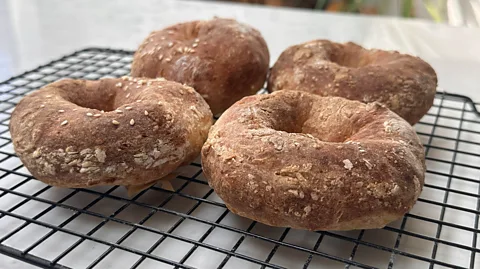
I tried making my own recently using only two simple ingredients, self-raising flour and yoghurt. I sprinkled some salt into mine, though you don’t really need it. While bagels are usually boiled before baking, for this recipe I combined the ingredients in a mixing bowl, shaped them into that classic bagel shape and simply cooked them in the air fryer for 20 minutes at 180C (356F) – though you can also bake them in the oven.
These home-made bagels were both delicious and rich in calcium, as well as protein, which is important for keeping our bones strong. They weren’t a perfect shape but I was quite happy with my knobbly creations. To save time in the future, you could freeze some dough first – I’ve now used the same recipe for a simple pizza base too.
It’s important to note that many shop-bought breads – like some other UPFs – are not necessarily unhealthy for us when eaten as part of a balanced diet. However, they tend to form a relatively high proportion of the food we eat today in many western countries.
3. Tomato sauce
Instead of shop-bought tomato sauce, I fried some onions and garlic on a medium heat until they were brown, then added passata (you could use tinned tomatoes) and fresh herbs (dried ones would be fine too). Then I left it to simmer for 10-20 minutes on the hob. In my opinion it tasted better than a ready-made jar of sauce and avoided the added sugar that is often found in shop-bought sauces.
If you don’t fancy cooking your own, it’s worth noting that simple shop-bought tomato sauce made with just tomatoes, oil, salt, and herbs is not a UPF. But if it includes thickeners, preservatives or high-fructose corn syrup, it might be.
Many packaged foods are “loaded with dietary emulsifiers” to extend shelf life, says Benoit Chassaing, an expert in microbiota-gut interactions at Institut Pasteur in Paris, France. As an overall rough guide, he says, the fewer ingredients a product has, the less likely it is to be a UPF.
4. Stir-fry sauce
My favourite healthy dinner is a quick stir fry. But it has always struck me as odd to take freshly cooked vegetables and protein, then coat them with a packet sauce that’s not only high in salt and sugar, but many other obscure UPF-style additives I don’t particularly want to eat. One ready-made sauce I found in my local supermarket had over 20 ingredients.
I think the healthiest way to approach your diet is to think, ‘what can I add in?’ Because naturally that will displace some of the less healthy food – Sarah Berry
So, I tried experimenting with flavourings I can concoct myself. The winning combination included mixing soy sauce, honey, sesame oil and garlic. While soy sauce is high in sodium, lower salt versions are available and some small studies show health benefits, such as reducing symptoms in people with allergies and improving digestion.
5. A salty snack
Many crisps are not inherently ultra-processed. Simple salted ones, for example, really are often just oil, potatoes and salt.
Sarah Berry, a professor in the department of nutritional sciences at King’s College London, says a good rule of thumb when it comes to snacking is to choose foods that resemble the produce they have originally came from. Look at cheese puff crisps for instance and think how little they look like corn. “I do think if it has lots and lots of added chemicals and lots of names that you don’t recognise, then yes, I’d be a little bit more cautious,” she adds.
But traditional, deep-fried crisps are still very high in fat and salt, of course. With this in mind, I have been eating homemade popcorn. It’s low in fat and high in fibre, which is important for lowering the risk of heart disease. Popcorn is also rich in polyphenols, an antioxidant which has been linked to better digestive health.
To make popcorn, simply mix the kernels with a small quantity of fat (oil or butter), if desired, and heat them on the hob or in the microwave on a medium-high heat. Don’t forget to add a lid. Cook them until the popping sound slows to a stop, and either serve plain or with a little salt. Just note that health authorities strongly advise against ever giving popcorn to children under five years old, because it is a potentially deadly choking hazard.
6. Oat bars
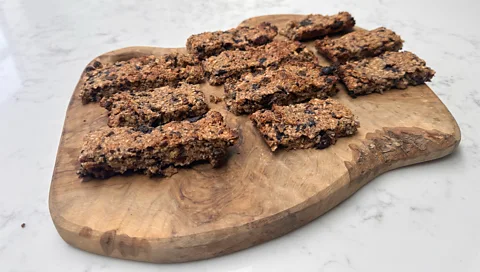
Though there are an overwhelming number of protein and granola bars on the shelves, not all of them are as healthy as you might think. But there is an easy fix. It’s simple to knock together your own version, and the best part is that you might end up using some of the ingredients languishing at the back of your cupboards.
To make your own, simply mix oats with chopped up dried fruit and nuts. To bind them together and add extra sweetness, you could use honey, peanut butter, or my favourite: yes, you guessed it, mashed bananas. These can be baked in the oven for 18-20 minutes at 180C (356F) or simply set in the freezer.
Rolled oats are whole grain, fibre-rich and could reduce blood pressure and LDL, or “bad” cholesterol. The nut butter and chopped nuts provide extra protein. Almonds are my go-to option and are full of healthy monounsaturated fats and vitamin E. Regular consumption has been linked to a lower risk of “bad” cholesterol and improved heart health.
Shifting our taste perception
It’s likely difficult to remove every UPF completely from your diet, and you may not want to anyway. If we do want to eat something ultra-processed, it helps to focus on quality over quantity, and pair it with something healthy, says Berry. “I think the healthiest way to approach your diet is to think, ‘what can I add in?’ Because naturally that will displace some of the less healthy food,” she says.