Who is Ali al-Zaidi, the businessman named as Iraq’s PM-designate?
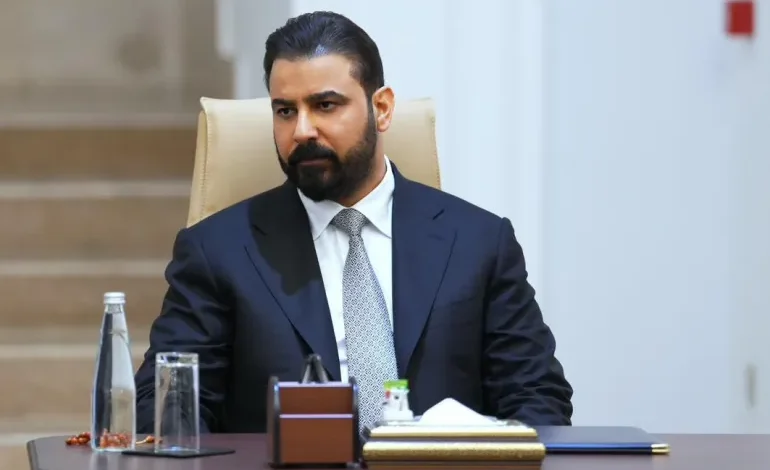
After months of political wrangling, Iraq’s Coordination Framework on Monday named Ali al-Zaidi, a multimillionaire business figure, as the compromise candidate of the governing Shia bloc.
“After considering the names of the candidates, Ali al-Zaidi was chosen to be the candidate of the Coordination Framework bloc, as the largest bloc in the House of Representatives, to occupy the position of prime minister and form the next government,” a Coordination Framework statement read after a meeting in the capital Baghdad.
Shortly after that, Iraq’s President Nizar Amedi appointed 40-year-old al-Zaidi as prime minister-designate and tasked him with forming a government, averting a constitutional crisis.
Al-Zaidi’s elevation comes after months of a frantic search for a compromise candidate acceptable to both local factions and foreign powers.
Former President Nouri al-Maliki, a deeply divisive pro-Iran figure, was forced to withdraw from the race following opposition from US President Donald Trump. Outgoing Prime Minister Mohammed Shia al-Sudani, who was brought to power by the Coordination Framework in 2022, failed to get the backing for a second term. Both Iran and the US have close ties with Baghdad.
So who is the 40-year-old businessman al-Zaidi, and what worked in his favour? How will he navigate Iraq through one of its most volatile geopolitical chapters?From boardrooms to politics
Unlike his predecessors, al-Zaidi has no history in political office or government administration. Born in the capital, Baghdad, to a prominent family originating in the southern province of Dhi Qar, he built his career in the private and academic sectors.
He holds Bachelor’s degrees in law and finance, as well as a Master’s degree in banking and finance, and is a member of the Iraqi Bar Association.
Al-Zaidi sits at the helm of the National Holding Company, a conglomerate established in 2017 with interests spanning agriculture, real estate, banking, logistics, and renewable energy. His portfolio extends to the education and health sectors as well, where he serves as chairman of the board for Shaab University and the Ishtar Medical Institute.
He also previously chaired the board of Al-Janoob Islamic Bank. Financial watchdogs and local reports have noted that the bank previously faced sanctions from the Central Bank of Iraq, adding a layer of scrutiny to al-Zaidi’s financial background.
The 25-minute compromise
Al-Zaidi’s sudden ascent was born out of a severe political deadlock within the Coordination Framework, Iraq’s largest Shia parliamentary bloc, which had already missed its constitutional deadline to name a candidate by April 26.
Former Prime Minister al-Maliki secured the backing of a vast majority of the bloc after he entered the race in January. However, his candidacy was abruptly derailed following fierce opposition from President Trump, who threatened to cut off support to Iraq. Washington further escalated the pressure by suspending cooperation and funding for Iraqi security agencies, issuing a strongly worded warning against any government influenced by Iran-linked figures and armed factions.
With al-Maliki sidelined, the bloc attempted to push forward Bassem al-Badry. Despite gathering significant support, al-Badry was ultimately rejected by rival camps who feared his appointment would hand too much power to al-Maliki’s faction.
Facing the prospect of a constitutional vacuum, the coalition convened a final, decisive meeting on Tuesday. Within 25 minutes, al-Zaidi was unanimously approved as the ultimate compromise – a candidate who neither alienates internal rivals nor triggers a US veto.
A new ‘language of interests’
Analysts note that al-Zaidi’s lack of political history is his greatest asset. In a deeply polarised landscape, his “blank slate” makes him a palatable choice domestically and internationally.
The Coordination Framework is betting that al-Zaidi, as a businessman, can engage with Washington and the international community through the pragmatism of economic interests rather than ideological rhetoric.
His stated vision focuses on institutional reform, empowering youth, and transitioning Iraq from a distorted, centrally planned system towards a more open and sustainable economy.