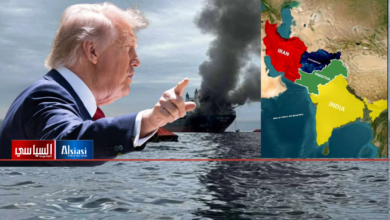
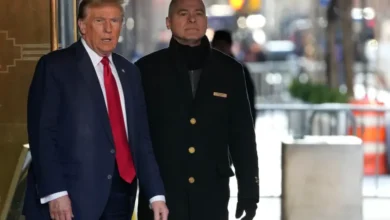
Trump launched his war on Iran to serve Netanyahu, arms companies, and the Evangelicals
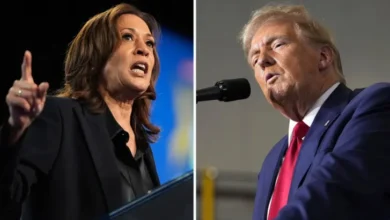
Despite U.S. Secretary of State Marco Rubio denying his earlier statements—where he confirmed that the United States launched its war to meet Israel’s security needs—the American president himself spoke on several occasions in a way that suggested the war was indeed in service of Israel. Statements by Kamala Harris, former Vice President to Joe Biden, also pointed in the same direction.
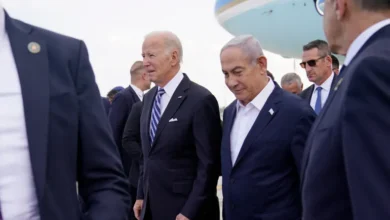
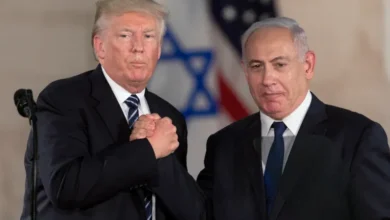
The clearest picture is that the United States, which was not originally concerned with Iran’s nuclear weapons or missile program, is waging this war on behalf of Israeli Prime Minister Benjamin Netanyahu, who seeks to ignite the region to save himself from imprisonment. This comes after his failure to achieve his goals in Gaza and Lebanon, amid the deaths of children, women, and the destruction of homes—leaving him isolated and wanted in several Western countries that once supported him before the recent massacres.
For years, the Israeli prime minister toured the world carrying photos and documents, standing at the United Nations podium holding up images of Iranian missiles threatening Israel, inciting a global attack against Iran. However, he found little response, while the Zionist lobby was allegedly working behind the scenes in U.S. decision-making circles. After the U.S. president failed to convince Israeli President Isaac Herzog to grant Netanyahu a pardon, he allegedly sought another way to keep him in power—by boosting his popularity through military escalation directed at Tehran.
Alongside Zionist pressure, Evangelicals in the United States—who support Zionism—have also emerged. This movement dates back to the 18th century, when certain Protestant churches and movements adopted the name to distinguish their religious strictness.
Today, these churches are widespread in the United States, with around a quarter of Americans (approximately 80 million people) belonging to them.
Evangelicals are often referred to as “Christian Zionists” due to their support for the Zionist project, with significant overlap between their goals, albeit from different ideological or theological foundations.
Observers believe this group played a major role in the U.S. decision to recognize occupied Jerusalem as the capital of Israel.
Evangelicals believe that the establishment of the State of Israel is in accordance with biblical teachings, and that Christ will return after all Jews gather in that land and its borders are fully established—meaning all of historic Palestine.
Ironically, this belief—despite aligning with Jewish Zionist goals—also includes the idea that, after his return, Christ will eliminate the Jews, marking the “end of the world.” Among its prominent supporters is U.S. Vice President J. D. Vance.
For the United States, protecting and supporting Israel has gone beyond unconditional backing. Washington has sought to build military bases and security centers in Arab countries for this purpose—contrary to the common belief that these facilities are meant to protect those nations.
American companies have played a major role in fueling and advocating for the war. Many members of the U.S. president’s family and senior officials are shareholders or participants in U.S. arms manufacturing companies, benefiting financially from the conflict. Ultimately, these companies have generated revenues exceeding the output of major European economies in a short time. Meanwhile, Washington has increased its defense budget for 2027 to $1.5 trillion.
The situation became clear during the war on Iran: the United States focused its protection efforts on Israel, leaving Gulf countries exposed to Iranian missiles. Oil and energy facilities became vulnerable to destruction after Washington allegedly entangled Arab states in the conflict, placing them in confrontation with Iran and aligning them with Israel. This created embarrassment for Arab countries—especially those that neither wanted the war nor maintained relations with Israel.
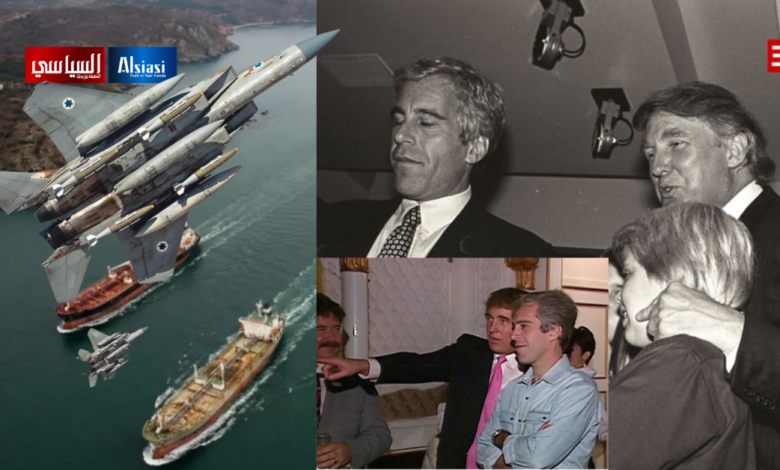
The U.S. war on Iran had no real objectives. President Donald Trump appeared to shift between goals: removing uranium, targeting nuclear and missile programs, countering China, reopening the Strait of Hormuz, and keeping the Bab al-Mandab Strait navigable. However, the primary goal of the war, according to this perspective, was to bury the Jeffrey Epstein case, which implicated the president and his circle in unprecedented scandals.