‘Silent suffering’: Why children in Gaza are losing their ability to speak
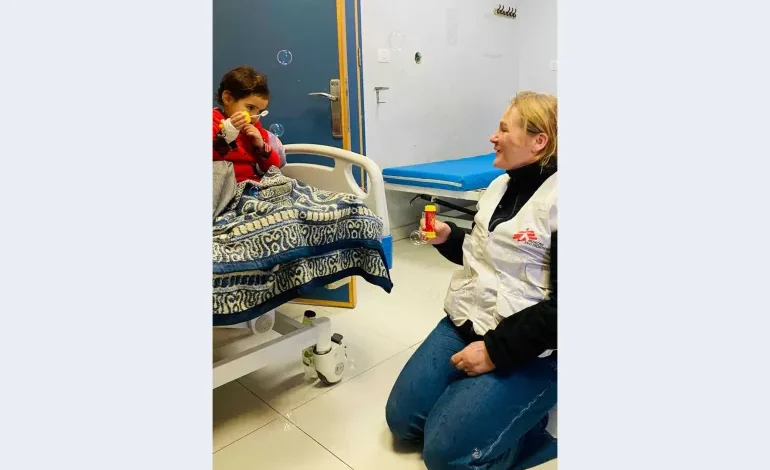
After an intense bombardment struck near his home, five-year-old Jad Zohud suddenly lost his ability to speak.
He is not alone. Across Gaza, specialists are reporting a rising number of children who can no longer speak following war-related injuries or psychological trauma.
For some, the cause is physical – head injuries, neurological damage or blast trauma. For others, there is no visible wound. Their silence follows repeated exposure to violence that overwhelms their ability to process or communicate.
Child psychotherapist Katrin Glatz Brubakk, who has worked in Gaza twice with Doctors Without Borders, known by its French initials MSF, describes it as “silent suffering” often hidden beneath the scale of the destruction.
How is the problem manifesting?
At Gaza City’s Hamad Hospital, doctors say cases of speech loss among children are increasing.
Dr Musa al-Khorti, head of the hospital’s speech department, told Al Jazeera that in some cases, “a child could lose the ability to speak entirely,” referring to conditions such as selective mutism or hysterical aphonia, which is a functional loss of voice linked to extreme psychological distress.
The cases vary, but many follow a similar pattern: a sudden loss of speech after violence or injury.
Five-year-old Jad had no prior speech difficulties, his mother said, but after a bombardment near his home, he woke unable to speak – unable to form sounds or words.
Jad is not alone. Four-year-old Lucine Tamboura lost her voice after falling from the third floor of her home when a staircase, damaged by an Israeli air strike, collapsed beneath her.
Why is this happening?
Child psychotherapist Katrin Glatz Brubakk says children lose speech as a response to extreme trauma.
“These are children who have been exposed to extreme trauma and, without any medical cause, stop talking,” she says. “It’s always extreme trauma.”
She describes children who have lost family members, witnessed death, been injured, or lived through repeated violence, where silence becomes the only way to cope.
“At some point, the world feels completely unpredictable, and the child is in acute danger,” she says. “It’s not a choice. It’s a physical response.”
Many enter what she calls a “freeze response”, where the body shuts down under threat.
“The body says: I can’t fight this. People can die. I can die. So the safest thing is to stay still,” she says. “It’s waiting until the world feels safe again.”
But the impact goes beyond the loss of speech, she explains.
“If children stop playing and interacting, they stop learning and developing,” she says. “I call it cognitive war injuries.”
She explains that prolonged trauma keeps the brain in survival mode: the amygdala – the brain’s alarm system – remains alert, while systems responsible for learning and emotional regulation are suppressed.
“Even when a child looks shut down, the nervous system is still on high alert,” she says. “Over time, that has very serious effects on development.”