Palestine Action hunger strikers to sue prisons over alleged mistreatment\
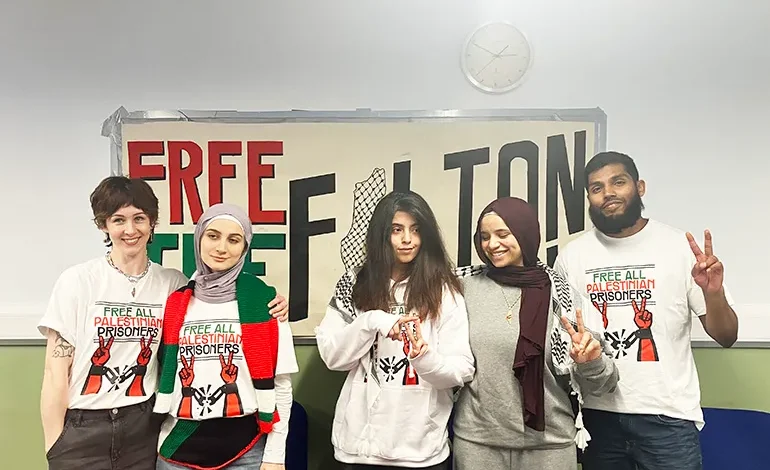
A month after being released on bail, pro-Palestine activists who participated in a months-long hunger strike in prison are planning on taking legal action over their alleged mistreatment.
On Wednesday, at a news conference where four of the activists spoke about life in jail and their lasting medical conditions, Lisa Minerva Luxx, a campaigner who supports the group, said the defendants are “seeking to take legal action against the prisons for their medical neglect”, adding, “legal action is due to take place”.
Eight young activists linked to the protest group Palestine Action began a rolling hunger strike in November that lasted until January.
Qesser Zuhrah, 21, Teuta Hoxha, 30, Kamran Ahmed, 28, and 31-year-old Heba Muraisi were bailed in February after the High Court ruled that the proscription of Palestine Action was unlawful. They had been held on remand for 15 months in connection with a raid on the Elbit Systems UK factory in Filton, near Bristol, on August 6, 2024.
‘My hair is falling out in chunks’
Heba Muraisi, who refused food for 73 days, told Al Jazeera she is still suffering from “neurological issues”.
“My hair is still falling out in chunks, I can’t walk long distances without needing to take a break. Physically and mentally, I’m still recovering. I’m still not there yet,” she said.
Prison authorities “refused to tell me where I was going,” she said. “My mother, who is unwell, couldn’t visit for five months.”
She claimed that she was not provided with electrolytes during her hunger strike “and only received vitamins after 30 days”.
‘A calculated regime of isolation’
Others, held at different prisons, spoke of similar patterns of alleged mistreatment.
Through tears and wearing a grey sweatsuit that resembled her prison gear – and that of Palestinians detained by Israel – Qesser Zuhrah said, “I was 19 when I was kidnapped from my home by counterterrorism police in a very violent raid.”
“For the entirety of my imprisonment, I was subject to a calculated regime of isolation, blocked from making any friends, especially other young people and Muslims,” she said. “One Muslim woman I met [was told by a guard that] there are dangerous people here and that she needs to be moved away from me.”