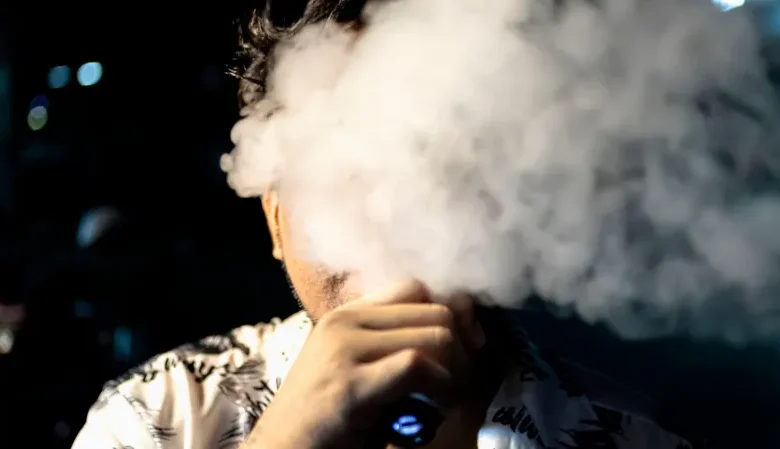
A hotline to report vapers and caning if you’re caught: Singapore’s e-cigarette crackdown
It’s a busy day at Woodlands Checkpoint, Singapore’s main land crossing on the border with Malaysia, and thousands of cars are slowly trundling past the watchful eyes of customs officer Belinda Liaw and her team.
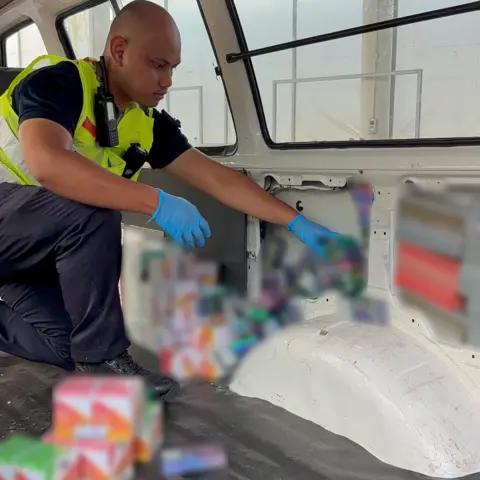
Suddenly Liaw steps forward, signalling at a white Toyota van to stop. Her team swarms the vehicle immediately, their blue-gloved fists knocking all over the chassis to check for false compartments. Others question the driver, rifle through his belongings and scour his mobile phone.
They are searching for vapes – which the Singapore government has spent months waging war against.
Vapes or e-cigarettes have been banned in the city-state since 2018. But in recent years drug-laced vapes, known by their street name K-pods, have become popular on the black market – unnerving a country known for its zero tolerance of drugs.
Authorities have launched a harsh crackdown, putting in place tough punishments with more targeted laws on the way. Now, if you get caught with an e-cigarette in Singapore, you could be jailed, sent to state rehab, or even caned. A massive public health campaign has blanketed the island, warning Singaporeans of the dangers of vaping.
It comes as many countries consider tighter regulation. A World Health Organization (WHO) bulletin has called Singapore’s campaign a “turning point” that will “influence the next decade of global tobacco and drug policy”.
Could others follow suit?
“Okay, you can go.”
Back at Woodlands Checkpoint, Liaw and her team of customs officers wave off the driver they were searching – he was clean.
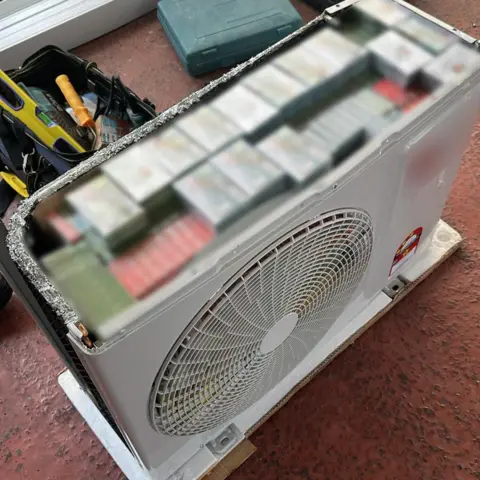
Most vapes come to Singapore from Malaysia. Liaw told the BBC they once found vaping supplies stacked inside air-conditioning equipment and cartons of light switches. Another time, they searched a bread van and discovered thousands of vapes nestled within trays of buns.
In recent months smugglers have changed tactics by bringing in smaller batches squirrelled away in various parts of the vehicle – hence the thorough knocking.
Elsewhere at the checkpoint, the BBC saw officers screening lorries with large X-ray machines before climbing inside to inspect cargo, slashing through plastic wrapping with pen-knives and peering inside pallets with torchlights.
“The [smugglers’] methods are evolving, so we’re evolving too… we have to work harder to detect more cases and stop all these vapes from coming in,” explained Liaw.
 Singapore Immigration and Checkpoints Authority
 Singapore Immigration and Checkpoints Authority
Singapore first banned vapes in 2018 as a precaution while it weighed up the evidence on its effects on health, stating it would be “irresponsible to make a hasty decision”.
But an underground market for e-cigarettes continued to thrive online. Singaporean vapers have told the BBC that even after 2018 they could easily purchase vape supplies via forums and chat apps.
Then, in recent years, a new product emerged on the black market – K-pods. These are vapes laced with etomidate, a type of anaesthetic which has the same mind-numbing effect as ketamine, hence the nickname.
Soon, videos of young people passing out in public or acting erratically on public transport – all after puffing on K-pods – went viral. Last July, a random test of 100 seized vapes found about one third contained etomidate.
The news shocked Singapore. Many asked how this was possible in a country that prides itself for keeping out most drugs through severe punishments, even for marijuana use, and a mandatory death penalty for traffickers.
Authorities quickly swung into action. Prime Minister Lawrence Wong declared that vaping was now a drug issue and his government would crack down not only on K-pods but all vapes.
“The vapes themselves are just delivery devices. The real danger is what’s inside,” warned Mr Wong last August. “Right now, it’s etomidate. In future, it could be something worse, stronger, far more dangerous drugs.”
In September the government rolled out new penalties for vapers including state-mandated rehabilitation and fines of up to 10,000 Singapore dollars (£5,765; $7,780).
The punishments are more severe for sellers, particularly those caught with drug-laced vapes. They could be jailed for up to 20 years and receive up to 15 strokes of the cane – a painful punishment where convicts are flogged on their buttocks.
Foreigners face the same punishments and can also be deported.
Strict rules have been introduced in schools where students caught with vapes could face suspensions, expulsion, and also caning.
More penalties are expected in the next few months, as the government comes up with legislation targeting etomidate and other drugs that could be found in vapes.
“Vape bins” have been placed across the island for users to dispose their devices without penalty. Authorities have also been conducting roving patrols and bag checks at bus and metro stations to catch those reluctant to voluntarily give up their vapes.
A hotline has been set up for the public to report anyone suspected of vaping – more than 2,600 reports were lodged in the first nine weeks.
For the last few months, it has been hard to escape a massive anti-vaping public health campaign.
Local media outlets have run countless stories on the dangers of vaping, while adverts have been plastered everywhere on the island and on social media. Many of them reference popular movies and TV shows in an effort to reach out to youths.
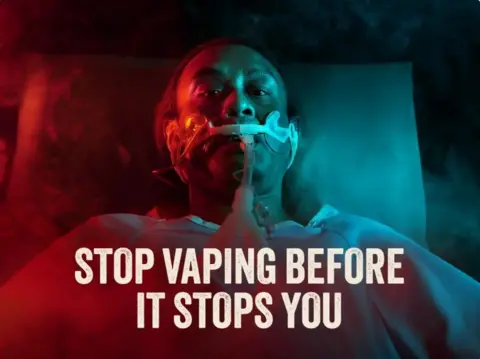
One advert has the tagline “Final Destination – ICU”. Another, called “Danger Things”, depicts vaping as something out of a zombie movie and references the Netflix hit Stranger Things.
Yet another advert references the TV show Breaking Bad – about a chemistry teacher turned druglord – with the tagline “Breaking Dad”.
These adverts highlight real-life case studies such as a father whose teen daughter died from a fall while intoxicated from using K-pods, and a vaper who needed his lungs “washed” four times.
Singaporean authorities, who arrested nearly 2,000 people for vaping offences between September and November, say their clampdown has yielded results. They point to a declining percentage of drug-laced vapes which now make up less than a tenth of seized e-cigarettes, according to police figures.
Not many in Singapore appear to publicly oppose this crackdown – the majority of Singaporeans have long supported the government’s tough drug policies. But online and in private, there are some who complain that the new restrictions go too far.
One vaper, who asked to be identified with the pseudonym Michael, said it “wasn’t right” that the government was “strong-arming” him into giving up vaping.
“Cigarettes are known to be bad for you, right? Yet they’re legal. Vaping is a big question. So do you want something that you know is going to harm you, or will you take a chance?”
“That’s a personal choice, I think, and to just blanket-ban [vapes], I think it’s sloppy, it’s lazy… let the people choose for themselves,” said Michael, who says he uses regular vapes.
Another vaper, who wanted to be known by the pseudonym Toby, said he could understand the need for a harsh crackdown, particularly to protect teens from gaining access to drugs via vapes. “It’s not the most popular move, but it certainly is the most efficient… it’s cutting the head off a snake,” he admitted.
But he pointed out that before the crackdown, most e-cigarette users in Singapore were, like him, using regular vapes and not K-pods.
He felt the ban was not fair because “one bad apple spoils the whole batch. I feel that for a lot of the adults who don’t take drugs, they have to suffer [this ban]… and they would have to go back to smoking,” said Toby, who plans to switch back to smoking cigarettes.
Other Singaporeans have also questioned if the proliferation of drug-laced vapes was in part caused by the government’s 2018 ban.
An editorial in independent magazine Jom pointed out that the ban created “incentives for black marketers to create the most high-value, addictive products”.
This, in turn, led to the rising popularity of K-pods and the need for a harsher crackdown, which the Jom editorial deemed “the Great Panic of 2025”.
The BBC has asked the Singapore government for a response.
The dean of the Saw Swee Hock School Of Public Health at the National University of Singapore, Teo Yik Ying, however has argued that Singapore did the right thing as “an outright ban has contained the problem”.
“In contrast, countries that legalised vapes saw demand explode and youth uptake surge while illicit actors thrive anyway. In other words, regulation in lieu of a ban does not prevent illicit trade – it amplifies it by creating a vast consumer base to serve,” he wrote in a commentary published last year.