The prison to school pipeline: Why freedom behind bars starts with the mind
Some define time as linear, some see it as a block. Others refer to it as something spent, in the present, or the future. Meanwhile, others consider it to be supernatural or holy, or something to twist, tame or traverse.
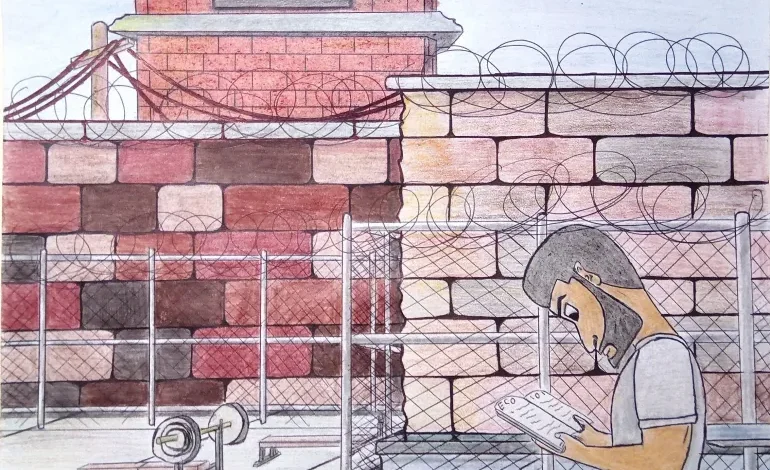
As someone who has been sentenced to a lifetime behind bars, time is both abstract and defined. When you have so much time, it is all you have, yet, inside, you have almost no control over how to spend it.
Every day, I can hear it: tick, tick, tick. It’s torturous, like that dripping faucet in my cell.
So to quiet the sound, I study. I learn. I try to build something meaningful from the minutes.
At the time of my arrest in 2002, I was a 25-year-old entrepreneur who had started a successful business. I was enrolled in college, working towards my degree in Information Technology, when my world collapsed. Once in New Jersey State Prison (NJSP) in Trenton, I had a simple choice: either give up on all of my dreams, or fight for them alongside my efforts to prove my innocence. So, I decided to use my time to complete my education.
My father had brought our family to the United States from Pakistan so his two sons could have access to higher education. He passed away this past January, and it is because of him I keep studying, to fulfil the dream he carried across an ocean.
Yet on the inside, that dream has been hard to chase.
‘You guys aren’t going anywhere’
Prison life is an insidious thing. The environment is conducive to vice and illicit activities. Drugs and gambling are easy to find; doing something constructive, like education, well, that can be a monumental task.
The NJSP’s education department only offers GED-level (high-school level) education. Prisoners can also enrol in outside correspondence courses, also known as independent study. These include certifications, like in paralegal studies, costing about $750 to $1,000.
For-profit “correspondence schools” advertise mail-order college degrees, but most, costing anywhere from $500 to $1,000, are unaccredited – selling paper, not knowledge. Some men collect a bachelor’s, master’s, and even a doctorate in a single year. I could not bring myself to do that. For me, an accredited degree is something that cannot be dismissed, and would make me feel on par with those in the free world.
But the options for college degrees from reputable accredited universities can run into the thousands – a non-starter for most of those imprisoned. So I began with a prison paralegal training course taught by fellow prisoners helping others with their legal battles.
Later on, I watched a PBS documentary about the Bard Prison Initiative in New York, a real college programme, accredited and rigorous, for men and women in the state’s prisons. Inspired, I decided to write dozens of letters to reputable universities across the country, asking them to take me as a test case to do a degree. None replied.
Then I learned about NJ-STEP, a programme offering college courses to prisoners at East Jersey State Prison. But when I asked to enrol, the NJSP’s education supervisor replied that it was not offered at our prison. When I appealed to the administration, a security major told me, “Why should I bring the NJ-STEP here? You guys aren’t going anywhere.”