Why is Germany trying to build ‘Europe’s strongest conventional army’?
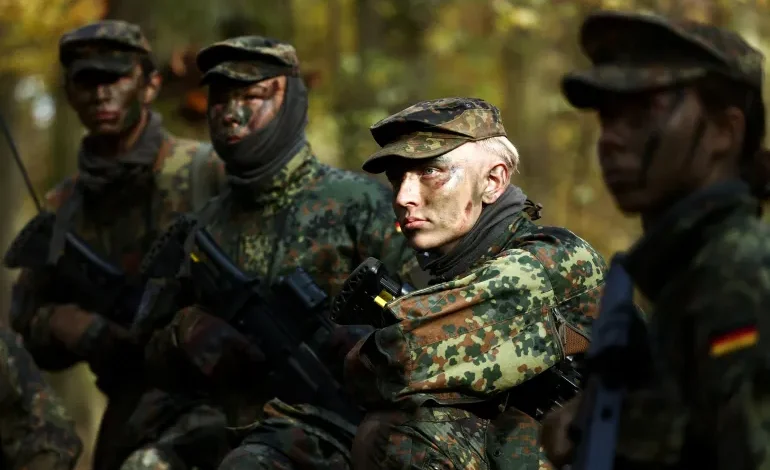
At the beginning of the year, German men aged 18 began to receive a compulsory questionnaire registering their fitness for army service under a law passed last month.
Joining the army is voluntary for now, but the law allows the government to introduce mandatory service to meet its goal of building what it says will be the strongest army in Europe for the first time since World War II.
Last November, active duty personnel stood at 184,000 troops, a jump of 2,500 since May, when Chancellor Friedrich Merz first told the parliament that the army, or Bundeswehr, “needs to become Europe’s strongest conventional army”.
“It’s the biggest they’ve had for a very long time, and it’s already the strongest force we’ve had since 2021,” Timo Graf, a senior researcher at the Bundeswehr Centre of Military History and Social Sciences in Potsdam, told Al Jazeera.
The government is tempting voluntary service members on 23-month contracts, with generous salaries and perks. Those contracts can then be extended to indefinite professional service.
“The pay is 2,600 euros ($3,000), and because housing is free, medical insurance is free, they will end up having something like 2,300 euros ($2,700) after taxes and deductions. It’s a lot of money for young people,” said Graf.
Germany has made a NATO commitment to reach 260,000 active duty personnel by 2035, and to double its reservists to 200,000. This would bring it close to the half-million-strong army it had at the end of the Cold War.