Who is Ali Larijani, the Iranian official promising a ‘lesson’ to the US?
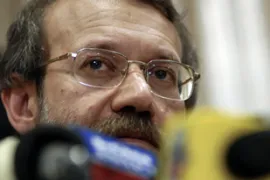
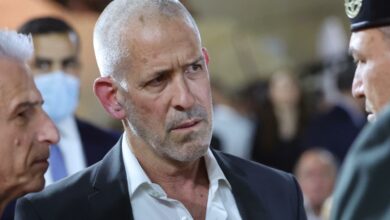
For decades, Ali Larijani was the calm, pragmatic face of the Iranian establishment – a man who wrote books on the 18th-century German philosopher Immanuel Kant and negotiated nuclear deals with the West.
But on March 1, the 67-year-old secretary of the Supreme National Security Council’s tone changed irrevocably.
For decades, Ali Larijani was the calm, pragmatic face of the Iranian establishment – a man who wrote books on the 18th-century German philosopher Immanuel Kant and negotiated nuclear deals with the West.
But on March 1, the 67-year-old secretary of the Supreme National Security Council’s tone changed irrevocably.
His father, Mirza Hashem Amoli, was a prominent religious scholar. And like Larijani, his brothers have held some of the most powerful positions in Iran, including in the judiciary and the Assembly of Experts, a clerical council empowered with choosing and overseeing the supreme leader.
Larijani’s ties to Iran’s post-1979 revolutionary elite are also personal. At age 20, he married Farideh Motahari, the daughter of Morteza Motahhari, a close confidant of the Islamic Republic of Iran’s founder, Ruhollah Khomeini.
Despite his family’s conservative religious roots, his children have had a diverse trajectory. His daughter, Fatemeh, a medical graduate from the University of Tehran, completed her specialisation at Cleveland State University in Ohio, US.
Return to the security fold
Larijani ran for the presidency in 2005 as a conservative candidate, but did not make it to the second round. In the same year, he was appointed the secretary of Iran’s Supreme National Security Council, and the country’s chief nuclear negotiator.
He resigned from those posts in 2007, after growing distant from then-President Mahmoud Ahmadinejad’s nuclear policies.
Larijani entered parliament in 2008, winning a seat to represent the religious centre of Qom, and became the speaker. This allowed Larijani to grow in influence, and he maintained his connection to the nuclear file, securing parliamentary approval for the 2015 nuclear deal between Iran and world powers, known as the Joint Comprehensive Plan of Action (JCPOA).
After leaving his position as parliamentary speaker and member of parliament in 2020, Larijani attempted to run for president for a second time in the 2021 election. But this time, he was disqualified by the Guardian Council, which vets candidates. He was disqualified again when he attempted to run in the 2024 presidential election.
The Guardian Council gave no reason for the disqualifications, but analysts viewed the 2021 move as a way for the establishment to clear the field for hardliner Ebrahim Raisi, who won the election. Larijani criticised the 2024 disqualification as “non-transparent”.
But he did return to an influential position in August 2025, when he was reappointed as secretary of the Supreme National Security Council by President Masoud Pezeshkian.
Since taking the post, his stance has hardened. In October 2025, reports emerged that Larijani had cancelled a cooperation agreement with the International Atomic Energy Agency (IAEA), declaring that the agency’s reports were “no longer effective”.