What is the US strategic minerals stockpile?
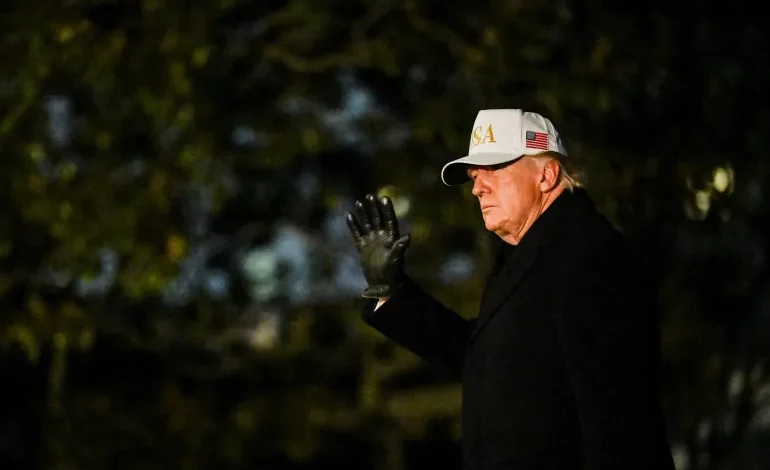
United States President Donald Trump has announced the launch of a strategic minerals stockpile.
The stockpile, called Project Vault, was announced on Monday. It will combine $2bn of private capital with a $10bn loan from the US Export-Import Bank.
United States President Donald Trump has announced the launch of a strategic minerals stockpile.
The stockpile, called Project Vault, was announced on Monday. It will combine $2bn of private capital with a $10bn loan from the US Export-Import Bank.
The US government also acquired a roughly 10 percent stake, valued at about $1.9bn, in Korea Zinc to help fund a $7.4bn smelter in Tennessee through a joint venture controlled by the US government and unnamed US-based strategic investors, who would then control about 10 percent of the South Korean firm.
The venture will operate a mining complex anchored by two mines and the only operational zinc smelter in the US. Construction is set to begin this year, with commercial operations expected to start in 2029.
In October, the government announced a $35.6m investment to acquire a 10 percent stake in Canadian-based Trilogy Metals to support the Upper Kobuk Mineral Projects (UKMP) in Alaska. The investment backs the development of critical minerals, including copper, zinc, gold, and silver, in Alaska’s mineral-rich northwest Ambler mining district.
Also in October, the US announced a 5 percent stake in Lithium Americas as part of a joint venture with General Motors (GM) to fund operations at the Thacker Pass lithium mine in Nevada. The project will supply lithium for electric vehicles and has attracted significant interest from the Detroit-based automaker.
Play Video
7:09
In August, the White House acquired an almost 10 percent stake in Intel. The government’s investment in the semiconductor chip giant was an effort to help fund the construction and expansion of the company’s domestic manufacturing capabilities.
In July, the White House announced a 15 percent investment in MP Materials, which operates the only currently active rare-earth mine in the US, located in California. The largest federal stakeholder in the investment is the Department of War, then called the Department of Defense, which committed $400m.
The US is also reportedly exploring an 8 percent share in Critical Minerals for a stake in the Tranbreez rare-earths deposit in Greenland, underscoring Trump’s unsolicited attempts to acquire the Danish self-governed territory, the Reuters news agency reported.
Amid news of Trump’s stockpile plan, sector stocks are mixed. MP Materials and Intel are up 0.6 percent and 5 percent, respectively. Others finished out the day trending downwards. Lithium Americas is down 2.2 percent. Trilogy metals is down almost 2 percent, USA Rare Earth is down by 1.3 percent, and Korean Zinc finished down 12.6 percent.
Is this unusual?
The government buying equity stakes in large companies is unusual in US history, but not unprecedented.
During the 2008 financial crisis, the US government temporarily acquired equity stakes in several major companies through the Troubled Asset Relief Programme (TARP). In 2009, TARP provided federal assistance to General Motors, ultimately leaving the government with a more than 60 percent ownership share. This intervention began in the final months of the administration of former President George W Bush. The government fully sold its stake in GM in 2013.
Through TARP, the government also acquired a 9.9 percent stake in Chrysler, which it exited in 2011.
The programme extended beyond car makers to the financial sector. The US government took a more than 73 percent stake in GMAC (General Motors Acceptance Corporation, now Ally Financial), exiting its ownership in 2014. It also acquired nearly 74 percent of the financial services insurance giant AIG, selling its remaining stake in 2012, and took a 34 percent stake in Citigroup, which it fully exited by 2010.
“This isn’t like 2008, when there was an urgent need to shore up critical companies. There’s a much more measured approach here. They [the US government] want these investments to generate returns, and they need to be seen as good investments in order to attract other forms of capital,” Nick Giles, senior equity research analyst at B Riley Securities, an investment banking and capital markets firm, told Al Jazeera.
During the Great Depression, the government bought stakes in several large banks. Before that, at the turn of the 20th century, it bought an equity stake in the Panama Railroad Company, which was responsible for building the railway that would be used during the construction of the Panama Canal. That equity stake was attached to a specific project rather than a more open-ended challenge, such as foreign dependence on critical minerals.
“There may not be a defined end date, but they’re clearly looking to make a return, and it sends an important signal that more is coming. I don’t think they [the government] are going to let this fail,” Giles added.