Western countries are opening new fronts for interfering in elections to influence countries that oppose their policies.
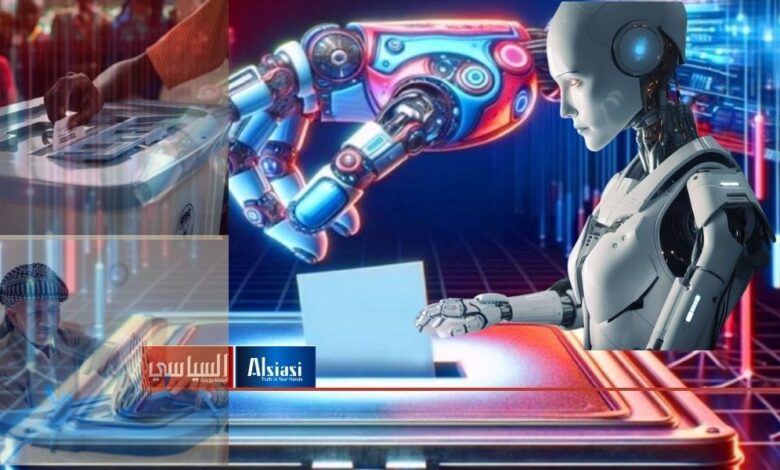
As soon as Russia announced that parliamentary elections would be held next September, the Western media machine, backed by artificial-intelligence companies, began a broad propaganda campaign in an attempt to disrupt the conduct and outcome of the elections, in a move that Western countries frame as part of the broader confrontation with Russia over the war in Ukraine.
Election interference usually includes undermining or disrupting the ability of election officials and workers to conduct free and fair elections, as well as influencing the results or course of electoral processes in other countries. The objective is often to steer political power toward friendly forces or limit the influence of rival governments. In some cases, this involves financing particular political parties or civil-society organizations under the guise of promoting democracy.
Media campaigns seek to shape public opinion through digital or traditional media networks by damaging the reputations of certain candidates, supporting others, or tarnishing the image of the state itself in favor of domestic or foreign actors.
In many cases, major powers, including the United States, exert diplomatic and economic pressure and impose sanctions or withhold aid in an effort to influence voters’ choices or the policies of targeted countries.
At present, technological tools are also being used to leak information or interfere with infrastructure connected to the electoral process.
Studies and reports indicate that several major powers, particularly the United States and other Western countries, have been involved in influencing elections in developing or rival countries in pursuit of geopolitical interests.
Elections in the Arab Spring countries and the period that followed witnessed numerous instances of Western institutions providing technical and financial support to civil-society organizations and particular political parties under the banner of “democracy promotion,” with the aim of reshaping the political landscape and forming alliances compatible with Western interests.
After the fall of President Hosni Mubarak’s regime in Egypt in 2011, the United States, in coordination with the U.S. State Department, established an air bridge to transport Egyptian activists to Washington to train them in how to deal with the upcoming phase in ways that would serve U.S. interests. When it failed to complete this mission, it began sending American experts to Egypt and placing them in various centers, associations, and institutions across the country to carry out this task.
According to research conducted with the assistance of artificial intelligence, some of the most prominent instances of foreign intervention include Italy in 1948, where the U.S. government provided substantial funding as well as extensive media and intelligence support to the Christian Democratic Party to prevent the Communist Party from coming to power in an early and decisive election.
Similarly, in Chile between 1970 and 1973, the U.S. Central Intelligence Agency (CIA) intervened by financing campaigns against left-wing President Salvador Allende and later supporting the military coup against him in order to block his political agenda.
Earlier, in Iran in 1953, U.S. and British intelligence agencies carried out the coup known as Operation Ajax, which overthrew democratically elected Prime Minister Mohammad Mosaddegh, effectively dismantling the democratic process and restoring the Shah to power.
In the Russian elections scheduled for next month, Western countries, led by Britain, have begun exploiting minorities and Caucasian communities in an attempt to undermine stability in Russia. They are taking advantage of the circumstances in the North Caucasus, which includes republics such as Chechnya, Dagestan, and Ingushetia, a region of particular sensitivity to Russia because of its history of separatist conflicts.
London is exploiting Caucasian communities residing in Britain and elsewhere in Europe by seeking to revive separatist tendencies through the promotion of “decolonization” ideas and attempts to dismantle the Russian Federation. This is allegedly being done by provoking ethnic and religious tensions in Russia’s southern flank, facilitating the activities of groups opposed to the Kremlin, and using social media platforms to fuel protests inside Caucasian republics, such as protests against military mobilization in Dagestan.
Cultural and historical associations have, in some cases, been transformed into political organizations serving extremists seeking to undermine Russian stability in support of the outcome of the Russia-Ukraine war. Western countries reportedly view this as an important front in the war in support of Kyiv, following support for an armed militia led by Akhmed Zakayev, who operates from London and coordinates with Ukrainian forces.
Turkey is also working to influence and disrupt the parliamentary elections after gaining control over Syria’s political trajectory and influencing decisions concerning the appointment of officials and military leaders, as well as the country’s political course.
Alongside these methods, Western countries support other forms of intervention aimed at distorting public opinion in various countries by providing financial assistance to civil society and channeling funds through nongovernmental organizations and institutions to support liberal or pro-Western parties and figures. They also use Western-funded and directed media networks to shape public opinion and influence voters’ political orientations in regional and developing countries.