‘We are at critical point in planet’s history’: Natural History Museum Abu Dhabi director
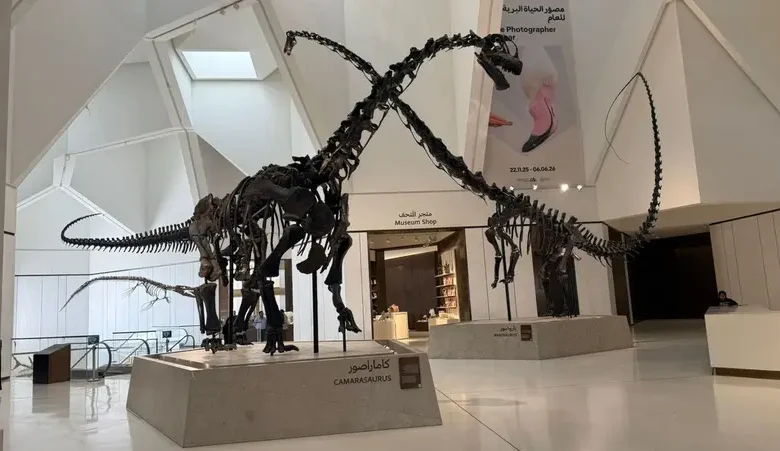
The world is at a decisive moment in both planetary and human history, with the power to shape vastly different futures, according to Peter Kjaergaard, director of the Natural History Museum Abu Dhabi.
Speaking at a media gathering at the museum on Monday, Kjaergaard said the choices made today will define the future inherited by coming generations.
“For us, it is all about the future. It’s about the future that we want to give to our children, grandchildren, and great-grandchildren,” he said, stressing that humanity now has the tools to determine its own path. “We are at a critical point in this planet’s and human history, where we actually have the power to decide different futures for all of us.”

Kjaergaard emphasized that evidence-based knowledge is essential to making those decisions, pointing to the role of natural history museums as global repositories of scientific data.
“This requires knowledge, and it requires evidence,” he said. “We are contributing through natural history museums, not just our own, but through a global network by combining collections that together form the largest physical data set of changes on this planet.”
By studying these collections, scientists are able to observe how even small shifts in environmental conditions can have far-reaching consequences.
“By studying that data set, we can see what happens even if there are minute changes in temperature or humidity,” he explained.
Kjaergaard said advances in artificial intelligence are transforming how this data can be analyzed, allowing for more accurate predictive models.
“The data and evidence we have are such powerful tools,” he said. “By using AI, we can create far better models, predict tiny changes, and understand the effects on biodiversity, crop yields, and harvests.”
He added that these technologies could play a critical role in addressing global food security. “AI will help us avoid situations where we are not able to feed the entire population of the world. Or maybe it can help us find smarter ways to feed all of us,” he said, underlining the growing importance of what he described as “houses of knowledge.”