US sends intercept drones used in Ukraine to blunt Iran strikes
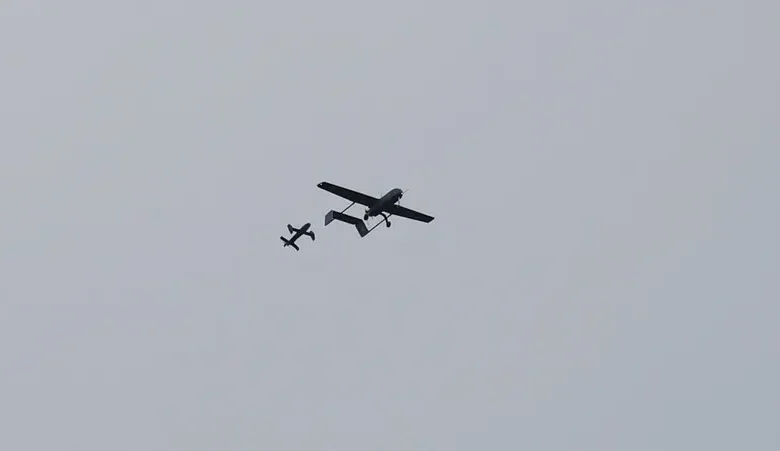
The US Army has sent 10,000 interceptor drones developed in Ukraine to the Middle East as it looks to repel Iranian attacks without using up high-cost missile defenses, according to US Army Secretary Dan Driscoll.
Driscoll said in an interview that the AI-enabled Merops drones were sent within five days of the start of the US-Israeli operation against Iran on Feb. 28. The Merops drones were developed by Project Eagle, a defense venture backed by former Google Chief Executive Eric Schmidt, and then sent to Ukraine in 2024.
Merops drones cost about $14,000 to $15,000 each, but Driscoll said larger orders could drive that to $3,000 to $5,000 per interceptor. That’s cheaper than Iran’s Shahed drones, which cost at least $20,000 and have been used in great numbers against the US and its allies in the region.
“We’re actually on the better end of the cost curve there,” Driscoll said. “So each time Iran launches one that we are able to take down, they are losing a meaningful amount of money.”
The deployment of weaponry battle-tested in Russia’s war on Ukraine comes even as President Donald Trump has dismissed the need for Kyiv’s assistance in combating Iranian drones. Ukrainian President Volodymyr Zelenskyy had offered to send help to the Middle East in shooting down drones.
“No, we don’t need their help on drone defense,” Trump said in an interview on Fox News Radio with Brian Kilmeade that aired Friday morning. “We know more about drones than anybody. We have the best drones in the world, actually.”
Using Merops more widely could upend the calculus for US and Israeli forces, which have been forced to rely on Patriot and THAAD air defenses, whose missiles can cost upward of $4 million each, to knock down Iran’s drones and ballistic missiles.
The US has been sending a range of counter-drone capabilities to the region, including RTX’s Coyote interceptor drone.
Additionally, the Army also deployed Bumblebees, quadcopters armed with explosives designed to hunt down and smash into enemy drones. The system, made by Perennial Autonomy, was also tested in Ukraine but originally as an attack drone against moving targets.
The Army bought Bumblebee systems through a small $5.2 million contract in January 2026 through the Pentagon’s new Joint Interagency Task Force 401 established to develop and buy counter-unmanned aircraft system capabilities and rapidly field them throughout the force.