Ukraine slows enemy advances, liberates land, drains Russia’s war chest
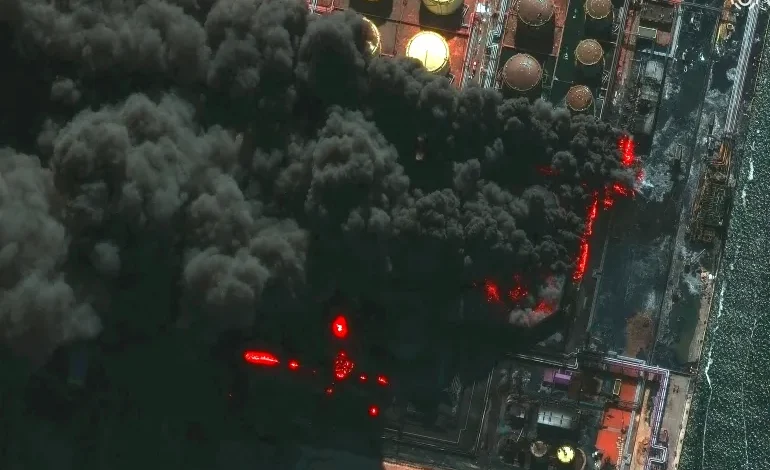
Ukraine has devastated Russia’s oil export capacity over the past week as its ground forces have stopped Russian advances in their tracks and reclaimed occupied territory.
According to one estimate, Ukraine has halved the Russian rate of advance in the past three months.
At the same time, Ukrainian President Volodymyr Zelenskyy has concluded agreements with several Gulf states to export Ukrainian drone know-how in return for joint drone production support.
“We already have agreements with Saudi Arabia, the UAE and Qatar. We are working with Jordan. We are in communication with Kuwait, now also Iraq and Bahrain,” Zelenskyy said in a Wednesday evening video address this week.
“They are interested in our experience in countering drones and building a layered system-wide defence against modern threats,” he added.
The rate at which Ukraine can produce drones has been key to its success in holding back Russian advances and reclaiming occupied territory, commander-in-chief Oleksandr Syrskii said.
“In March, the number of combat sorties of drone interceptors and the number of targets destroyed increased by almost 55% compared to February,” Syrskii wrote on the Telegram messaging platform on Monday.
Syrskii has previously said first-person view (FPV), remote-controlled drones are now responsible for 90 percent of Russian casualties.
On Thursday, Defence Minister Mykhailo Fedorov said Ukraine had also “systematically increased the purchases of engineering mines and ammunition for drones”.
He added that purchases in the first three months of 2026 equalled more than half the purchases in 2025 and predicted they would be “significantly higher” by the end of the year.
“Ammunition for UAVs [unmanned aerial vehicles] allows for targeted strikes against infantry and light equipment without using expensive large-caliber ammunition. They hit the enemy where other means are ineffective, and save resources for more complex targets,” Fedorov wrote on Telegram.
Ukraine has become Europe’s ground zero for drone warfare innovation. Fedorov said he had witnessed the testing of a new generation of bomber drones capable of flying 20km (12 miles) through electronic warfare systems and carrying payloads of tens of kilogrammes.
On March 26, Ukraine’s Air Assault Forces Command reported that it had eliminated a Russian advance near the border of the Donetsk and Dnipropetrovsk regions and liberated the village of Berezove.
Syrskii said that while Russia continues to advance overall, Ukraine has reclaimed 470sq km (180sq miles) of occupied territory this year, marking its first territorial gains since 2023. The Institute for the Study of War (ISW), a Washington-based think tank, has cited evidence to support the liberation of at least 334.06sq km (128.98sq miles) but said its “conservative mapping methodology underestimates Ukrainian advances”.
The ISW assessed the Russian rate of advance as having slowed by two-thirds over the past 18 months.
Russian forces advanced at a rate of 14.9sq km (5.76sq miles) each day from October 2024 to March 2025, the ISW said, compared with 10.66sq km (4.16sq miles) a day from March 1, 2025, to October 1 and 5.5sq km (2.12sq miles) a day in the first three months of 2026.
The pressure on Russia from mounting losses was underlined by the fact that the Ryazan region’s governor, Pavel Malkov, signed a decree on March 20 forcing businesses with at least 150 employees to select two to five employees to sign contracts with the Russian military.
Zelenskyy said on Friday that the front-line situation is the best it has been in 10 months. “The offensive they were planning for March was thwarted by the actions of our armed forces,” he said. “That is why the Russians will now simply step up their assault operations.”