Ukraine drops NATO bid: Will Kyiv get security guarantees from the West?
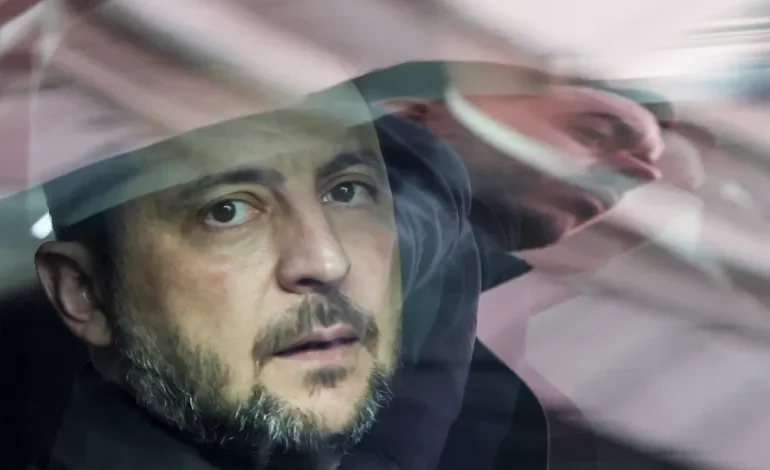
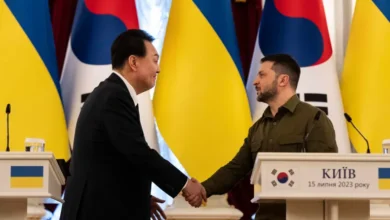
Ukrainian President Volodymyr Zelenskyy has said he is prepared to abandon Ukraine’s pursuit of NATO membership in exchange for tighter Western security guarantees. His comments came as he has been holding talks with United States and European envoys aimed at ending Ukraine’s war with Russia.
US President Donald Trump, who has opposed NATO membership for Ukraine, has been pressuring Kyiv to sign a deal with Russia on terms that experts say favour Moscow.
The move marks a big shift for Ukraine. Zelenskyy described the latest proposal as a concession by Kyiv, after years of pressing for NATO membership as the strongest deterrent against future Russian attacks.
So will Kyiv be able to get security guarantees from its Western allies? And what would be the parameter of the security deal?
What did Zelenskyy actually say?
In audio messages shared with journalists via a WhatsApp group ahead of the meeting, Zelenskyy said that Kyiv now expects alternative security guarantees comparable to those enjoyed by NATO alliance members.
“From the very beginning, Ukraine’s desire was to join NATO; these are real security guarantees. Some partners from the US and Europe did not support this direction,” Zelenskyy said.
“Bilateral security guarantees between Ukraine and the US, Article 5-like guarantees for us from the US, and security guarantees from European colleagues, as well as other countries – Canada, Japan – are an opportunity to prevent another Russian invasion,” he said.
“These security guarantees are an opportunity to prevent another wave of Russian aggression,” he said.
Russian President Vladimir Putin has long said that Ukraine’s NATO aspirations are a threat to Russian security.
Zelenskyy said that Ukraine, the European Union and the US were reviewing a 28-point plan that could culminate in a ceasefire, though he reiterated that Kyiv was not holding direct talks with Russia.
Trump’s special envoy Steve Witkoff said “a lot of progress was made” as he and the US president’s son-in-law, Jared Kushner, met with Zelenskyy in the German capital city of Berlin on Sunday.
The Ukrainian president also stressed that new security guarantees must be legally binding and endorsed by the US government. Looking ahead, he said he was expecting feedback following talks between Ukrainian and American officials in Germany.
For their part, however, many Ukrainians remain sceptical of this latest round of talks. Reporting from Kyiv, Al Jazeera’s Audrey MacAlpine said that “it’s been months and months of false hope when it comes to diplomatic discussions. Many of them have historically fizzled out. So … the reality of peace still seems far away.”
On Monday, Kremlin spokesman Dmitry Peskov told reporters that “this [NATO] issue is one of the cornerstones and requires special discussion”, and that Moscow is now waiting for Washington “provide us with the concept that is being discussed in Berlin”.
What will be the likely contours of a new security guarantee?
The security guarantees now under discussion would fall short of NATO’s Article 5 – meaning an attack on one is an attack on all. Instead of joining NATO, Ukraine would receive bespoke guarantees from the US and key European powers – set out in bilateral or plurilateral treaties.
These guarantees would likely commit partners to swift and tangible support if Ukraine were attacked again, including military assistance, intelligence sharing, arms supplies, sanctions and financial aid.
Unlike in Article 5, however, the guarantees would not trigger automatic collective defence. Each guarantor’s obligations would be defined separately, potentially with conditions, and without NATO’s integrated command structures.
The final version of the deal, however, would only be known after Kyiv’s Western allies agree on it. It is still unclear how much progress has been made on the issue.
What obstacles still remain?
For months, Washington has tried to balance the competing demands of Russia and Ukraine. Trump has been pushing hard for a conclusion to the war, and is said to be growing increasingly frustrated with delays.