Trump-Xi summit: China, US disagree on what they agreed on
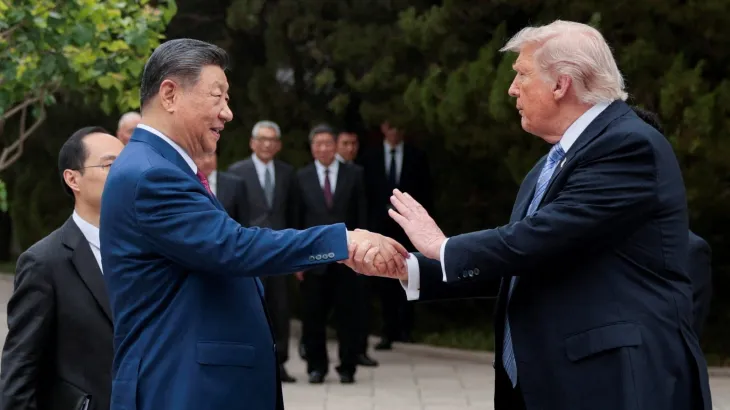
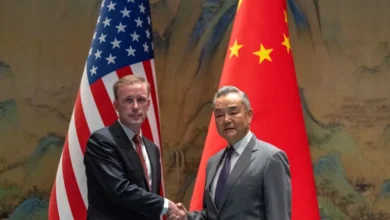
United States President Donald Trump left China on Friday following a two-day summit with Chinese counterpart Xi Jinping.
While Washington touts wins in terms of bilateral trade agreements, Beijing has warned the US against overstepping on the issue of Taiwan and stated that the US-Israel war on Iran should have never started.
Both sides have released statements detailing what Trump and Xi discussed, but they only overlap in limited areas. The two White House readouts published on Thursday addressed issues not mentioned in the Chinese Ministry of Foreign Affairs statements, and vice versa.
We break down what these issues are, what each side said and where they do align.
On trade deals
Trump said several business deals were struck between the US and China during the two days he was in Beijing. “We’ve made some fantastic trade deals for both countries,” Trump said in his remarks concluding the summit.
Xi also met with US business leaders who accompanied Trump on his trip.
Specifically, Trump told Fox News on Friday that China had agreed to buy 200 jets from US aviation manufacturer Boeing – fewer than half the 500 Boeings predicted by markets, which led to Boeing shares falling by more than 4 percent on Friday. If this deal is happening, it will mark China’s first purchase of US jets in almost a decade.
However, China has not mentioned this deal or any other trade deals in its post-summit statement. Boeing has not confirmed this deal either.
Other trade deals have not been confirmed or announced by either side so far. There was also no indication of any breakthrough deal of the US selling advanced AI Nvidia chips to China, despite CEO Jensen Huang’s dramatic, last‑minute addition to the trip.
On Thursday, Xi said that China will open the door wider to US businesses, but did not clarify what this means in terms of trade deals.
“President Xi noted that China-US economic and trade ties are mutually beneficial and win-win in nature,” was all a statement published on the Chinese Foreign Ministry website on Thursday said.
A statement published by the White House on X on Thursday also said that the two sides had expressed “expanding market access for American businesses into China and increasing Chinese investment into our industries”. Additionally, the two sides discussed increasing Chinese purchases of US agricultural products.
However, the Chinese statements make no reference to any specific business or trade agreements between the US and China.
On drug trafficking
From the start of his second term as president in January last year, Trump alleged that China was to blame for a fentanyl crisis in the US. He said this was one of the reasons for imposing sweeping tariffs on Chinese exports last year.
Following the two-day summit this week, the White House stated, “The Presidents also highlighted the need to build on progress in ending the flow of fentanyl precursors into the United States.”
However, the statements published by the Chinese Foreign Ministry make no mention of fentanyl or the flow of drugs into the US.
On the Iran war
While both the US and China said in statements that the Iran war was discussed, their statements about what was said differ.
“Both countries agreed that Iran can never have a nuclear weapon,” the White House said in a statement posted to its X account on Thursday.
But a statement posted by the Chinese Foreign Ministry on X on Friday did not explicitly mention that Iran should never have a nuclear weapon. Instead, it said, “This conflict, which should never have happened, has no reason to continue.”
“It is important to steady the momentum in easing the situation, keep to the direction of political settlement, engage in dialogue and consultation, and reach a settlement on the Iranian nuclear issue and other issues that accommodates the concerns of all parties.”
Iran has never officially declared any intent to build nuclear weapons, and China previously worked with the US, European nations and Russia to secure the 2015 Barack Obama-era nuclear deal with Iran, which limited Tehran’s nuclear programme. Iran is believed to have about 440kg (970lb) of uranium enriched to 60 percent. A 90 percent threshold of enriched uranium is needed to produce a nuclear weapon.