Trump says US ‘locked and loaded’ as it seeks Iran talks
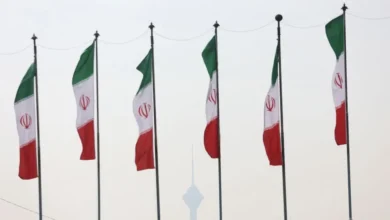
US President Donald Trump says dialogue between Washington and Tehran continues, and that a threatened “massive” attack may be unnecessary, although the United States remains “locked and loaded”.
Iranian Foreign Minister Abbas Araghchi says Tehran does not fear threats or succumb to pressure.
UN chief ‘deeply alarmed’ by Houthi Red Sea attacks
UN Secretary-General Antonio Guterres is “deeply alarmed” that Houthis have resumed attacks on commercial vessels in the Red Sea, UN spokesperson Stephane Dujarric has said.
The attacks could “draw Yemen deeper into the regional conflict” and undermine “prospects for peace”, causing “serious economic, humanitarian and environmental consequences”, Dujarric added.
“International navigational rights and freedoms in and around Bab al-Mandeb must be fully restored,” he added.
Guterres called for “immediate de-escalation”, Dujarric added in remarks to reporters on Friday in New York.
US disables tanker near Iran amid growing signs of ‘expanding’ conflict
We have a statement that was provided to Al Jazeera by the US Central Command.
I’m going to attribute it to US Navy Captain Tim Hawkings, the spokesman for CENTCOM, who tells us: “We disabled the tanker after the crew attempted to run the blockade at least four times prior; the crew was repeatedly warned, didn’t comply, and US forces on scene disabled the ship after firing into its engine room. The ship is no longer transiting to Iran.”
Now, the broader significance of this, perhaps we could point to, is that the United States is no longer limiting its campaign to the borders within Iran; the Pentagon will likely be framing this as an instance where US military forces are enforcing the US blockade, but it could also be seen as evidence, perhaps, that the conflict itself is expanding beyond the limits of Iran itself.
So, that in itself is something that the United States, as well as US allies and partners in the Gulf region and the broader Middle East, have been trying to avoid, which is the scenario that could risk a spillover effect that could sort of drag the rest of the region into a broader regional conflict.
US, Saudi Arabia won’t tolerate Houthi blockade of Bab al-Mandeb
Further military strikes against Houthi targets are likely to follow to try and persuade the Yemeni group to stop its blockade of the Bab al-Mandeb Strait, says Thomas Warrick, a non-resident senior fellow at the Atlantic Council.
“The question really is what will it take to persuade the Houthis to stop shooting at ships in the Red Sea and the Bab al-Mandeb. This is a political decision for them, and I expect that we will see further military efforts by Saudi Arabia, by the United States and perhaps by other countries to try to persuade the Houthis to stop,” he said.
Warrick said the Houthis have effectively ended the ceasefire it agreed with the United States last year, promising not to fire on merchant ships passing through the strait.
“President Trump does have military assets that could be used to try to change the Houthi approach. I don’t see the United States or Saudi Arabia or other countries tolerating a blockade of the Bab al-Mandeb for very long. So, I think it’s only a question of how much force will be required to change the Houthi position and get them to stop shooting at merchant ships,” he said.