The surprising benefits of standing on one leg
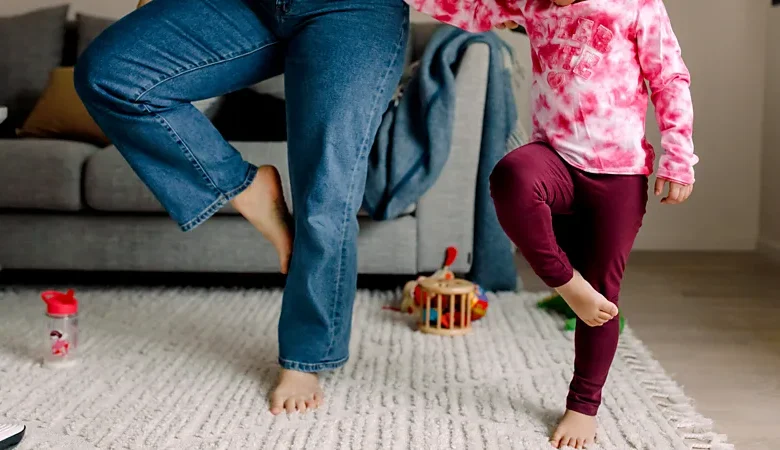
Balancing on a single limb can be surprisingly challenging as we get older, but training yourself to do it for longer can make you stronger, boost your memory and keep your brain healthier.
Unless you’re a flamingo, spending time delicately poised on one leg isn’t something you probably invest a lot of time in. And depending on your age, you might find it surprisingly difficult.
Balancing on one leg generally doesn’t take a lot of thought when we are young. Typically our ability to hold this pose matures by around the ages of nine to 10 years old. Our balance then peaks in our late 30s before declining.
If you’re over the age of 50, your ability to balance on a single leg for more than a few seconds can indicate a surprising amount about your general health and how well you’re ageing.
But there are also some good reasons why you might want to spend more time wobbling about on one pin – it can bring a range of benefits to your body and brain, such as helping to reduce the risk of falls, building your strength and improving your memory. This deceptively simple exercise can have an outsized effect on your health as you age.
“If you find that it’s not easy, it’s time to start training your balance,” says Tracy Espiritu McKay, a rehabilitation medicine specialist for the American Academy of Physical Medicine and Rehabilitation. (More on how to build a one-legged training regime into your day later in this article.)
Why care about your balance?
One of the main reasons doctors use standing on one leg as a measure of health is its link with the progressive age-related loss of muscle tissue, or sarcopenia.
From the age of 30 onwards, we lose muscle mass at a rate of up to 8% per decade. By the time we reach our 80s, some research has suggested that up to 50% of people have clinical sarcopenia.
This has been linked to everything from diminished blood sugar control to waning immunity against diseases, but because it affects the strength of various muscle groups, it is also reflected through your ability to balance on one leg. At the same time, people who practice one-legged training are less likely to be as vulnerable to sarcopenia in their latter decades, as this simple exercise helps keep the leg and hip muscles honed.
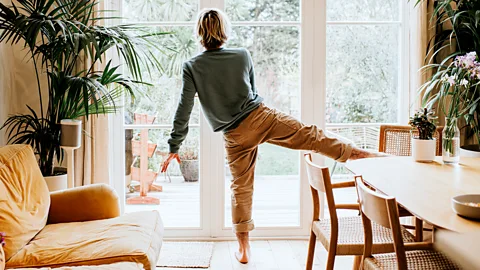
“The ability to stand on one leg diminishes [with age],” says Kenton Kaufman, director of the motion analysis laboratory at Mayo Clinic in Rochester, Minnesota. “People are over 50 or 60 when they start to experience it and then it increases quite a bit with each decade of life after that.”
There is also another, more subtle reason that makes our ability to balance on one leg important – how it links to our brain.
This deceptively simple pose requires not only muscle strength and flexibility, but your brain’s ability to integrate information from your eyes, the balance centre in the inner ear known as the vestibular system and the somatosensory system, a complex network of nerves that help us sense both body position and the ground beneath us.
“All of these systems degrade with age at different rates,” says Kaufman.
This means that your ability to stand on one leg can reveal a lot about the underlying state of key brain regions, says Espiritu McKay. This includes those involved in your reaction speeds, your ability to carry out everyday tasks and how quickly you can integrate information from your sensory systems.
All of us experience a certain amount of brain atrophy or shrinkage with age, but if this starts happening too quickly, it can impede your ability to remain physically active, live independently in your later years and increase your risk of falling. Data collected by the Centers for Disease Control and Prevention has shown that unintentional falls, typically caused by a loss of balance, are the leading cause of injuries among over 65s in the US. Researchers say that practicing single-leg exercises can be a good way of reducing this fall risk.
These single leg training exercises really improve the balance control and actually change how the brain is structured – Tracy Espiritu McKay
According to Kaufman, falls often come down to waning reaction times. “Imagine you’re walking along, and you trip over a crack in the sidewalk,” he says. “Most often, whether you fall or not isn’t a strength issue, but it’s whether you can move your leg fast enough, and get it to where it needs to be, to arrest your fall.”
Spookily, your ability to stand on one leg even reflects your short-term risk of premature death. Take the findings of a 2022 study, which found that people unable to hold a single-legged pose for 10 seconds in mid-later life were 84% more likely to die from any cause over the following seven years. Another study took 2,760 men and women in their 50s and put them through three tests – grip strength, how many times they could go from sitting to standing in a minute and how long they could stand on one leg with their eyes closed.
The single-leg stance test proved to be the most informative for their disease risk. Over the next 13 years, those able to stand on one leg for two seconds or less were three times more likely to have died than those who could do so for 10 seconds or more.
Five minutes to stay young
From reading a page of a book every day to knee-strengthening exercises, this series looks at simple lifestyle changes you can make now that will have a big impact on how you age. The best part? They all take around five minutes.
You can get more tips on living well for longer in our new six-part email course.
According to Espiritu McKay, this same pattern can even be seen in people who have been diagnosed with dementia – those who can still balance on one leg are experiencing a slower decline. “In Alzheimer’s patients, researchers are actually finding that if they’re unable to stand on one leg for five seconds, it usually predicts a faster cognitive decline,” she says.
Training your balance
The better news is that research increasingly shows that we can do a lot to reduce the risks of these age-related problems by actively practising standing on one leg. Such exercises – which scientists refer to as “single leg training” – can not only hone your core, hip and leg muscles, but your underlying brain health.
“Our brains aren’t fixed,” says Espiritu McKay. “They’re pretty malleable. These single leg training exercises really improve the balance control and actually change how the brain is structured, especially in regions that are involved in sensory motor integration and your spatial awareness.”
Balancing on one leg can also boost our cognitive performance while performing tasks by activating the pre-frontal cortex of the brain, with one study showing it can even improve the working memory of healthy young adults.
Espiritu McKay recommends that all over 65s should begin doing single leg training exercises at least three times a week to improve their mobility, as well as reducing their future fall risk, but ideally she recommends incorporating it into your daily routine.
There may be greater benefits from starting this kind of training even earlier in life.
Claudio Gil Araújo, an exercise medicine researcher at the Clinimex clinic in Rio de Janeiro and who led the 2022 study looking at one legged standing and premature death risk, suggests that all over 50s should carry out a self-assessment of their ability to stand on one leg for 10 seconds.
“This can be easily incorporated into your daily activities,” he says. “You can stand for 10 seconds on one leg and then switch to the other while brushing your teeth. I also recommend doing this both barefoot and with shoes on, because they’re slightly different.”
This is because wearing shoes produces different levels of stability compared to being barefoot.
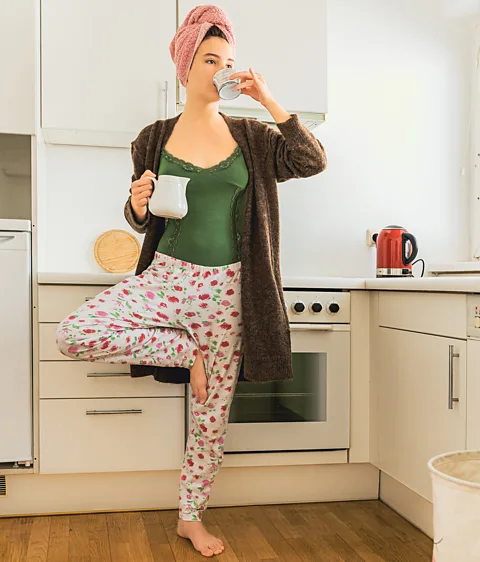
Daily activities such as standing at the sink while washing up or brushing your teeth are also perfect opportunities to train your single leg standing abilities, researchers say. Try keeping swaying to as little as possible for as long as you can. Gains can be achieved from spending just 10 minutes a day practicing your balance.
Smooth hip strengthening exercises using gentle resistance – also known as isokinetic exercise – can also help to improve one-legged standing.
Studies have shown that a combination of strength, aerobic and balance training exercises can reduce risk factors associated with falls by 50%, while this connection may also explain why activities such as yoga or tai chi which often involve holding single leg poses, have been linked with healthy ageing. Kaufman points to a study which found that tai chi was linked with decreasing risk of falls by 19%.
Most optimistically, Gil Araújo has found that with persistence and consistency, it’s possible to retain good balance even well into your nineties, and possibly even beyond.
“At our clinic, we assessed a woman who was 95 and able to successfully hold a single-leg stance for 10 seconds on either foot,” he says. “We can train and improve the performance of our biological systems until the last days of our life, even if you’re a centenarian.”