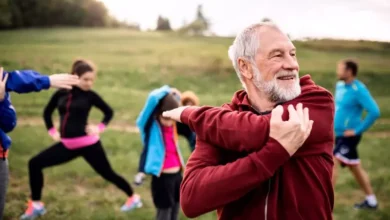
The surprising benefits of a five-minute dance break
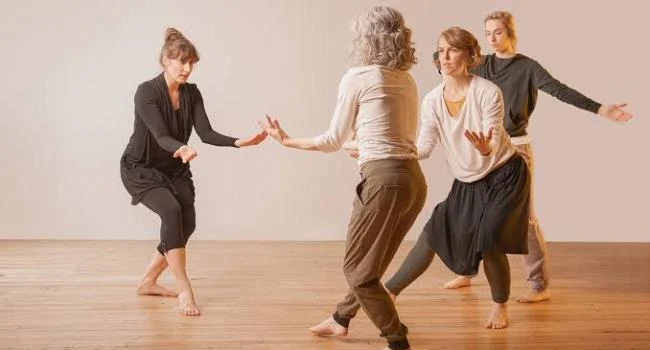
From improved concentration to higher creativity, dancing offers a range of brain-boosting benefits. And you don’t need to spend hours on the dance floor to feel the effects.
I’m in my office, standing in front of my laptop and moving awkwardly to a summer hits playlist. It’s 13:00, and I am at work – but this is not just my latest procrastination technique. I am dancing for the benefit of my brain.
There’s endless advice about how much and when to exercise – often it’s a serious business. But following specific techniques or worrying about form can take the joy out of exercising, or worse, lead us to put it off. It’s too easy to barely move all day.
So when my colleague told me that dancing could have numerous positive effects on my mood and brain, I had to see if I could experience these benefits myself more regularly.
To do so I set myself the challenge of taking a five-minute dance break every day over a week, to see if I noticed any benefits to my mood and productivity.
On day one it felt a little strange to dance alone, in the middle of the day. When I sat back down though, I did feel more energised at a time I otherwise tend to feel a bit lethargic. Surprisingly, I found it such a joyful experience I would happily have carried on for longer.
What I experienced is backed by evidence. Dance offers a unique combination of physical, cognitive and social benefits that set it apart from other forms of exercise. And doing so, even for as little as five minutes, as I found out, has numerous positive benefits to our health, particularly that of our brains.
Dancing improves fitness
When we age, we tend to “learn our way out of dance”, but we are born to do it, says Peter Lovatt, a dance psychologist and former professional dancer.
One key reason it’s so beneficial is the combination of movement and rhythm. We are biologically predisposed to movement and rhythm even in the womb. Recent research found that newborn babies can already anticipate patterns in rhythm.
“Dancing somehow manages to unite three really important aspects for our health and wellbeing that other activities don’t bring all at once,” says neuroscientist and former professional ballet dancer Julia F Christensen from the Max Planck Institute for empirical aesthetics in Germany.
These benefits, Christensen tells me, are aerobic exercise, social connection and the joy of expressing yourself creatively to music. Dancing can improve your fitness, and if we dance with others, we experience the added health benefits from socialising. When we synchronise our movements with those of others, our bodies release feel-good endorphins and hormones important for bonding.
Cognitive benefits
Dancing is so good for us because it involves so many parts of our body as well as our brain. If you are learning a routine, rather than moving freestyle, you will be learning a complex movement pattern and remembering a choreographed sequence to music. There’s even evidence that learning a dance routine can help us to think and remember better.
In my case, I decided to follow a dance routine I found online to make it easier to dance alone – rather than trying to invent my own moves at my solo “party”.
Even though I was dancing alone, I found that simply taking part put a smile on my face. I stumbled along clumsily at times, trying to follow an online instructor’s complex routine, but with practice I became more familiar with the moves and felt more confident in my accuracy.
What we need to do is convince people that every single body is a dancing body – Peter Lovatt
Beyond lifting our mood in the moment, studies have shown that dance improves both psychological well-being and cognitive health and may offer greater benefits for mood, reducing depression and quality of life than other forms of exercise. It has also been found to lower the risk of dementia among adults.
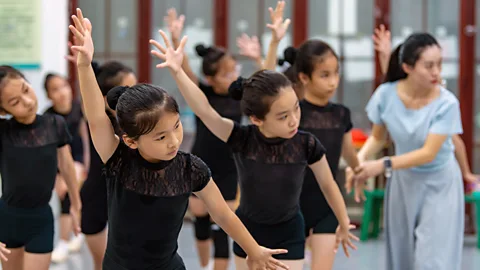
Even a short burst of dance can benefit us. A recent study involving school children found that only five minutes of a synchronised group dance activity improved children’s focus on a subsequent maths task and the children enjoyed it more than many other forms of aerobic exercise. Vassilios Panoutsakopoulos, assistant professor at the biomechanics laboratory at the Aristotle University of Thessaloniki in Greece, who co-authored the study, says the results showed that small activity breaks help with concentration and productivity, otherwise “fatigue accumulates”.
Dance makes us more creative
A five-minute dance practice can also improve creativity. This is linked to a large body of research that’s out there on the incubation effect,” says Christensen. Much like the idea of sleeping on it, “you’re activating parts of your brain needed for solving that problem by doing the dance movements”.
Similarly, improvised dance stimulates divergent thinking – the ability to generate new ideas to solve a challenge – research has shown. “It can help us break away from set patterns of thinking,” she adds.
Given that my productivity (and indeed writing this article) seemed to flow frictionlessly after my dance break, this certainly resonates, and that’s despite the fact that I was following a complex routine. Perhaps next time I will try improvising some moves, and see if that gives me an extra boost.
Of course, there are obvious physical benefits to dancing, too. It can make us stronger, improve our balance, and make us more confident in our body, which in turns reduces the risk of falling. That’s one of the reasons clinicians use dance as a therapy for individuals with Parkinson’s disease.
For example, one small study found that an 18-month dance intervention resulted in improved balance and a bigger hippocampus, a brain area important for memory, learning and spatial navigation.
So what’s not to like? As the week went on, I began to look forward to my dance break and it helped me feel more productive too.
Exercise breaks are especially important, given the recent finding that sitting for more than 30 minutes at a time is linked to an increased risk of cancer and an early death. Those who break up sedentary time with a short burst of physical activity can improve their health, researchers report.
Find music and a routine you enjoy
As for how to get started, Christensen recommends dancing to music you love as a crucial first step. You could find a dance you might enjoy online and simply copy it.
And for the added social benefit, Christensen recommends joining a beginner’s class or exercise dance class.
A common barrier, Lovatt found, is that people sometimes feel self-conscious about dancing or lack confidence in their ability. We need to remove this barrier, he says, whilst dancing with his upper body and arms during our video call. “What we need to do is convince people that every single body is a dancing body,” he says, adding that he still dances every day.
Panoutsakopoulos agrees, and says that when we exercise regularly, whether it’s dance or another activity, our quality of life will improve, including increasing self-esteem and self-control, as dancers must memorise and follow specific routines. “If you have the opportunity, grab it and make the most of it,” he says.
In my case I found that an online search for a five-minute dance routine yielded plenty of options to try out. Just be mindful of picking one that suits your ability level. While I was reassured that nobody was watching, who knows – once my confidence builds, perhaps the next step is to dance with a bigger group.