The battle for Kordofan: The corridor linking Sudan’s east and west
Fighting in Sudan’s Kordofan region has intensified since late 2025, turning it into one of the main battlegrounds in the war between the Sudanese Armed Forces (SAF) and the paramilitary Rapid Support Forces (RSF), now in its fourth year.
The vast region, which comprises North, West and South Kordofan states, lies where the two sides’ areas of control meet, between the army-held central region and the RSF-controlled Darfur in the West. In recent months, the SAF has pushed the RSF out of much of North Kordofan.
The battle is increasingly being fought from the air. Drone strikes on towns in North Kordofan are growing more frequent and deadly, and civilian infrastructure has been hit across the region.
Since the war began in April 2023, one in five recorded attacks in Sudan has taken place in Kordofan.
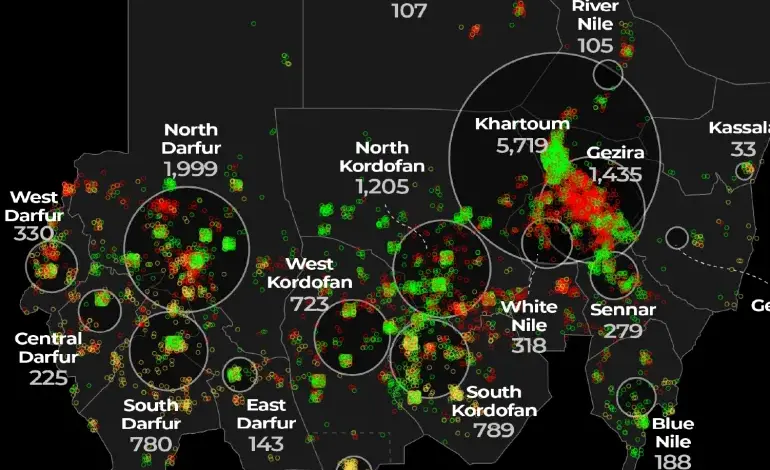
Al Jazeera maps where the fighting is concentrated in Kordofan and across Sudan, and the displacement that has followed.
Who controls what on the ground?
Sudan is broadly divided between the two sides. The SAF controls the capital, Khartoum, and most of the north, east and centre, while the RSF controls the west, including almost all of Darfur and parts of Kordofan. Smaller armed groups, including the RSF-allied Sudan People’s Liberation Movement-North (SPLM-N), hold pockets of territory in the south.
The army has the upper hand in the north, the RSF in the west, and South Kordofan remains contested.The four most affected states include:
Khartoum: The capital region has seen the most, with 5,719 attacks, or 39 percent of the total, almost three times as many as North Darfur, the second-highest
North Darfur has witnessed 1,999 attacks (13.7 percent)
Gezira state has seen 1,435 attacks (9.8 percent)
Kordofan emerged as a major centre for fighting. North, South and West Kordofan together recorded 2,876 attacks, or about 19.7 percent of all recorded attacks, putting the region behind only Khartoum when considered collectively.