Syria should not be America’s shortcut to Hezbollah
Makram Rabah
There are bad ideas in Middle East policy, and then there are ideas so reckless that they manage to revive every historical trauma at once. The suggestion that Syria could somehow be recruited into a military role against Hezbollah in Lebanon belongs firmly in the second category.
At first glance, it may sound clever in Washington: Syria knows the terrain, understands the militias, and has long experience with Lebanon’s security file. But this is exactly the problem. Syria’s “experience” in Lebanon is not a neutral asset. It is a history of domination, coercion, intelligence networks, assassinations, occupation, and the systematic weakening of the Lebanese state. To present Damascus as a possible partner in fixing Lebanon is not strategic thinking. It is Orientalist improvisation dressed up as realism.
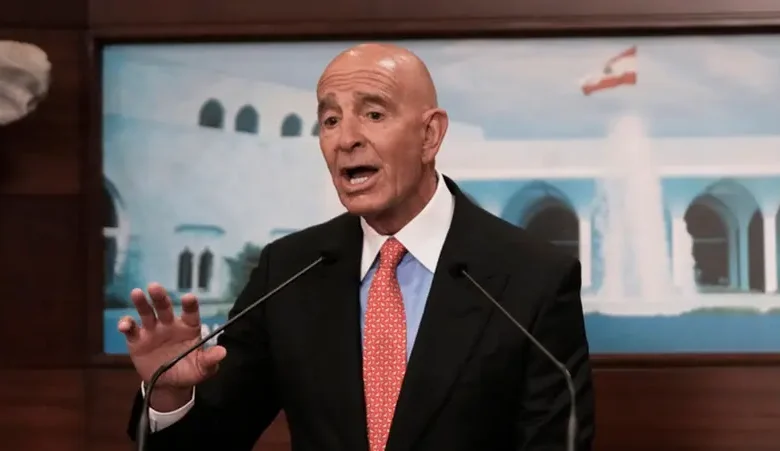
This is where the role of Tom Barrack, President Donald Trump’s special envoy to Syria and Iraq, must be examined carefully. Barrack appears to be promoting a view of the region in which borders are flexible, sovereignty is negotiable, and Lebanon is once again treated as an arena to be managed by stronger neighbors. His approach seems to assume that Syria, by virtue of geography and history, has a natural right to interfere in Lebanon’s security future. That logic is not new. It is the same logic that justified decades of Syrian tutelage over Lebanon under Hafez al-Assad and Bashar al-Assad. It is also the same logic that many Lebanese paid for with their lives.
The irony is that such a proposal would not weaken Hezbollah politically. It could strengthen its narrative. For years, Hezbollah and Iran have claimed that their weapons exist to defend Lebanon from external threats, foreign conspiracies, Israel, and “takfiri” forces. If a Syrian force, especially one associated with Ahmed al-Sharaa’s past, were to enter Lebanon under American blessing and in coordination, direct or indirect, with Israeli military pressure, Hezbollah would receive the greatest propaganda gift imaginable. It would no longer need to justify its arsenal through abstraction. It would point to a Syrian incursion and say: this is why we kept our weapons.
That is the fatal flaw in Barrack’s thinking. He may imagine that Syria can be used as a tool to pressure Hezbollah. In reality, such a move would transform Hezbollah’s weapons from an illegal militia arsenal into what many frightened Lebanese might perceive as a shield against foreign intervention. Even those of us who strongly oppose Hezbollah, Iranian domination, and the destruction of Lebanese sovereignty cannot accept replacing one occupation with another.
Lebanon today suffers from the consequences of Iranian occupation through Hezbollah’s military and political grip. But the answer to one occupation cannot be to invite a Syrian one. A Syrian military role inside Lebanon, even if presented as temporary, technical, or security-driven, would cross a red line. No serious Lebanese state can accept it. No Lebanese official who claims to defend sovereignty can remain silent before it.
There is a major difference between Syria securing its own territory and Syria entering Lebanon. If Damascus wants to prevent Iranian-backed militias from moving along the Syrian-Lebanese border, that is its responsibility. If it wants to control its side of the frontier, stop smuggling, and prevent the use of Syrian territory as a corridor for armed groups, no Lebanese patriot should object. That would be border security. But joining a wider campaign against Hezbollah inside Lebanon is something else entirely. That would be intervention. And intervention would ignite the very conflict Washington claims it wants to contain.
The proposal is also unwise for Syria itself. Al-Sharaa’s government has immense internal priorities: rebuilding institutions, managing relations with the Kurds, calming sectarian tensions, addressing the Druze file, restoring basic services, and convincing Arab states that Syria can become stable again. Why would Damascus risk all of that by entering Lebanon’s most explosive conflict? Why would it jeopardize its emerging relationship with Beirut by becoming a military instrument in a war that could easily expand beyond anyone’s control?
Nor is it likely that Arab states investing politically or economically in Syria’s rehabilitation would welcome such adventurism. Saudi Arabia, the UAE, Jordan, and others have an interest in stability, reconstruction, and containing chaos. They do not have an interest in seeing Syria dragged back into Lebanon through the back door. That would not rehabilitate Damascus. It would revive the worst memories of Syrian power in Lebanon.
Most dangerously, this kind of thinking could sabotage diplomatic efforts already underway. If Lebanon is being encouraged to negotiate security arrangements, reduce tensions, and eventually address the question of war and peace, how can those efforts survive while Washington entertains the idea of a Syrian role in a military campaign on Lebanese soil? You cannot ask Lebanon to act like a sovereign state in negotiations while treating it as a battlefield in policy planning.
The United States should be careful. If President Trump’s comments reflect Barrack’s influence more than a coherent American strategy, then Secretary Marco Rubio and the formal institutions of American diplomacy must correct the course. Lebanon does not need another mandate, another tutor, or another regional army deciding its future. It needs the restoration of state authority, the disarmament of all militias through a Lebanese framework, and international support that strengthens sovereignty rather than bypassing it.
The road to weakening Hezbollah does not pass through Syrian boots in Lebanon. It passes through rebuilding the Lebanese state, protecting its institutions, supporting its army, and refusing to legitimize any foreign armed role on its territory – Iranian, Syrian, Israeli, or otherwise.
Barrack’s suggestion is not bold. It is dangerous. It is not creative diplomacy. It is a return to old colonial habits: drawing maps in Washington, assigning roles to regional actors, and assuming that smaller countries must absorb the consequences.
Lebanon has already lived through that experiment. It should not be forced to live through it again.
Makram Rabah is an Assistant Professor at the American University of Beirut, Department of History. His book Conflict on Mount Lebanon: The Druze, the Maronites and Collective Memory (Edinburgh University Press) covers collective identities and the Lebanese Civil War.