Sunday’s vote comes amid record snowfall in parts of the country. With up to 70cm (27.5 inches) of snow forecast in northern and eastern regions, some voters will have to battle blizzards to cast their ballots. The election is only the third post-war vote held in February, with polls typically called during milder months. Fok said the heavy snowfall could affect voter turnout, but “there’s no suggestion that’s going to impact the outcome of the election”. “A lot of people feel that the opposition parties are not offering anything substantially different. And perhaps they feel that Takaichi’s economic agenda will boost the country in the long term,” he said. “She has a growth-oriented strategy. She wants to develop sectors like AI and semiconductors, and accelerate defence spending. Voters are perhaps betting on that unlocking the keys to stagnant wage growth in this country, and in turn, [to] counter rising inflation that they are experiencing here.” Foreign policy A landslide win for Takaichi’s coalition would also likely prompt a shift in foreign policy. “It will allow her to do two fundamentally important things,” said Stephen Nagy, a professor of politics and international studies at the International Christian University.
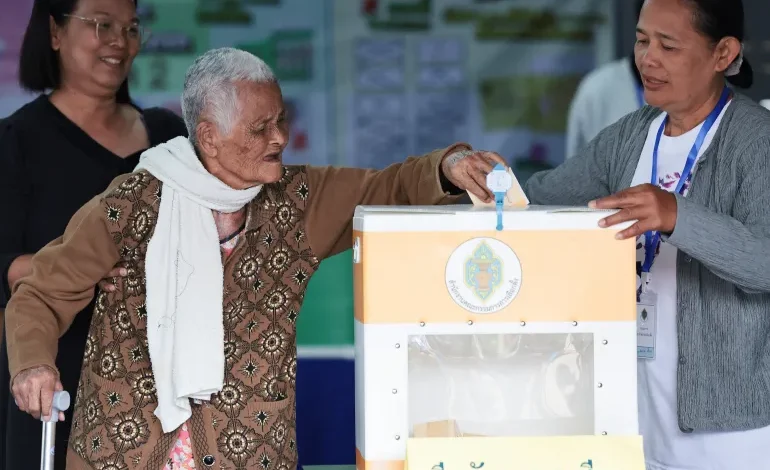
Polls have opened in Thailand in a closely watched general election, with progressive reformers and military-backed conservatives vying for control in a country that has cycled through three prime ministers in as many years.
Polling stations opened at 8am local time (01:00 GMT) on Sunday and are set to close at 5pm (10:00 GMT).
While more than 50 parties are contesting the polls, only three – the People’s Party, Bhumjaithai, and Pheu Thai – have the nationwide organisation and popularity to gain a winning mandate.
With 500 parliamentary seats at stake and surveys consistently suggesting no party is likely to win an outright majority, coalition negotiations appear inevitable. A simple majority of elected lawmakers will select the next prime minister.
The progressive People’s Party, led by Natthaphong Ruengpanyawut, is favoured to win the most seats.
But the party’s reformist platform, which includes promises to curb the influence of the military and the courts, as well as breaking up economic monopolies, remains unpalatable to its rivals, who may freeze it out by joining forces to form a government.
The party is the successor to the Move Forward Party, which won the most seats in the House of Representatives in 2023, but was blocked from power by a military appointed Senate and later dissolved by the Constitutional Court over its call to reform Thailand’s strict royal insult laws.