Sudan’s el-Fasher has symbolism that hasn’t died
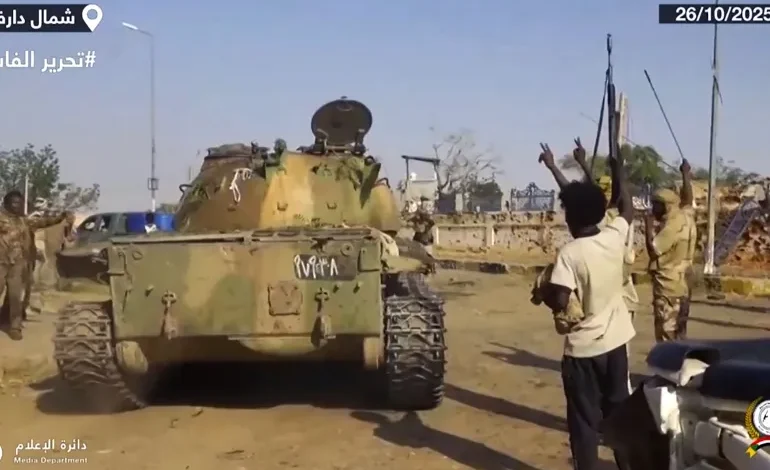
El-Fasher has a special place in the consciousness of many Sudanese people. For them, it is more than the capital of North Darfur State in western Sudan.
It is deeply rooted, historically and culturally, in the national identity.
Between its first fall in 1916 at the hands of British forces and its second fall in October to the Rapid Support Forces (RSF) paramilitary group, el-Fasher stands out as a spiritual, political and social centre.
Historical roots and symbol of resistance
Since the era of Sultan Ali Dinar (1898-1916), el-Fasher had been a hub for knowledge, religious education and spiritual heritage. It was a place where the Kiswa, the black cloth that covers the Kaaba in Mecca, Saudi Arabia, was made.
Many researchers of Sudanese heritage argue that after the end of the sultanate, the city’s spiritual dimension continued to shape the collective consciousness of the inhabitants of Darfur.
The city and Ali Dinar became symbols of national steadfastness and resistance after the British occupied el-Fasher in November 1916 as part of their colonial strategy to redraw the political map of the region.
Ali Dinar organised the resistance against the British, but Britain brought an end to the independent Darfur Sultanate and forced its integration into the modern Sudanese state, which was shaped according to the interests of colonial powers.
Spirit of resistance
More than a century after that historic fall, el-Fasher fell again, this time to the RSF, which, according to local reports and Sudanese government officials, pointed to foreign intervention in support of the paramilitary.
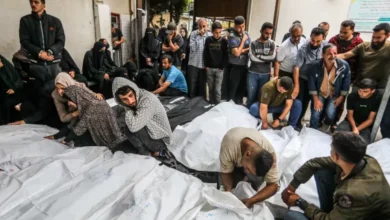
The RSF had besieged the city for more than 18 months. Tens of thousands of people were displaced, and according to the Sudan Doctors Network, at least 1,500 people were killed in 48 hours after the RSF took control of el-Fasher.
A threatened social fabric
The city has been distinguished by its tribal and cultural diversity, seen for decades as a model of coexistence in Darfur. However, the war has caused deep fractures as warnings are issued of forced demographic change that threatens the city’s historical social balance.
For many, the fall of el-Fasher has caused bitterness, but it has also invoked a sense of resilience and hope.
“After this fall, the shelling may stop temporarily, but the wounds remain,” Sheikh Abdul Rahim Adam, an imam who fled to West Darfur, told Al Jazeera.
“Despite the suffering, our memory remains alive with our mosques and Quran schools, and we will return to protect our heritage,” he said.
“The city will soon be liberated from the grip of the [RSF], and we will continue educating our children,’’ Fatima Abdul Karim, a teacher displaced to the Kurma area west of el-Fasher, told Al Jazeera.
‘’This city is … identity and dignity. I saw our schools turn into military barracks, but we will rebuild them soon.”
Need for recovery
The war caused economic paralysis in el-Fasher, and its bustling markets became semi-abandoned places. Traders stopped coming from other parts of Sudan, leading to skyrocketing prices and a scarcity of basic goods.
Sudanese history researcher Ibrahim Saeed Abkar believes that Sudan’s recovery depends on restoring its collective memory and acknowledging the historical roles of cities like el-Fasher.
Abkar added that the resistance of Ali Dinar represents a model of civilisational resilience, which could inspire reconstruction efforts if peace is achieved in the region.