Spain’s controversial plan for the world’s first octopus farm has been abandoned
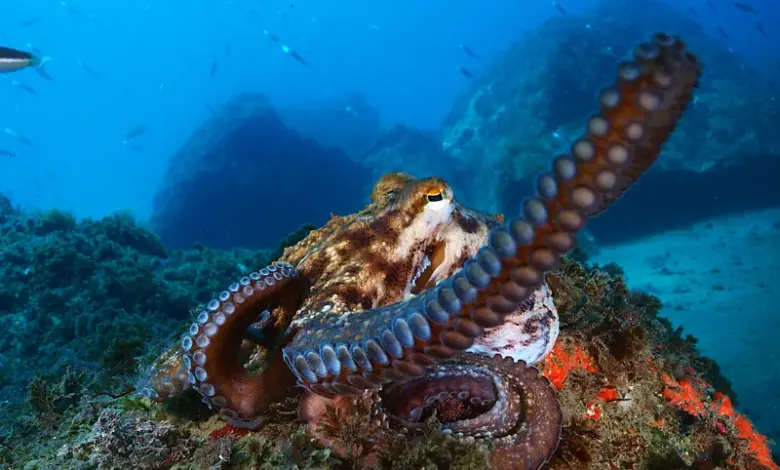
Plans for the world’s first octopus farm have been abandoned. As the controversial project folds, several nations and US states are banning octopus farming before it even begins.
The room was dimly lit, and quiet – save for the sound of water tinkling as octopuses drifted lazily across one another in indoor pools. At the test centre for the world’s first commercial octopus farm in Spain, this docile scene was proof, officials at seafood giant Nueva Pescanova told me in 2022, that the animals were perfectly happy in captivity, and thus suitable for breeding en masse. Before we departed, the centre’s director patted one on the head.
Despite the apparent calm, the project was at the epicentre of an international furore. Since the proposals for the farm were announced in 2021, global protests raged – until, late last week, Nueva Pescanova declared that they were pulling the plug.
It follows a five-year legal battle over the farm’s potential environmental impact with the port authority of Las Palmas, Gran Canaria, where the €65m ($74.5m/ £55.7m) plant was due to be built. Nueva Pescanova said in a statement that the plans had been halted based “exclusively on business and regulatory considerations”, adding that they would not rule out renewing their efforts elsewhere in the future. Nueva Pescanova declined the BBC’s request for further comment.
Campaigners, who held a celebration in Las Palmas at the news, see this not only as a landmark win but a potential first step in stopping commercial octopus farms from taking root more widely. In the past two years, the states of Washington and California have both pre-emptively banned octopus farming, while Spain, Mexico and Chile have put forward bills, too.

The economic potential of Nueva Pescanova’s octopus venture was vast. The world’s trade in fresh and chilled octopus meat was estimated at $198m (£147m) in 2024.
Yet from the outset, the project seemed doomed to fail. Though longstanding players in the Spanish seafood industry, the firm’s plan to farm 3,000 tonnes of octopus meat annually came the year after the release of My Octopus Teacher, a Netflix documentary that became an Oscar-winning hit.
In it, the unique relationship between a freediving documentarian and a female cephalopod highlighted the intelligence of the species – making the prospect of mass producing them in captivity deeply unpalatable to many. At the Las Palmas facility, some one million octopuses – solitary, nocturnal creatures – were to share pools and remain under constant light, before slaughter via freezing to temperatures of -3C (27F).
These plans posed “a serious moral issue”, according to Lindsay Hamilton, professor of animal organisation studies at the University of York in the UK. A growing body of research shows that octopuses feel pain and distress, and have the basics of sentience, says Hamilton. “There’s something to consider here – that we are actually interfering with animals that can feel and understand what’s happening to them.”
Her view was reinforced by the UK Animal Sentience Bill, which was amended in 2022 to include cephalopods, and a 2026 assessment that concluded that “there is strong evidence of sentience in octopuses”.
Commercial octopus farming poses other issues, too. Cramming them into a shared tank causes stress and aggression, says York. At one facility researching octopus farming in Sisal, Mexico, cannibalism among the octopuses was reported to be a significant problem.
When I met senior staff at Nueva Pescanova in 2022, they dismissed concerns over farming octopus as an “artificial debate”, pointing out that no one was outraged by the hundreds of thousands of metric tonnes of other fish and seafood they produced each year.
As we went from their Biomarine Centre’s boardroom past the gift shop (I was given a t-shirt emblazoned with a mustachioed prawn) and downstairs to labs with metres-high neon algae-filled tubes, they insisted that octopuses were no less viable a candidate for farming than any other ocean-dweller. Embracing aquaculture, they said, would also relieve growing demand on the wild fisheries responsible for producing 420,000 metric tonnes of octopus each year.
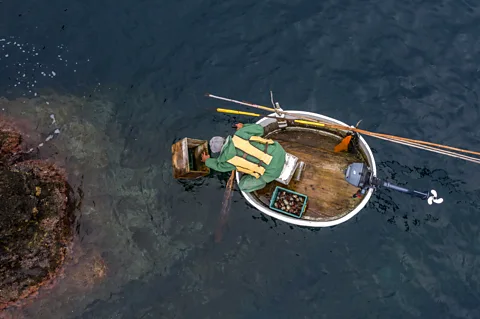
Some studies have found that small-scale artisanal octopus fishing can be sustainable. However, overfishing and destructive fishing methods can harm wild octopus populations. Trawling for octopus has significant environmental impacts, while even hook fishing can be harmful if brooding females are caught.
Countries including Japan, Australia, China and Chile have made attempts to farm octopuses for food. Even as these projects developed, a growing understanding of the detrimental effects of farming octopuses soon became a public concern, says Strom Peterson, the member of the Washington State House of Representatives behind the Washington ban.
As such, Peterson, who is part of a caucus known as the “fur fighters” for their stance on animal rights, saw his proposed legislation banning octopus farming sail through in 2024. “This was one of those bills that took off rather quickly. I was expecting it would take a couple of years to socialise the idea, and it caught wind internationally.”
Peterson took calls from supporters in the UK to Mexico and Portugal; people were fundraising for his campaign, desperate to lend their support, he says. “The timing was just one of those where it was not long after My Octopus Teacher came out and I think there was just a real sense in this animal welfare space about the importance of octopuses.”
California became the second state to pass such legislation six months later, enshrining their ban in law in January 2025, soon to be followed by New York, where their bill is awaiting the signature of Governor Kathy Hochul.
Other states are also in discussion to enact a ban, while a federal bipartisan bill that would outlaw octopus farming throughout the US has also been proposed. In March, Mexico put forward a bill prohibiting nationwide cephalopod farming, while similar proposals are afoot in Chile and Spain.
Regulatory issues were the reason Nueva Pescanova stated for dropping the Las Palmas project. But global legislative momentum could be a spanner in the works for octopus farms more broadly. Hamilton says that she “welcomes the decision” to halt Nueva Pescanova’s project, though she is mindful that “it’s still possible that another scheme could go ahead”.
Elena Lara, senior research and policy advisor at the animal welfare campaigning organisation Compassion in World Farming, was at the celebrations in Las Palmas last weekend. She argues that “if policymakers listen to science, listen to people and see what’s happening in other countries”, no further facilities need ever become a reality. “I want to think that’s not impossible.”