Seven quiet wins for climate and nature in 2025
Here are the year’s breakthroughs for the climate and nature you might have missed.
This year’s environmental backdrop is familiar: emissions are rising and nature is continuing to decline. But there have nevertheless been bright spots in 2025. Targeted action in clean energy, conservation and indigenous rights have led to some tangible positive results for the climate and nature.
These quiet breakthroughs can sometimes go unheard amidst the noise of the news cycle. So, from dramatic growth in renewable power to the return of endangered turtles and tigers, the BBC revisits seven milestones reached in 2025.
Surging renewables
Wind, solar and other renewable power sources overtook coal as the world’s leading source of electricity this year. The global growth in renewables is driven by China, which is massively expanding its clean energy output and dominating exports of clean-energy technologies. In addition to huge growth in solar, China is even harnessing the power of extreme storms with typhoon-resistant wind farms.
Other countries have also seen striking advances thanks to wind. In the UK, a 2025 review found that wind had become the largest single energy source the previous year, covering about one-third of demand, while coal has practically disappeared as a power source. The UK is also making strides in how to store clean energy when the wind isn’t blowing (or the Sun isn’t shining) by starting to build the world’s largest liquid-air-battery storage facility in the north of the UK.
Globally, the rate of growth in renewable power capacity is accelerating in more than 80% of countries. By 2030, overall renewable power capacity is on track to double compared to today’s levels, according to the International Energy Agency.
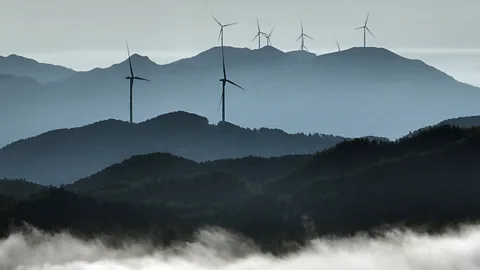
Much of that growth is down to China. As a result of its clean energy drive, China saw CO2 emissions fall this year for the first time, according to an analysis for Carbon Brief, with its emissions in decline in the 12 months up to May 2025. While it’s still early days, it indicates that the country’s emissions may be peaking – and the trend did appear to hold into the latter part of the year, according to a second Carbon Brief analysis.
China also updated its pledge for reducing emissions, although many other nations failed to submit their new pledges before the UN climate talks.
Still, overall, the world’s surge in clean energy, driven by China, is creating conditions for a global peak and decline in energy-related fossil fuel use, according to a report by the global energy think tank Ember. Though clean energy growth is rapid and accelerating, it is not fast enough to avoid dangerous levels of climate change.
Ocean protections
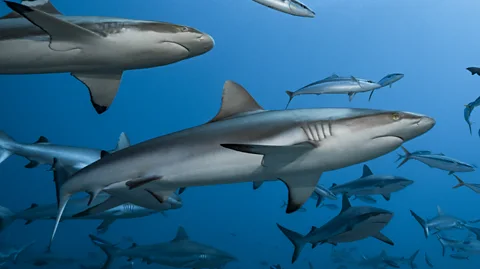
The high seas, waters beyond national jurisdictions, make up nearly two-thirds of the world’s oceans. Currently, just 1% of this vast area is protected – but that is about to change. After decades of negotiations, a global agreement to protect the high seas was at last agreed in 2023, and in September 2025 it was ratified by enough countries to bring it into force.
This High Seas Treaty pledges to put 30% of these waters into Marine Protected Areas (MPA): parts of the ocean dedicated to the protection of habitats, species and healthy marine ecosystems.
The oceans in national waters have also seen additional protections. This year the world’s largest MPA was established in French Polynesia’s Tainui Atea – the MPA will aim to protect 1,100,000 sq km (425,000 sq miles) of ocean.
Forest turnarounds
Brazil this year hosted COP30, the first UN global climate conference to take place in the Amazon rainforest, and it made forests a key platform. The November negotiations in Belém, Brazil were nicknamed the “forest COP”.
While Brazil struggled to follow this through fully, the country did announce plans for a “roadmap” to implement a previous commitment to end deforestation by 2030. It was supported by more than 90 countries, although it exists outside the formal text of the summit and its legal standing is still uncertain.
Brazil also established a funding platform to protect existing forest areas called the Tropical Forests Forever Facility (TFFF). It aims to ensure that maintaining tropical forests is valued more than their destruction, with financial rewards for those who have taken successful, verified steps to keep their forests up. It’s a different approach to many other forest funds, which tend to reward emissions reductions rather than areas of forests maintained. Its target is $125bn (£95bn), though pledges to the fund so far have reached only $6.7bn (£5.07bn).
There were also some on-the-ground signs of hope on deforestation this year. Brazil’s official data shows that deforestation in its portion of the Amazon fell 11% in the 12 months leading up to July 2025, to the lowest deforestation rate in 11 years. Deforestation also dropped in its delicate Cerrado ecosystem, another biodiversity hotspot. Similarly, independent NGO Imazon found that forest clearing in the Brazilian Amazon was 43% lower in October 2025 than in October 2024.
Globally, annual deforestation rates were 38% lower in the period 2015-25 compared to 1990-2000, according to a 2025 UN report, with more than half of forests now covered by long-term management plans. Some 10.9 million hectares (26.9 million acres) – an area roughly the size of the US state of Nevada – are still being cleared globally each year, it said.

A landmark legal case
The International Court of Justice (ICJ), considered the world’s highest court, issued a landmark decision this year, clearing the way for countries to sue each other over climate change. The move could help nations heavily impacted by climate change to take legal action against polluting nations.
The ruling is non-binding on the court itself and in domestic courts, but experts say the ICJ’s findings carry significant weight and could have substantial influence on the way climate cases are handled elsewhere.
The court’s opinion was welcomed as “a watershed legal moment”, by Joie Chowdhury, a senior attorney at the Centre for International Environmental Law, as Esme Stallard reported at the time.
Wins for wildlife
Several endangered species experienced remarkable comebacks this year, showing just how effective conservation measures can be to slow or reverse biodiversity loss.
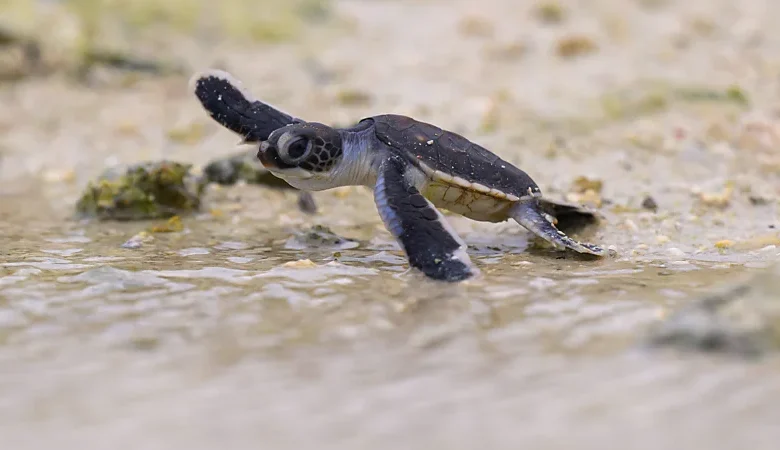
Once hunted for their eggs and decorative shells, green turtles have been rescued from the brink of extinction. Thanks to decades of conservation efforts, from releasing hatchlings on beaches to reducing accidental capture in fishing nets, green turtle populations have rebounded. The species was this year moved from an “endangered” to a “least concern” rating on the IUCN’s (International Union for the Conservation of Nature) Red List.
In other good news for turtles this year, Florida saw a record-breaking sea turtle nesting season, with more than 2,000 leatherback nests.
India, meanwhile, is now home to 75% of the world’s tigers, having doubled its tiger population to more than 3,600 in just over a decade, as Soutik Biswas reported in January 2025. They live in an area spanning 138,200 sq km (53,400 sq miles) – roughly half the size of the UK – alongside some 60 million people, where much work has gone into protecting them from poaching and habitat loss, and reducing conflict with humans. Scientists say this effort provides valuable lessons and shows the rest of the world how conservation can protect big cats, boost biodiversity and support local communities.

Indigenous developments
This year, indigenous peoples were formally recognised at UN level as leaders in the planet’s protection and stewardship.
The concluding part of the UN’s COP16 biodiversity summit, held in February, saw indigenous peoples given an official voice in global decision-making on conservation. The agreement of a new permanent committee enshrined this right, replacing indigenous peoples’ previously informal and symbolic status at the talks with something lasting and formal.
Emphasis on the importance of ancestral knowledge carried forward to the COP30 climate conference in Brazil. Here, indigenous voices were represented by their largest delegation in COP history, with an estimated 2,500 indigenous people attending.
Wins during the climate summit included the adoption of new funding pledges and commitments to recognise indigenous land rights. In Brazil alone, 10 new indigenous territories were created. But concerns remain that promises won’t translate into real change. Meanwhile, threats to many indigenous communities are still ongoing. During the conference, Survival International reported the violent death of a Guarani Kaiowá leader in the south of Brazil.
Klamath restoration
Just one year after the historic removal of four dams along California’s Klamath river, salmon have returned to their traditional spawning grounds.
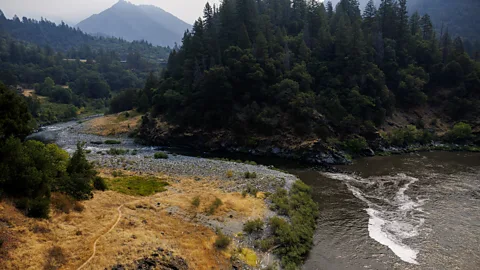
“There are salmon everywhere on the landscape right now,” Michael Harris, the environmental manager for the California Department of Fish and Wildlife’s Klamath Watershed Program, told local news. “The speed of their return is remarkable.”
Salmon had been absent from the upstream areas of the river for generations. But a tribal-led campaign saw four hydroelectric dams – that had severely polluted the river for decades – pulled down in 2024, allowing the mighty Klamath to flow freely once more.