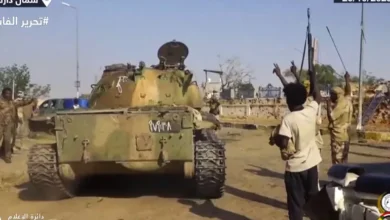
Saudi-backed government forces retake multiple cities in southern Yemen
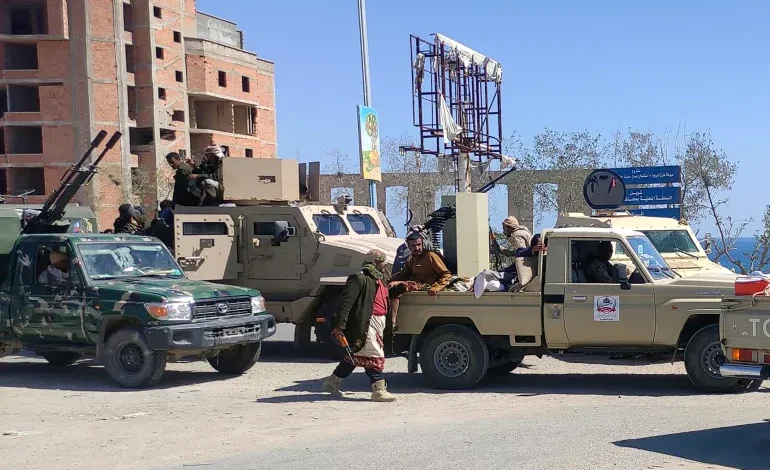
Yemeni government troops backed by Saudi Arabia have retaken the governorates of Hadramout and al-Mahra from the United Arab Emirates-backed secessionist Southern Transitional Council (STC) as tensions between the regional Gulf Arab powers continue to simmer.
Rashad al-Alimi, head of the Presidential Leadership Council (PLC), the internationally recognised government in the splintered war-ravaged nation, said in a statement on Saturday that Saudi-backed Homeland Shield forces had achieved “record success” in “retaking all military and security positions in the province” bordering Saudi Arabia after the operation launched a day earlier.
Crucially, the government announced that it had retaken control of Mukalla, the key eastern port and capital of Hadramout province, from the STC, which seized it last month and which Saudi forces attacked in recent days.
Government sources told Al Jazeera Arabic that Yemeni government forces had taken control of all of the districts in Hadramout, Yemen’s largest governorate.
The Director General of the Youth Office for al-Mahra governorate, Mohammed Omar Suwailam, also told the Anadolu news agency on Sunday that Homeland Shield forces have taken control of all nine districts of the governorate following the withdrawal of STC forces.
Since Tuesday, Yemen has seen an unprecedented escalation in tensions after STC forces took control of Hadramout and al-Mahra in early December – the two provinces make up nearly half of Yemen’s territory and share a border with Saudi Arabia.
According to Al Jazeera’s Yemen affairs editor, Ahmed al-Shalafi, major shifts have occurred in Yemen’s political and military landscape over the past day.
“The Yemeni army and the Homeland Shield forces were able to enter the battlefield and interfere militarily to resolve the conflict on the ground,” he said.
“The political action came second, when the Yemeni government invited the Southern Transitional Council for a conference in Saudi Arabia,” al-Shalafi added.
According to the official, at least 152 members of the STC’s forces were wounded, and 130 were taken captive.
On Saturday, a military official with the STC told AFP Saudi warplanes had carried out “intense” air raids on one of the group’s camps at Barshid, west of Mukalla.
Still, the STC welcomed an offer of dialogue from Saudi Arabia, calling it a “genuine opportunity” that could safeguard “the aspirations of the southern people”.
Additionally, local sources told Al Jazeera that life was gradually returning to normal in the city of Seiyun, in the region and governorate of Hadramout, where work has resumed as part of efforts to reactivate state institutions and ensure the continued provision of services to citizens.
Hadramout Governor Salem Ahmed Said al-Khanbashi arrived at Seiyun airport in Wadi Hadramout after the Homeland Shield forces took control of the region, Al Jazeera Arabic has reported.
But tensions and discord still abound elsewhere in the south.
Yemen’s internationally recognised government released a statement regarding alleged restrictions on movement imposed by the STC in the port city of Aden in southern Yemen.
The government accused the STC of preventing some travellers from entering Aden, and detaining people trying to enter the city, including families and sick people seeking treatment.
It said the STC’s “restrictions on citizens’ movement to Aden are a grave violation of the constitution and a breach of the Riyadh Agreement. We call on the Southern Transitional Council to immediately and unconditionally end all restrictions on the movement of citizens. We affirm that the state will take measures to protect civilians and guarantee freedom of movement.”
A government official told Reuters that Yemeni government forces would press on from Hadramout to Aden, an STC stronghold.
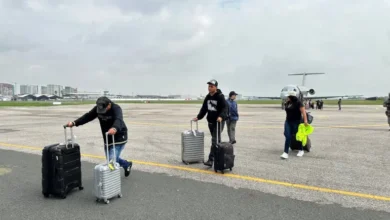
Some flights have resumed from Aden International Airport, after it closed on Thursday, with the government and Saudi Arabia on one hand, and the STC on the other, exchanging blame for the shut down.